




It’s been extremely wet here in Iowa and I’ve had a ton of foot abscesses. This has really helped the soles recover on a few subsolar abscesses I’ve had! It also is helping prevent as well as recover some feet from thrush
Free U.S. shipping at $50+
No code needed.
Shipping detailsTopical hoof, frog, heel, and lower-leg routine
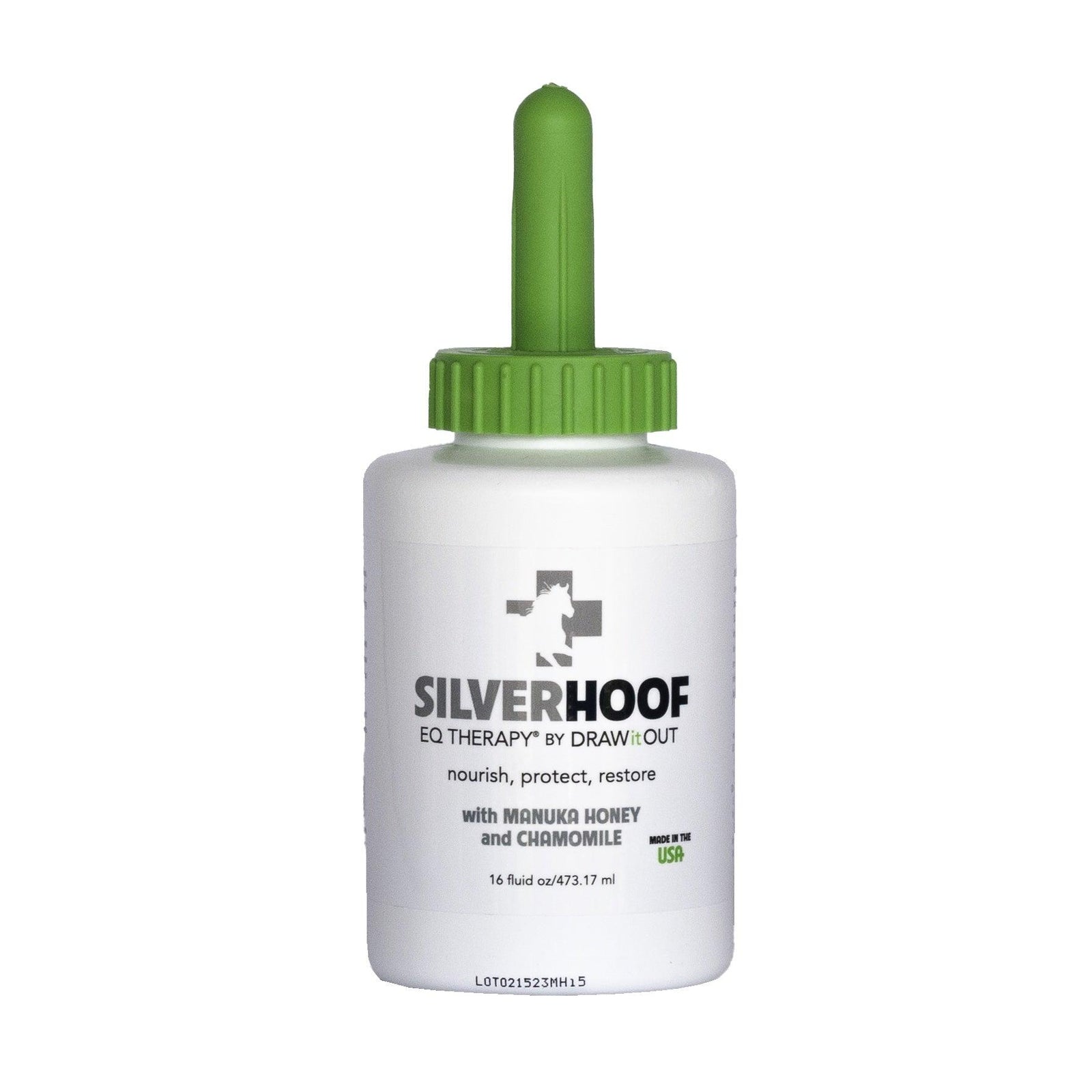
Silver Hoof EQ Therapy® 16oz
Quick answer: choose Silver Hoof EQ Therapy® when the concern belongs in the hoof-care lane: the hoof wall, frog, heel bulbs, coronet area, surrounding lower-leg structures, wet-weather maintenance, or a regular between-farrier routine.
It is a practical topical product, not a shortcut around picking hooves, managing footing, scheduling trims, or finding the source of pain. Clean first, dry when possible, apply a thin controlled layer according to the label, and keep your farrier involved when the hoof changes.
16oz barn sizeFarrier-aware routineHoof and heel focusTopical application
Best fit for Silver Hoof EQ Therapy®
- Routine hoof hygiene after the hoof has been picked, brushed, and assessed.
- Frog, heel, hoof wall, coronet, and surrounding lower-leg care where label directions allow.
- Wet-dry weather cycles, muddy turnout, damp bedding, and thrush-prone barn conditions.
- Tack rooms, farrier kits, trailers, and owners who want one dedicated hoof-care product on hand.
The formula includes zinc pyrithione, silver nitrate, hydrolyzed keratin, Abyssinian oil, tea tree oil, thyme oil, Manuka, aloe, chamomile, and arnica. Those ingredients support a purposeful hoof-care formula; they do not turn every odor, crack, tenderness, or dark frog into the same problem.
Choose the product by the location of the concern
Hoof, frog, or heel
Choose Silver Hoof EQ Therapy® for a dedicated topical hoof-care routine.
Skin, rub, or surface irritation
Compare a controlled skin-care format such as Rapid Relief Restorative Cream.
Muscle or body routine
Start with Draw It Out® 16oz Liniment Gel, not a hoof product.
Decision rule: route by anatomy before routing by symptom words. Hoof and heel care starts here. Body stiffness belongs with liniment. Skin problems belong with skin care. Pain, lameness, heat, or a strong digital pulse belong with a farrier or veterinarian first.
How to build a clean hoof-care routine
- Pick out the hoof completely and look for a lodged object, puncture, drainage, deep crack, unusual odor, or structural change.
- Brush away loose dirt and debris. Dry the target area when possible; repeatedly sealing mud under product defeats a clean routine.
- Apply a thin, even layer to the appropriate external structures according to label directions.
- Keep the schedule consistent enough to observe change, but adjust for weather, footing, and your farrier’s guidance.
- Clean and reassess before reapplying. Do not keep layering product over a hoof you have stopped inspecting.
For placement and barn-side steps, use the Silver Hoof EQ Therapy® Use Guide. You can also browse the Draw It Out® hoof-care collection.
Call the farrier or veterinarian: lameness, hoof heat, a bounding or unusually strong digital pulse, swelling, a puncture, drainage, deep cracks, persistent strong odor, suspected abscess, severe tenderness, or a sudden structural change should not be managed by product selection alone.
Frequently asked questions
Does Silver Hoof EQ Therapy® replace a farrier?
No. It supports routine owner care between visits. It does not replace trimming, balancing, shoeing, diagnosis, or professional treatment.
Where can I apply Silver Hoof EQ Therapy®?
Follow the label. Routine use may include appropriate areas of the hoof wall, frog, heel bulbs, coronet area, and surrounding structures after cleaning and inspection.
Is it a cure for thrush?
No product should replace identifying the cause, cleaning the hoof, improving moisture management, and involving a farrier or veterinarian when the concern is deep, painful, persistent, or worsening.
How often should I apply it?
Use it according to label directions and the horse’s conditions. Wet footing, dry footing, and active professional treatment may require different routines.
Hoof-care lane confirmed? Select the 16oz or 2 Pack variant above. If the concern is not clearly hoof, skin, or body related, use the Draw It Out® Solution Finder before ordering.
Keep the directions handy
Save the Silver Hoof EQ Therapy® Use Card
Open the phone version for fast barn reference or the 4×6 version for printing.
Hoof therapy product designed to improve horse hoof health and strength. Customers said it's "a game changer" with "incredible results" and noted their horses' hooves "have never been healthier." However, one customer reported an 8-week shipping delay, highlighting potential fulfillment issues that need addressing.
Horse (positive)Therapy (positive)Hooves (positive)Product (positive)Results (positive)
J
Absolutely love this product. My horse's hooves have never been healthier!
S
SilverHoof EQ Therapy is a game changer. My horse's hooves are in top shape!
S
So happy with this purchase. My horse's hooves are stronger and healthier!
N
Incredible results. My horse loves it and so do I!
L
Saw a huge difference after just a few uses. SilverHoof EQ Therapy is the best!
M
Best hoof therapy I've used. My horse's hooves are looking great!
E
Can't believe how effective this is. My horse is so much happier!
J
Highly recommend SilverHoof EQ Therapy. It's a lifesaver for my horse's hooves!
B
Best hoof therapy I've used. My horse's hooves are looking great!
A
Best hoof therapy I've used. My horse's hooves are looking great!
P
Best hoof therapy I've used. My horse's hooves are looking great!
T
Highly recommend SilverHoof EQ Therapy. It's a lifesaver for my horse's hooves!
D
So happy with this purchase. My horse's hooves are stronger and healthier!
A
Incredible results. My horse loves it and so do I!
V
SilverHoof EQ Therapy is a game changer. My horse's hooves are in top shape!
M
Highly recommend SilverHoof EQ Therapy. It's a lifesaver for my horse's hooves!
K
So happy with this purchase. My horse's hooves are stronger and healthier!
C
Absolutely love this product. My horse's hooves have never been healthier!
A
Incredible results. My horse loves it and so do I!
S
SilverHoof EQ Therapy is a game changer. My horse's hooves are in top shape!
L
Can't believe how effective this is. My horse is so much happier!
K
Highly recommend SilverHoof EQ Therapy. It's a lifesaver for my horse's hooves!
T
So happy with this purchase. My horse's hooves are stronger and healthier!
A
Can't believe how effective this is. My horse is so much happier!
D
Absolutely love this product. My horse's hooves have never been healthier!
C
Can't believe how effective this is. My horse is so much happier!
C
SilverHoof EQ Therapy is a game changer. My horse's hooves are in top shape!
J
Amazing results in such a short time. Will definitely buy again!
J
Can't believe how effective this is. My horse is so much happier!
S
Best hoof therapy I've used. My horse's hooves are looking great!
Y
Incredible results. My horse loves it and so do I!
- Choosing a selection results in a full page refresh.
!