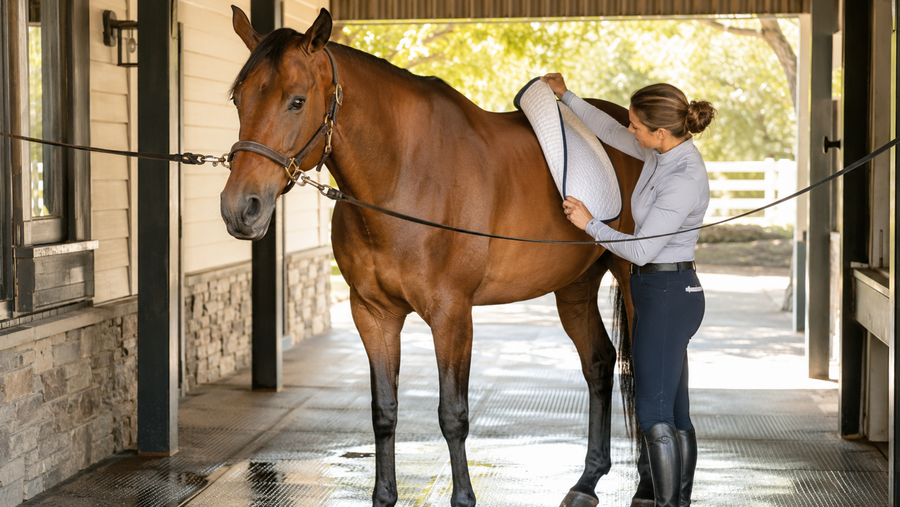
Rider hand-walking an alert horse the morning after fireworks

Quick answer: After a fireworks night, check the property and the horse before riding. Inspect fencing, gates, stalls, water, manure, appetite, sweat, wounds, legs, feet, movement, and attitude. Call the veterinarian for injury, colic signs, lameness, abnormal breathing, severe distress, fever, or a horse that is not returning toward normal.

A horse may spend the night pacing, sweating, running the fence, spinning in the stall, or standing alert instead of resting. Even when everything looks quiet at breakfast, the night can change hydration, digestion, movement, and safety.

Check the Property First

Before turning the horse out or leading through the aisle, inspect fences, gates, latches, stall walls, buckets, feeders, and bedding. Look for broken boards, exposed wire, sharp edges, disturbed panels, or signs that the horse struck or climbed something.

Do not assume the facility is unchanged.
A frightened horse can damage a normally safe space in a few seconds.

Check the Whole Horse

  • Attitude: alert, dull, anxious, unusually quiet, or difficult to handle?
  • Appetite and water: did the horse finish feed and drink near its normal?
  • Manure: normal amount and consistency, or reduced and abnormal?
  • Skin and coat: dried sweat, scrapes, swelling, hair loss, or rubs?
  • Legs and feet: heat, filling, wounds, hoof damage, or stronger digital pulses?
  • Movement: sound at the walk, comfortable turning, and willing to move?

Take the horse’s temperature if it is part of your normal skill set or your veterinarian asks for it. Compare all findings with this horse’s usual baseline.

Look for the Cost of Pacing or Running

Repeated fence running or stall spinning can leave a horse tired, tight, footsore, or dehydrated. Check the first steps after standing and again after a short, calm walk if the horse is sound and safe to handle. Do not use lunging or a hard ride to “take the edge off” when the horse may already be fatigued.

Decide Whether to Ride

Ride only when the horse is settled, sound, hydrated, eating, passing normal manure, and behaving close to normal. A quiet turnout, hand walk, or rest day may be the better decision. The training calendar does not outweigh the horse’s morning evidence.

A tired horse can still feel electric.
Adrenaline and fatigue can exist at the same time. More work is not automatically the answer.

Where Products Fit

Hydro-Lyte® may fit an established, label-directed hydration and electrolyte plan. Do not introduce a new supplement during a stressful event without veterinary or nutrition guidance, and do not use a supplement as a substitute for evaluating a horse that is not drinking or acting normally.

An external Draw It Out® liniment may fit a familiar grooming routine when the horse is otherwise appropriate for topical care. It does not treat an injury or make an abnormal horse ready to ride.

Plan Before the Next Fireworks Night

Ask the veterinarian about the individual horse before the next predictable event, especially when prior fireworks caused severe distress. Confirm identification, emergency contacts, fencing, lighting, water, and the safest housing plan. Avoid waiting until the noise starts to invent a medication or supplement strategy.

FAQ

Should I ride the morning after fireworks?

Only if the horse is settled, sound, hydrated, eating, passing manure, and moving normally. A quiet reset may be safer.

What signs need veterinary help?

Injuries, colic signs, lameness, abnormal breathing, severe or persistent distress, fever, weakness, or a horse that is not drinking or returning toward normal need professional guidance.

Can I give a calming supplement after the fireworks?

Do not improvise a new supplement or medication plan. Ask the veterinarian about the specific horse and follow current labels and competition rules.

General horse-care education only. This article does not diagnose or treat a horse and does not replace veterinary advice.
Leave a comment

Please note, comments need to be approved before they are published.

Start here

Reading first? Here is the clean path.

This article gives you the background. If you are ready to put the idea into a real horse care routine, these are the next places most riders should go.

Daily recovery

Liniment Gels

Explore the Draw It Out® liniment gel lineup for everyday use, post-work routines, and targeted recovery support.

Shop liniment gels
Find the fit

Solution Finder

Match your horse’s workload, age, routine, and care goals to the Draw It Out® products that make the most sense.

Use the finder
Routine first

Prehabilitation

Learn how riders support soundness, comfort, and consistency before little issues become bigger problems.

Read the guide
Simple rule: read the article for context, use the Solution Finder for direction, then build the routine around the product format your horse will actually use consistently.

Real Barn Proof

What this looks like in real barns.

Real riders. Real horses. Real routines. These clips rotate automatically so the proof stays fresh without weighing the page down with a long feed.

Random rider clips

Why this matters: good horse care should make sense outside the ad. These clips show the kind of everyday use that builds trust one barn at a time.

Further Reading

Keep building the routine.

Horse care works better when the next step is clear. These related reads help connect today’s topic to better daily decisions in the barn.

Horse health news

Start with the principle, then build the habit. The right article should make the next barn decision easier, not more complicated.

Next Step

Keep your barn dialed in.

Simple care guides, practical product paths, and rider-trusted tools built for real horses and real routines.

Good care gets easier when the next step is obvious. Read the guide, match the routine, then choose the format that fits how your barn actually works.

Recovery Routine

Build a complete recovery routine.

Want a smarter way to think through post-ride care, heat, swelling, leg support, and daily recovery decisions? Start with the Performance Recovery Hub.

Better recovery starts with a repeatable routine. The hub gives riders a clearer path from workload to product format to aftercare timing.

Rider Favorites

Always in the kit.

Four core Draw It Out® staples riders keep close for daily recovery routines, wash rack use, targeted support, and quick barn-side care.

Core barn staples
Draw It Out® 16oz Horse Liniment Gel | Daily Care

Stay-Put Gel

16oz Liniment Gel

The everyday liniment gel format riders reach for when they want targeted, no-mess application.

View product
Draw It Out® 32oz Horse Liniment Concentrate | Spray, Wrap & Soak

Mix Your Way

32oz Concentrate

A flexible concentrate for riders who want to mix their own routine around workload and barn needs.

View product
Draw It Out® RTU Spray 24oz | Ready-to-Use Liniment Spray

Ready To Use

24oz RTU Spray

A ready-to-use spray format for quick application after work, travel, turnout, or daily care.

View product
CryoSpray® by Draw It Out® 24oz | Cooling Body Brace for Horses

Cooling Brace

CryoSpray

A cooling body brace spray for riders who want a fast, practical option after hard work or hot days.

View product

Format matters. Gel, concentrate, ready-to-use spray, and cooling spray each solve a different barn problem. Pick the one your routine will actually use.

Where To Go Next

Turn the idea into a routine.

If this topic connects to what you are seeing in your horse, these are the three cleanest next steps. Start with direction, then choose the product format that fits the way your barn actually works.

Next steps

Best next move: use the Solution Finder first when the issue is unclear. Go straight to the liniment gel collection when you already know the format you want.