Hill-work horse recovery
Horse Shoulders Tight After Hill Work? What to Check
Hill work can expose a training-dose problem, uneven footing, tack pressure, hoof discomfort, or soreness elsewhere in the movement chain. Use the pattern—not a guess—to decide whether the horse needs easy recovery or professional evaluation.
Quick answer: if your horse feels tight through the shoulders after hills, stop adding intensity and compare movement, feet, legs, tack marks, back, and both sides of the body. Note whether the change appeared uphill, downhill, on one lead, or only after fatigue. A mild, even change that settles with ordinary rest is different from a short stride, head nod, heat, swelling, marked sensitivity, stumbling, or a pattern that remains the next day. Those findings deserve a veterinarian or farrier before another hill session.
“Tight shoulders” is an observation, not a diagnosis
Riders use the phrase for several different pictures: a shorter reach in front, a choppy downhill walk, reluctance to lengthen, tension during grooming, resistance when the saddle moves over the shoulder, or a horse that simply feels less free after a demanding ride. The words are useful because they identify an area to investigate, but they do not prove that the shoulder joint or shoulder muscles are the source.
A horse moves as a connected chain. Front feet, shoes, lower limbs, neck, withers, back, saddle position, rider balance, hind-end effort, and footing can all change how the front end looks and feels. Hill work may make a small weakness or discomfort easier to notice because the horse must organize balance and effort differently than on level ground.
Start with the timing of the change
During the climb
Record whether the horse shortened the front step, lost rhythm, drifted, or resisted only as the grade increased. Consider fatigue, the depth or slipperiness of the footing, the length of the climb, and whether the horse had enough progressive conditioning for that dose.
During the descent
Downhill travel may reveal hesitation, rushing, bracing, or difficulty controlling the body. A horse that becomes irregular or unsafe downhill should not be repeatedly tested on the same slope. Return to safe ground and document what happened.
Only after the ride
Changes noticed during untacking or grooming may relate to workload, sweat and friction, saddle movement, muscle fatigue, or an issue that the horse hid while working. Compare the response after cooling and again the next morning.
Only on one side
A repeatable left-right difference matters more than a vague sense that the whole horse worked hard. Note the direction, lead, slope, and exact location. New asymmetry moves pain, hoof balance, tack, and rider influence higher on the list.
A calm barn-side differential check
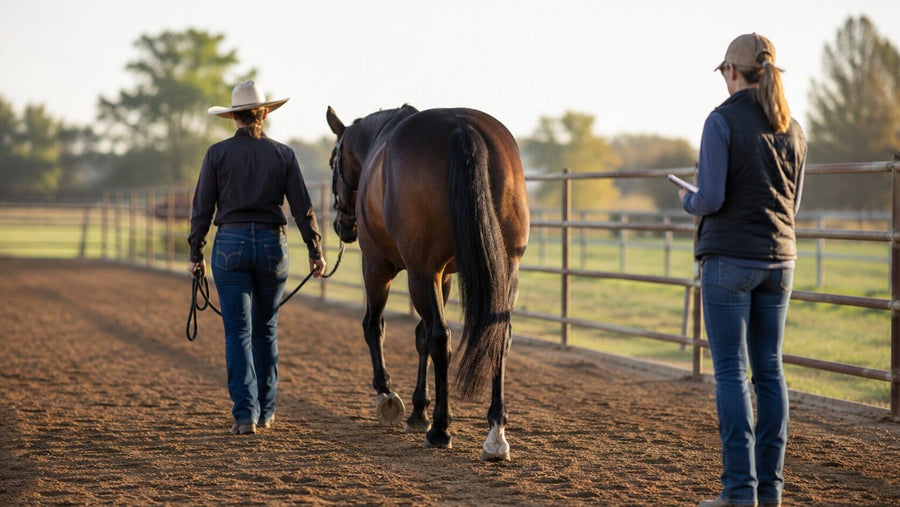
Begin before touching the sore-looking area. Watch the horse stand, walk straight, turn both directions on a safe surface, and back a few normal steps if that is already part of the horse's training. Do not force tight circles, flexion tests, or deep stretches to prove a theory. A short clear video can help a veterinarian see the pattern without exhausting the horse.
- Feet and shoes: pick out all four feet. Look for a loose or shifted shoe, a sprung clinch, a lodged object, a new chip, unusual heat, or a stronger digital pulse. Front-foot discomfort can look like a shoulder problem.
- Legs: compare matching areas for heat, filling, swelling, and sensitivity. Follow the same light-pressure routine on each side rather than digging into tissue.
- Shoulder and chest: check for rubs, swelling, a kick mark, skin irritation, or a response that is clearly different from the horse's normal grooming behavior.
- Withers and back: look at sweat patterns and ordinary grooming response. Tension near the shoulder may accompany pressure farther back under the saddle.
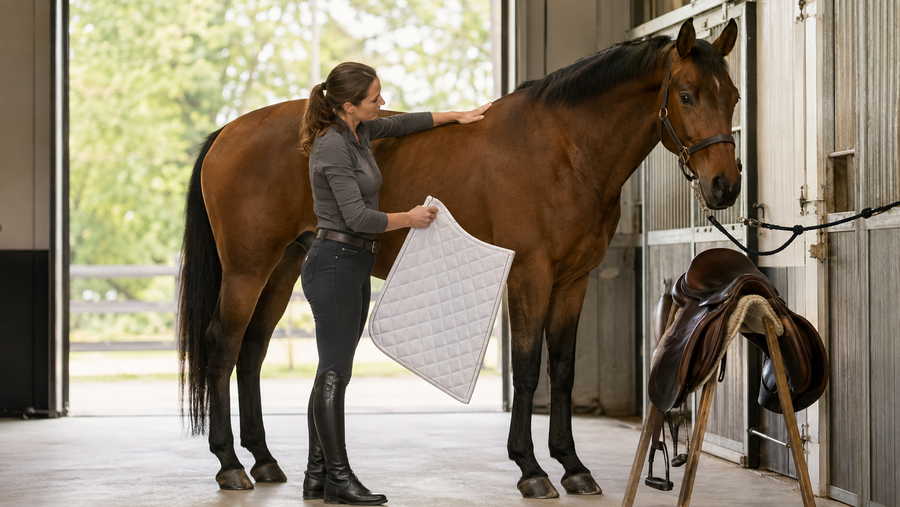
- Tack: inspect the pad and girth, and consider whether the saddle moved forward, tipped, bridged, or became less stable on the hills. A qualified saddle fitter should assess recurring fit questions.
- Training dose: compare this ride with the horse's recent work. More repetitions, a steeper grade, longer duration, faster pace, deeper footing, or less recovery can turn a familiar exercise into a new demand.
Stop work and call for help when
- The horse is lame, short-strided, head-nodding, stumbling, unwilling to bear weight, or unsafe to lead.
- You find notable heat, swelling, a wound, a strong digital pulse, a loose shoe, or sudden marked sensitivity.
- The change followed a slip, fall, collision, pull-back, kick, or another clear incident.
- There is weakness, incoordination, crossing of the limbs, trouble backing, or another possible neurologic sign.
- The horse is distressed, has abnormal breathing after adequate recovery, has a fever, is off feed, or appears unwell beyond ordinary post-work fatigue.
- The same pattern remains after rest, returns every hill session, worsens, or changes the horse's normal movement the next day.
Do not use a topical, massage, stretching, or more exercise to test whether a red-flag problem will disappear. Your veterinarian can guide the examination; a farrier and saddle fitter may add evidence when feet or tack are part of the picture.
If no red flags are present, reduce the next demand
Give the horse a normal cool-down, turnout or rest appropriate to the horse, water, forage, and time to settle. Recheck movement and the hands-on findings later and the next morning. The next session should not automatically repeat the same hill dose. Choose level walking, an easier route, fewer repetitions, or a recovery day based on what you observe.
When the horse is cleared for work, rebuild hills gradually. Use a progressive warm-up, select secure footing, keep the first repetitions short, and stop while the horse can still maintain rhythm and balance. Separate demanding hill days with enough recovery for that individual. A training log can show whether tightness follows grade, duration, speed, direction, footing, travel, shoeing timing, or a particular tack setup.
Do not confuse “warms out of it” with proof that nothing is wrong. Some horses move more freely after several minutes even when an underlying issue remains. The useful measure is a stable trend: normal movement before work, an appropriate response to the planned dose, and an ordinary return toward baseline afterward.
What to tell your veterinarian, farrier, or fitter
Specific notes are more useful than “his shoulders were sore.” Share when the change began; whether it appeared climbing, descending, turning, or after untacking; which side looked different; the surface and slope; recent shoeing; recent travel or time off; tack changes; how long recovery took; and what the horse looked like the next morning. Add short videos from safe, level ground when requested.
That history helps the right professional decide what deserves closer evaluation. It also prevents a common mistake: changing several things at once, then not knowing which change mattered.
What riders commonly use next
One routine option after the horse checks out normally
When the horse is moving normally, the skin is healthy, and the concern fits ordinary post-work body care, Draw It Out® 16oz Liniment Gel is a ready-to-use external option for controlled placement on large muscle areas according to the current label. It cannot diagnose the cause, correct hoof or saddle problems, or make a lame horse safe to work.
See the 16oz Liniment Gel Use the Solution FinderFor format selection, compare gel, spray, and concentrate. For the complete after-work sequence, read the post-ride recovery guide.
Get practical hill-work and recovery notes
Join the rider list for workload, movement-check, and post-ride guidance.
By signing up, you agree to receive Draw It Out® marketing emails relevant to horse care. Unsubscribe anytime.
Hill-work shoulder tightness FAQ
Can hill work make a horse feel tight through the shoulders?
It can create a new training demand and make fatigue, weakness, footing problems, tack pressure, or existing discomfort easier to notice. The location a rider feels does not identify the source, so check the whole movement chain.
Should I massage a horse that is tight after hills?
Not before ruling out heat, swelling, injury, lameness, hoof pain, or marked sensitivity. Avoid deep pressure on an unexplained change. Ask your veterinarian or a qualified professional what hands-on care is appropriate.
How long should a horse rest after hill work?
There is no universal number. Fitness, grade, duration, footing, age, health, travel, and the horse's next-day response all matter. Reduce the next demand when recovery is slower or different from the horse's normal pattern.
Why does my horse look worse downhill than uphill?
Descending asks the horse to organize balance and control differently. Rushing, bracing, hesitation, stumbling, or an uneven step may reflect training, footing, hoof, limb, tack, or comfort issues and should not be repeatedly tested on a slope.
Can a topical fix shoulder tightness?
No. An external topical may fit an ordinary post-work routine after the horse checks out normally, but it cannot identify or correct injury, lameness, hoof balance, saddle fit, or an unsuitable workload.