Horse Moves Away at the Mounting Block? Check This First
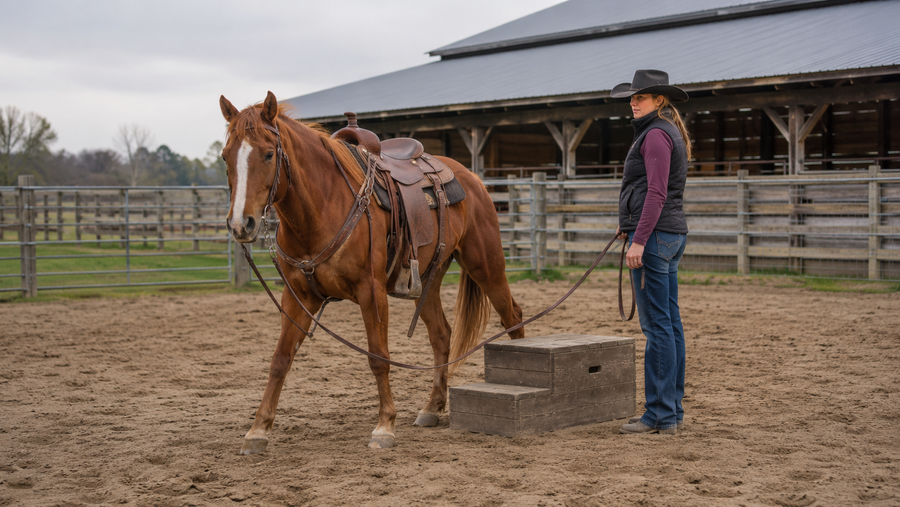
If a horse suddenly steps away from the mounting block, check comfort, tack, footing, rider technique, and the exact pattern before calling it disobedience.
Free U.S. shipping at $50+
No code needed.
Shipping details
After dark, check each horse under enough light to see clearly, confirm access to water, observe behavior and feed interest, and finish with a physical check of gates and latches. Use the same sequence each evening, note changes, and make sure the next caretaker knows about anything unresolved.
Short days can turn a familiar barn into a hurried stop between work and home. The temptation is to count heads, fill buckets, and leave. A repeatable route gives you a better chance of noticing the horse that is standing differently or the waterer that looks fine from the aisle but is not working.
Use the barn’s appropriate fixed lighting so you can inspect the horse and its surroundings without working in shadow. Penn State Extension identifies good lighting as important for observing and caring for stalled horses. Its horse stall design guide explains how shadows interfere with care.
Keep your route clear and a backup light accessible. Do not improvise with dangling lamps or cords across the aisle. Report failed lights and electrical concerns to the barn manager rather than trying to get used to the dark.
This is an observation sequence, not a diagnosis. If a horse appears painful, distressed, lame, or substantially different from normal, contact the veterinarian or responsible barn manager promptly. Do not leave an unresolved health concern as a note for someone to discover in the morning.
The University of Minnesota advises giving horses free access to fresh, clean water and cleaning water containers regularly. Read its horse drinking guide for more context. In freezing weather, checking water access is more useful than merely looking in the direction of a trough.
If your water supply depends on electricity, keep an agreed backup plan. Our barn power outage water plan helps you think through that handoff before a problem occurs.
If label-directed liniment is already part of that horse’s care, complete it after the check. Keep the bottle identifiable and record its use when more than one person handles evening care. Do not add a new product, an extra layer, or a wrap simply because you will not be back until morning.
Draw It Out® 16oz Horse Liniment Gel is a ready-to-use format for controlled routine application. It can simplify the product step; it cannot replace checking the horse or explaining an unexpected change.
Use this structure: time, horse, observation, action, next person responsible. For a normal check: “7:10 p.m., Maggie: usual behavior and feed interest; water checked; routine care completed; latch checked.” If something is abnormal, make direct contact with the responsible person and document the instructions you receive.
For longer absences, use our horse-care handoff checklist. A note is valuable because it closes a communication gap, not because it replaces a conversation when something is wrong.
No. Confirming every horse is present is only the beginning. Look at each horse and check its water, surroundings, and usual behavior.
Follow the product’s current amount and frequency directions. An overnight absence is not a reason to use extra product or change the care plan.
Long enough to observe each horse safely and address what you find. Do not force a fixed minute target when a horse needs closer attention.
General barn-care education. Individual care plans and veterinary instructions take priority. For external product use, follow the current label.
If a horse suddenly steps away from the mounting block, check comfort, tack, footing, rider technique, and the exact pattern before calling it disobedience.
A daily mobility baseline helps riders notice small changes in a mature horse and gives the veterinarian better information than “he seems off.”
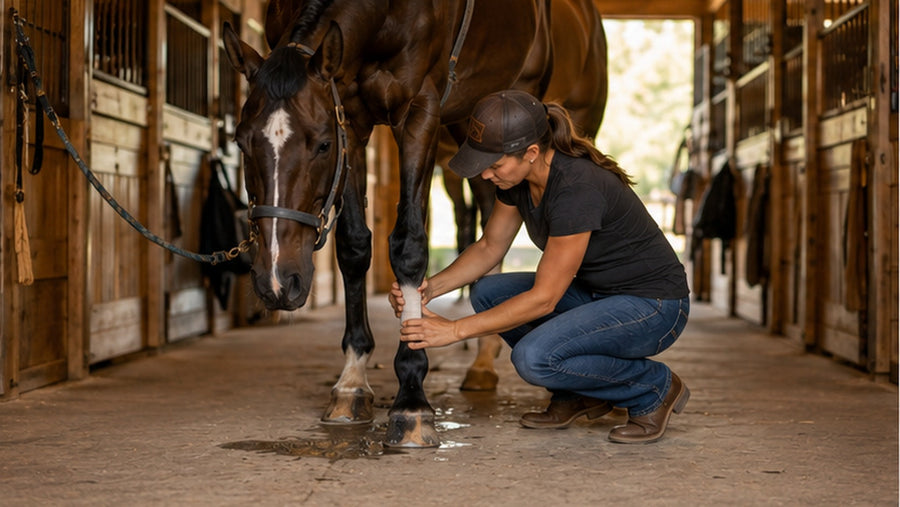
Learn your horse's normal before you need the comparison. Build a practical leg baseline using touch, simple notes, reference photos, digital pulse awareness, and left-to-right checks.
!