Labor Day for Real Riders: The Work Nobody Sees
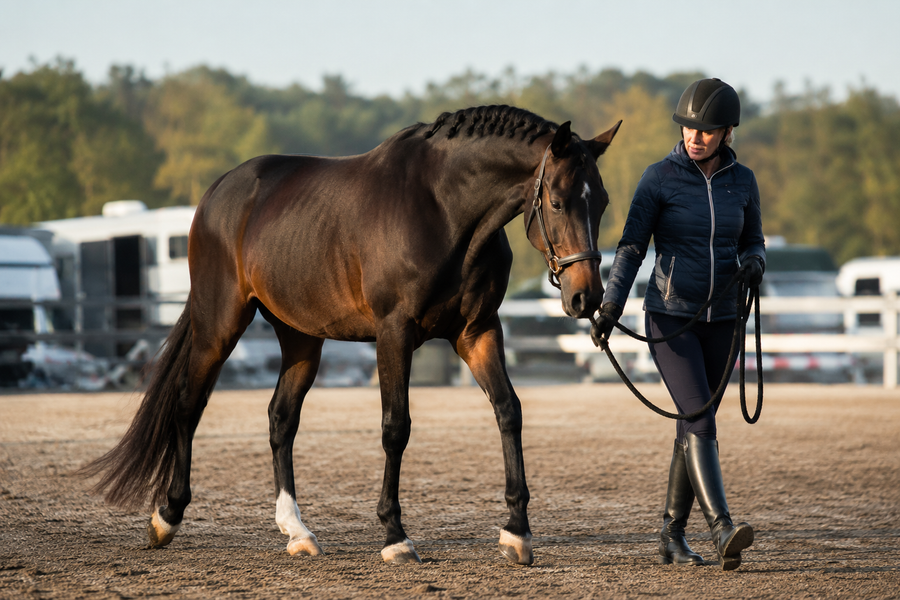
A Labor Day tribute to the unseen work of real riders: early mornings, late nights, hard choices and the daily responsibility of putting the horse first.
Free U.S. shipping at $50+
No code needed.
Shipping details
Quick answer: If a horse suddenly moves away from the mounting block, do not start by making the correction bigger. First check for pain, back sensitivity, lameness, girth or saddle pressure, unsafe footing, and an unbalanced mounting technique. If the horse is comfortable and the tack checks out, rebuild the behavior in small steps: line up, stand, accept weight in the stirrup, accept the rider’s balanced rise, and wait after the rider sits.
A horse that has stood well for months and suddenly swings the hindquarters, backs away, pins the ears, hollows, or rushes off is not giving you the same problem as a green horse that never learned to park. Name the pattern before you train it.
Those details separate anticipation, confusion, environmental stress, rider technique, and possible physical discomfort. They also give your veterinarian, saddle fitter, or trainer something more useful than “he is bad at the block.”
Run your hands over the back, withers, girth area, shoulders, and both sides. Look for heat, swelling, skin damage, flinching, guarding, or a new reaction to grooming. Watch the horse walk and turn on safe level footing. Check the feet, shoes, and legs. Review recent falls, slips, workload changes, hauling, dental concerns, and farrier work.
Stop and call your veterinarian for lameness, marked back pain, swelling, wounds, poor coordination, repeated stumbling, bucking or rearing, a sudden severe behavior change, or anything that makes mounting unsafe.
Our horse back soreness and saddle-fit checklist gives you a more detailed body and tack review.
A saddle can look acceptable while the horse is standing square and still shift, pinch, bridge, or roll when weight enters one stirrup. Check:
A qualified saddle fitter can watch the horse move and assess the saddle with the rider mounted. Do not keep changing pads to compensate for a fit problem you have not identified.
The block should be stable, tall enough to reduce pull on the saddle, and placed on level nonslip footing with room for the horse to stand straight. A rider can improve the moment by staying close to the horse, avoiding a hard pull on the saddle, pushing from the block rather than hanging from the stirrup, clearing the horse’s back with the right leg, and lowering into the seat with control.
Have an experienced helper observe from the opposite side. Video can reveal a twisting saddle, a toe bumping the elbow, a rider landing heavily, or reins that tighten as the rider rises.
Use this only after reasonable comfort and tack concerns have been cleared. Wear a helmet, work in an enclosed safe area, and get qualified help if the horse has bucked, bolted, or reared.
Reward the correct answer early. Drilling twenty repetitions after the horse gets it right can turn the block into another place of pressure.
Liniment cannot correct saddle fit, teach parking, or make an unsafe horse safe to mount. After lameness and acute pain have been ruled out, Draw It Out® 16oz Liniment Gel can fit a label-directed routine for clean, dry, intact skin as part of ordinary post-work muscle and leg care. If the horse reacts during application or the mounting behavior persists, stop guessing and involve the appropriate professional.
No. The cause may be training, anticipation, environment, balance, rider technique, or discomfort. A sudden change or a reaction tied to girthing, stirrup pressure, or rider weight deserves a physical and tack check first.
A competent helper can improve safety and observation, but holding the horse should not be used to overpower a severe reaction. Get professional help when the horse bolts, bucks, rears, or becomes dangerous.
Ground mounting usually creates more sideways pull on the saddle than using a correctly sized block. A stable block and balanced technique generally reduce that leverage.
That pattern points you toward saddle movement, pressure, rider balance, anticipation, or discomfort associated with the mounting motion. Have someone watch or film the moment from the opposite side.
Call a fitter when the saddle shifts, bridges, pinches, contacts the withers or spine, creates uneven pressure clues, or no longer matches the horse’s current shape. Call the veterinarian first when pain or lameness is present. Training belongs after comfort and equipment are reasonably clear.
Educational information only. This article does not diagnose pain, lameness, saddle-fit problems, or behavioral disorders.
A Labor Day tribute to the unseen work of real riders: early mornings, late nights, hard choices and the daily responsibility of putting the horse first.
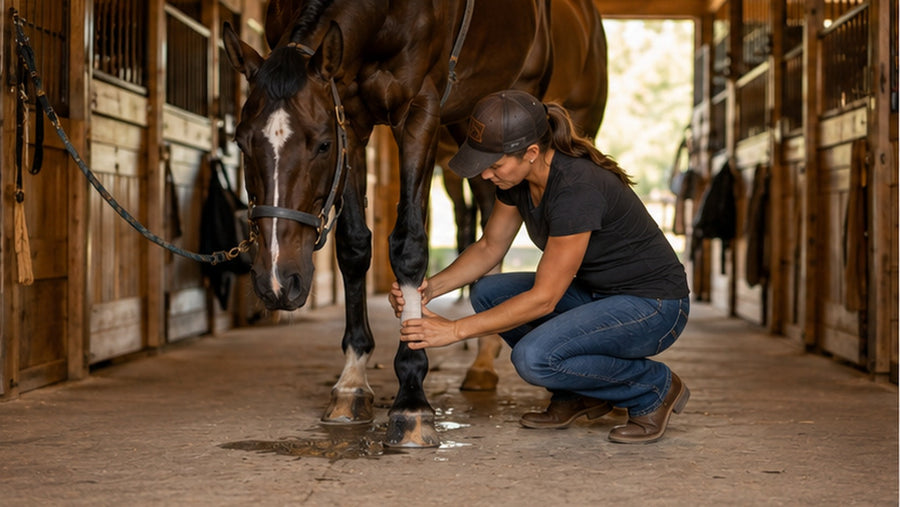
A daily mobility baseline helps riders notice small changes in a mature horse and gives the veterinarian better information than “he seems off.”
Learn your horse's normal before you need the comparison. Build a practical leg baseline using touch, simple notes, reference photos, digital pulse awareness, and left-to-right checks.
!