Quick Answer
The morning after a long haul, check the horse before returning to work. Review first steps, feet, legs, back, water, appetite, manure, temperature when indicated, attitude, and evidence from the trailer. Call the veterinarian for lameness, significant pain or swelling, fever, colic signs, abnormal breathing, weakness, or a horse that is not returning toward normal.
The haul is not over when the trailer is parked. A horse can unload quietly, drink, and still show the physical or digestive cost the next morning. Travel belongs in the workload and recovery plan.
Watch Before You Handle
Notice posture in the stall or paddock, interest in feed, water, manure, and willingness to move. A horse that is dull, anxious, tucked up, shifting weight, or standing unusually needs a closer look before the routine begins.
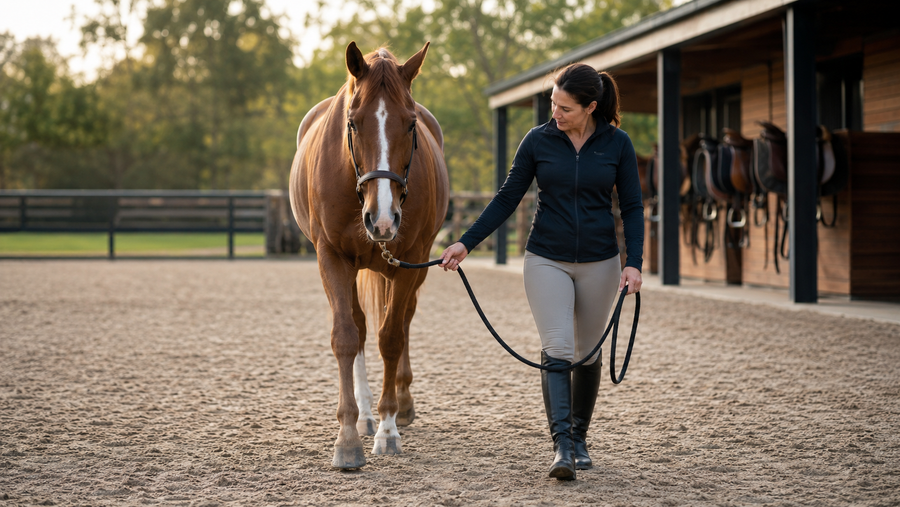
Check the First Steps
Observe straight steps and turns only when safe. Compare stride length, symmetry, coordination, and willingness with the horse’s normal. Do not use lunging or a hard warm-up to decide whether the horse will loosen.
See them before exercise or excitement changes the picture.
Run a Head-to-Hoof Check
- Feet, shoes, hoof wall, heat, and digital pulses.
- Legs for filling, wounds, heat, and shipping-gear marks.
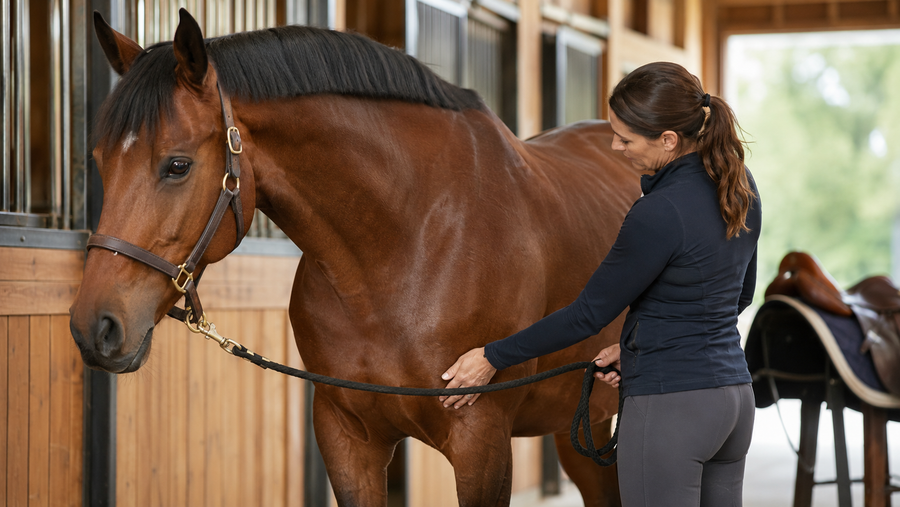
- Back, withers, shoulders, neck, and girth area for guarding or rubs.
- Water, appetite, manure, attitude, breathing, and temperature when appropriate.
Read the Trailer
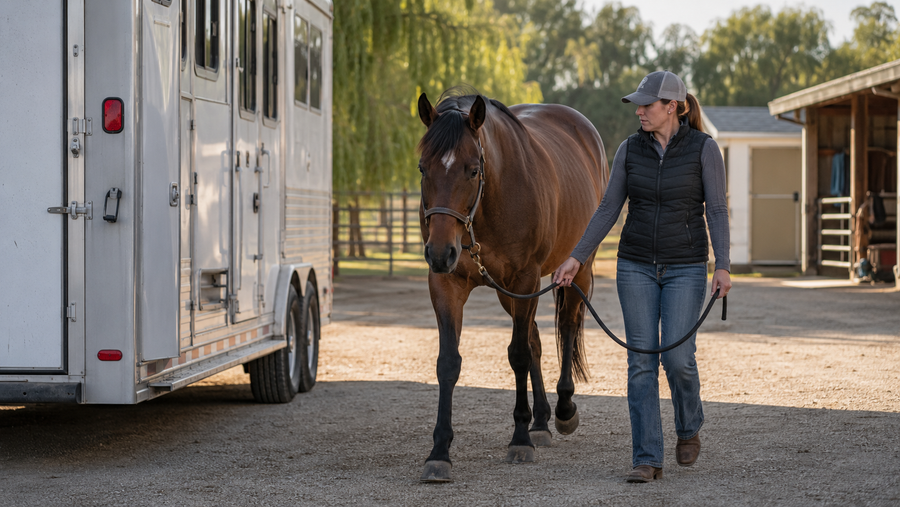
Disturbed bedding, manure placement, scuff marks, shifted mats, or damaged partitions may show that the horse scrambled or braced. Record trip time, stops, temperature, ventilation, water offered, and road conditions.
Decide the Day From the Horse
If the horse is fully normal, an easy return may be reasonable. If the horse is stiff, sore, dull, swollen, or abnormal, change the plan and seek help. Fuel money, entry fees, and a lesson schedule do not make the horse ready.
Where Draw It Out® Fits
An external Draw It Out® liniment may fit a familiar, label-directed post-haul routine for an appropriate horse after red flags are addressed. It does not diagnose travel soreness or replace veterinary, farrier, tack, and trailer evaluation.
FAQ
What should I check the day after hauling?
Check first steps, feet, legs, back, water, appetite, manure, attitude, temperature when indicated, and recovery.
Should I ride hard after a long haul?
Not until the horse has shown normal movement, hydration, appetite, manure, and attitude.
When should I call the veterinarian?
Call for lameness, significant pain or swelling, fever, colic signs, abnormal breathing, weakness, or incomplete recovery.
General riding education only. This article does not diagnose or treat a horse and does not replace veterinary advice.