Real Rider Resource
The Feed Room Board: Track Before Supplementing
Before adding another horse supplement, write down what actually changed. A feed-room board turns memory into a shared record of water, manure, appetite, feed, workload, hauling, movement, medications, and response. It will not diagnose a problem, but it can show whether the barn is reacting to a pattern or to one uncertain moment.
Quick answer: Use a feed-room board to record the horse's normal baseline, the exact concern, recent changes, what product or management step was started, when it began, and what outcome will be checked. Change one variable at a time when it is safe, follow labels, and involve a veterinarian or equine nutrition professional for illness signs, major ration changes, medications, or persistent problems.
Build a board the whole barn can read
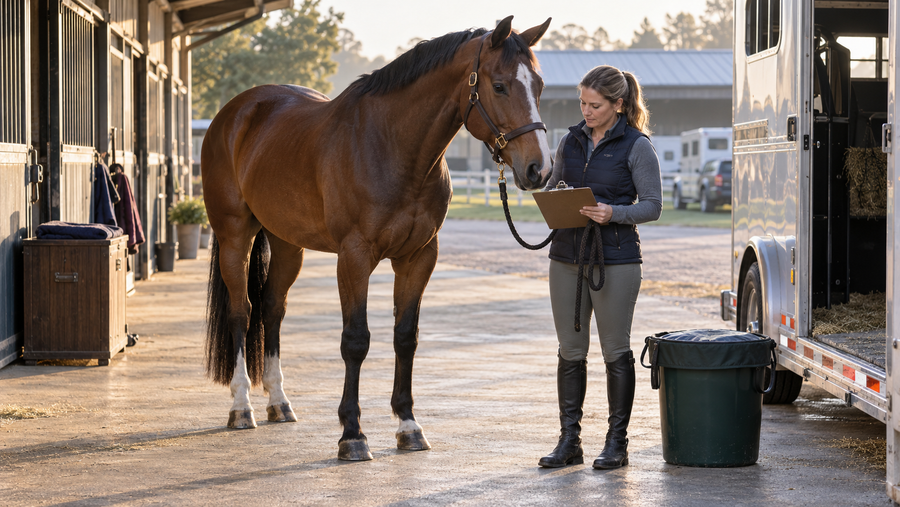
Put the board where feed and care decisions happen. Use a whiteboard, clipboard, or shared digital form, but keep the fields consistent. Every entry needs a date, horse, observer, finding, action, and next check. Avoid vague notes such as off or better. Record what was seen and measured.
- Water offered and water actually consumed when measurable
- Manure amount, moisture, frequency, and meaningful change
- Feed and forage offered, refused, or changed
- Appetite, attitude, temperature concern, and normal behavior
- Workload, turnout, hauling, heat, humidity, and sweat
- Movement, stiffness, swelling, feet, and recovery time
- Medications, supplements, dose, lot, start date, and person responsible
Record normal before chasing improvement
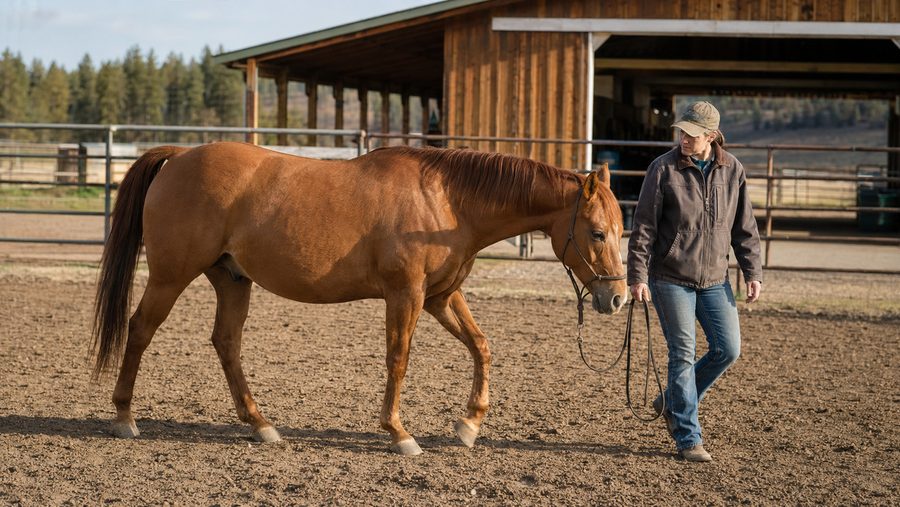
A useful board needs a baseline. For several ordinary days, record the horse's usual water behavior, manure, feed intake, turnout, workload, and movement. Normal varies by horse and management. A horse that cleans up every meal and a slow eater should not be judged by the same expectation without context.
Baseline also prevents the barn from crediting every good day to the newest product. Weather, work, shoeing, turnout, forage, travel, rest, and rider changes can all affect the outcome. Notes help identify those confounders before a conclusion hardens into barn folklore.
Define the question before choosing a supplement
Write one sentence describing the decision. Is the barn trying to support hydration during a known workload, fill a verified nutrient gap, simplify an existing ration, or respond to a new clinical sign? A supplement should have a defined job and a reason it fits the full diet and medical picture.
- Describe the concern without naming a product.
- List recent changes in feed, forage, work, weather, travel, turnout, and health.
- Review the label, serving, ingredients, and overlap with the current ration.
- Set a start date and a realistic review date.
- Choose the observations that will show benefit, no change, or a reason to stop.
The horse supplement red-flags guide helps separate a shopping decision from a situation that needs professional evaluation.
Change one variable when possible
Starting several supplements, changing forage, increasing work, and altering turnout at the same time makes the result hard to interpret. When the horse is stable and professional guidance allows it, change one variable and keep the rest of the routine consistent. Follow the label and do not increase servings because a response is not immediate.
Record missed servings and refusals honestly. Note whether the product was stored correctly and whether different staff measured it the same way. If a veterinarian or nutritionist directs multiple changes, document the complete plan rather than trying to isolate variables against that advice.
Use a scheduled review instead of endless adding
Set a review date when the plan begins. Compare the horse with the written baseline and the stated goal. Continue only when the product still fits the ration, budget, label, and observed need. Stop or seek help when the horse develops an adverse response, the concern worsens, or the goal was never clear.
Review the entire shelf every few months. Remove expired products, duplicates, and items no current horse needs. Confirm that medications and supplements are not being confused. Keep emergency instructions and veterinary contacts visible. The hydration and mobility checklist can provide consistent observations without turning the board into a product pitch.
Know what the board cannot do
The board is evidence for a conversation, not a diagnosis. It cannot determine why a horse has colic signs, loses weight, drinks abnormally, develops diarrhea, becomes lame, stops eating, or changes behavior. It cannot make an unbalanced ration complete without analysis.
Share the record with the veterinarian, nutritionist, farrier, trainer, or barn manager as appropriate. Clean dates and observations can help those professionals ask better questions and see the timeline faster.
Red flags that change the plan
- Not eating, not drinking, colic signs, diarrhea, fever, depression, or a major manure change.
- Rapid weight loss, abnormal thirst or urination, weakness, collapse, or behavior that is not normal.
- Lameness, heat, swelling, strong digital pulse, severe stiffness, or a sudden movement change.
- A reaction after starting a supplement, including swelling, hives, breathing change, agitation, or digestive upset.
- A ration change for a horse with metabolic, kidney, liver, gastrointestinal, breeding, or medication concerns without professional guidance.
Frequently asked questions
What should go on a horse feed-room board?
Track water, manure, appetite, feed and forage, workload, turnout, hauling, weather, movement, medications, supplements, findings, actions, and the next check.
How long should I track before adding a supplement?
Establish a useful baseline when the horse is stable, then follow professional and label guidance. Do not delay care for illness or urgent changes just to collect more notes.
Can I start two supplements at once?
Multiple changes make results harder to interpret. Change one variable when safe, unless a veterinarian or nutrition professional directs a combined plan.
How do I know whether a supplement is working?
Define the intended outcome before starting, choose observable measures, record consistency, and compare at a scheduled review rather than relying on memory.
When should I stop tracking and call the veterinarian?
Call for illness signs, appetite or water changes, colic, diarrhea, fever, lameness, severe pain, weakness, an adverse reaction, or a persistent unexplained problem.
Educational note: This article provides general information and does not replace veterinary diagnosis, farrier care, saddle assessment, nutrition advice, or qualified training help.