Horse Stumbles at the Walk: What Riders Should Record
One trip can happen. A new or repeated stumble is a reason to stop, observe, and record the pattern. Use this rider checklist before the vet or farrier...
Free U.S. shipping at $50+
No code needed.
Shipping details
Quick answer: When a horse suddenly resists bending one direction, stop trying to fix the problem with smaller circles and stronger aids. Check whether the change is new, compare straight-line movement, review rider balance, saddle slip, hoof care, dental timing, and recent workload, then involve your veterinarian when resistance is repeatable or paired with uneven movement, pain behavior, swelling, stumbling, or performance loss.
Every horse has a more organized side. A clear change from the horse's normal, or a reaction that grows as the circle gets smaller, belongs in the observation lane before it belongs in the training lane.
Before changing bits or adding leverage, check the simple variables:
Saddle slip can be caused by fit, horse shape, rider asymmetry, or movement asymmetry. Centering the saddle again does not explain why it moved. When the pattern repeats, involve a qualified saddle fitter and veterinarian rather than stacking pads or tightening the girth.
Record what changed around the time the resistance appeared:
The American College of Veterinary Surgeons notes that lameness can show as a gait, stance, performance, behavior, or attitude change and can come from pain, a mechanical problem, or a neurologic condition. Their equine lameness overview explains why subtle performance changes deserve evaluation.
Call your veterinarian promptly for:
Dismount and keep the situation simple when the horse feels unsafe. A difficult bend is not worth a fall.
Write down the direction, gait, surface, circle size, time in the ride, tack, recent work, and whether the issue appears in hand. If safe and comfortable, film straight movement and a large circle without repeating a painful response. Our trot-up video guide and symptom timeline can help.
Follow the veterinarian's, farrier's, saddle fitter's, and instructor's guidance. When the horse is cleared, rebuild work gradually. Use large lines, frequent changes of direction, and simple transitions before asking for more collection or lateral work. Change one variable at a time so you can tell what helped.
After pain, tack, hoof, and medical causes have been evaluated, Draw It Out® 16oz Horse Liniment Gel may fit into a normal post-work body-care routine. The ready-to-use gel is odorless, colorless, menthol-free, and made for targeted external use according to the current label. It is not a treatment for one-sided movement and should not be used to delay an examination. Competitors should confirm current rules and event guidance before use.
A mild preference is common. A sudden, strong, worsening, or painful change is different and deserves a comfort, tack, hoof, rider, and veterinary review.
Only if the horse is safe, sound enough, and your veterinarian or experienced professional considers it appropriate. Circles can make some problems more obvious and can also increase strain.
Yes. Uneven weight, rein contact, leg use, strength, or mobility can influence the horse. Rider asymmetry can also exist alongside a horse problem, so avoid treating either explanation as automatic.
No. A topical routine does not correct saddle fit, hoof balance, training, pain, or neurologic disease. Use it only as part of normal care after the cause has been assessed.
One trip can happen. A new or repeated stumble is a reason to stop, observe, and record the pattern. Use this rider checklist before the vet or farrier...
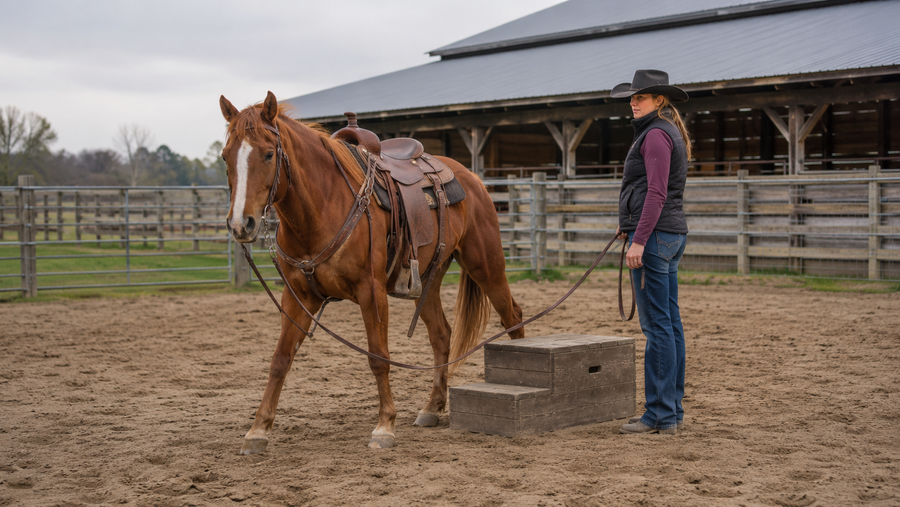
If a horse suddenly steps away from the mounting block, check comfort, tack, footing, rider technique, and the exact pattern before calling it disobedience.
Anthrax is rare but can progress rapidly in horses. Learn who is at risk, what signs require urgent veterinary action, why suspected carcasses should be left alone, and...
!