How to Film a Horse Trot-Up Video Your Veterinarian Can Use
Film a clearer horse trot-up video with safe footing, steady angles, full-body framing, a practical shot list, and useful notes for your veterinarian.
Free U.S. shipping at $50+
No code needed.
Shipping details
Short answer: “Stocking up” is a barn term for lower-leg filling that can appear after a horse stands for a long period. When the filling is familiar, fairly even, cool, not painful, and improves with comfortable movement, restricted activity may be part of the picture. One-sided swelling, heat, pain, a wound, fever, lameness, dullness, rapid worsening, or filling that does not follow the horse's normal pattern needs veterinary guidance.
The barn rule
“Stocked up” describes what the leg looks like. It does not diagnose why. Compare the legs, the horse's movement, and the horse's overall attitude before you ride, wrap, hose, or apply anything.
Horse people use “stocked up” to describe soft filling or puffiness in the lower limbs, often after stall confinement, hauling, bad weather, or another period with less movement than usual. The University of Minnesota notes that confinement and limited exercise can lead to lower-leg swelling.
That explanation is useful, but it is not permission to call every swollen leg routine stocking up. Injury, infection, skin disease, hoof pain, lymphatic problems, systemic illness, and other conditions can also produce leg swelling. The pattern is what helps you decide whether the morning looks familiar or different.
| What you find | Why it matters | Practical next step |
|---|---|---|
| Both hind legs or all four legs look similarly filled | A fairly even pattern can fit post-standing filling, especially when familiar for that horse | Continue the full check before deciding |
| One leg is clearly different | A one-sided change raises a different set of questions | Stop work and contact your veterinarian when new or significant |
| The area is hot, painful, firm, rapidly increasing, or paired with a wound | This does not match a quiet routine pattern | Call your veterinarian |
| The horse is lame, reluctant to move, dull, feverish, or off feed | The leg cannot be separated from the whole horse | Treat it as a veterinary question |
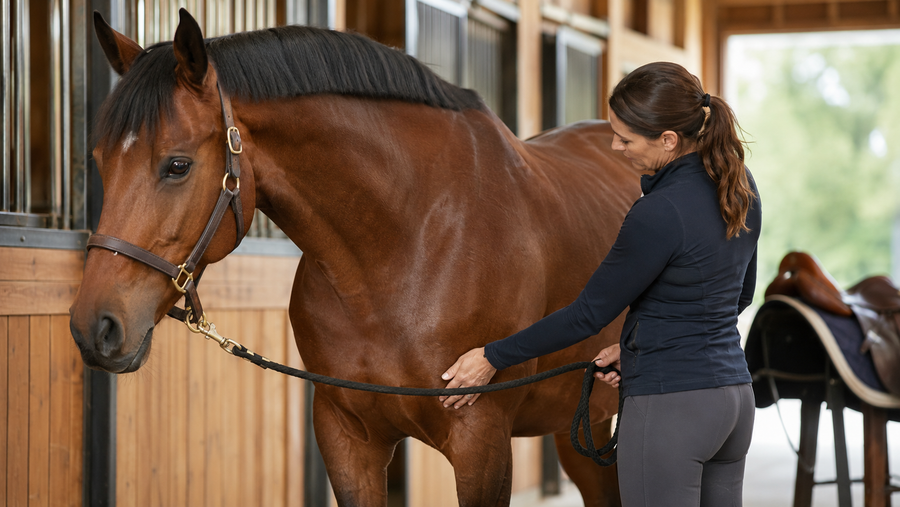
Notice posture, weight bearing, appetite, manure, breathing, and attitude. The horse who is bright, eating, and standing evenly tells a different story than the horse who is dull, guarding a leg, or refusing to move.
Look from the front, side, and behind. Compare height, location, and shape of the filling. Do not rely on memory alone. Photos from the same angle can help you compare mornings, hauling days, and workload changes.
Feel matching areas in the same order. Compare temperature, softness, firmness, skin condition, moisture, and sensitivity. A daily baseline makes this far more useful. If you have not built one yet, use the horse leg baseline guide.
Look for a small cut, puncture, crust, rub, boot mark, wrap line, mud irritation, or drainage. The University of Minnesota advises contacting a veterinarian when a leg becomes hot, swollen, and painful, because those signs can reflect a more serious skin infection.
Check for a packed hoof, stone, nail problem, unusual warmth, or a stronger-than-normal digital pulse if you are trained to assess one. Lower-leg swelling and hoof pain can appear in the same morning, and the foot deserves its own check.
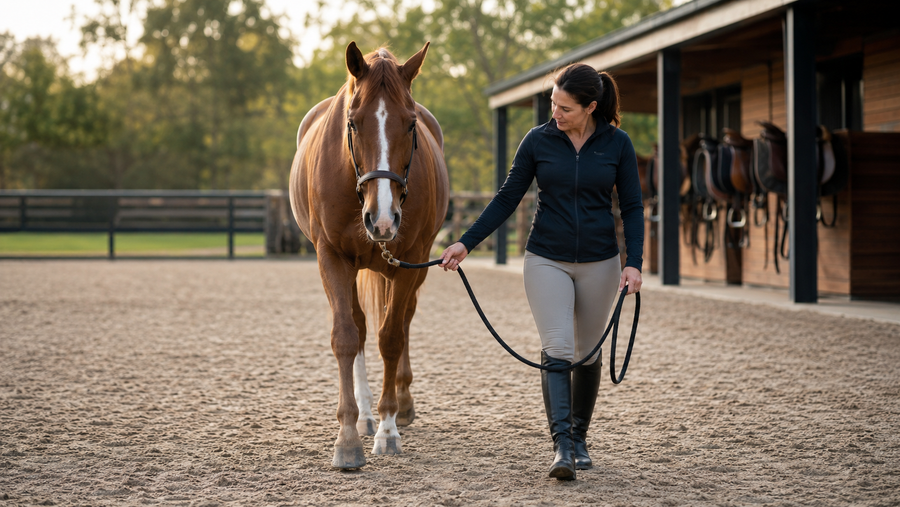
If the horse is comfortable enough to move and has no veterinary restriction, hand-walk quietly on a safe, level surface. Watch straight lines and turns. Texas A&M veterinary guidance recommends stopping exercise when a horse is limping or a leg is swollen and getting professional input.
Do not decide from the first glance. Compare the legs and movement again. Familiar, soft filling that reduces with comfortable movement is useful information. Filling that stays unchanged, becomes hotter, grows, or is paired with altered movement is also useful information, and it points away from riding through it.
Turnout or a brief hand-walk may fit when the horse is comfortable, the pattern is familiar, the filling is fairly even, and there are no warning signs or movement restrictions. Movement should be calm and purposeful, not a test ride. If you are unsure whether the horse should move, call your veterinarian first.
Record what happens. “Improved after movement” is better information than “looked fine later.” Note the time, which legs were involved, whether heat or tenderness was present, and how the horse walked before and after.
These signs do not tell you the diagnosis. They tell you the problem belongs with a veterinarian.
Standing wraps are not a casual answer to an unexplained swollen leg. Uneven pressure, poor padding, trapped debris, wet skin, and missed rechecks can create new problems. Wrap only when the horse's situation, your skill, and the veterinarian's or trainer's plan support it.
Before reaching for a bandage, read Horse Leg Wrapping: What to Check Before You Bandage. A wrap should never be used to make a leg look normal enough to work.
After the horse has been checked, is moving normally, and the situation matches a familiar non-painful post-standing routine, a label-directed topical may fit as one step in the barn plan. Draw It Out® 16oz Liniment Gel is a ready-to-use, stay-put format made without menthol, camphor, capsaicin, alcohol, or witch hazel. It is designed for routine use and can be used under properly fitted pads, boots, and wraps when used according to the current label.
The gel does not diagnose the cause of filling and should not be used to postpone a veterinary call. Apply enough to cover the intended area evenly, then keep observing the horse. Use the thin-layer liniment guide for the application standard.
Choose the 16oz Liniment Gel for a controlled ready-to-use topical step after the horse has checked out normally. If the concern does not fit this lane, use the Draw It Out® Solution Finder or contact your veterinarian.
It can be a familiar response to reduced movement in some horses, but “stocking up” is a description, not a diagnosis. New, one-sided, hot, painful, rapidly worsening, or persistent swelling should be evaluated.
Familiar post-standing filling may reduce with comfortable movement. Only move the horse when it is safe, the horse is not lame or painful, and no veterinarian has restricted exercise.
Do not decide from appearance alone. Check the horse, the legs, the feet, and the movement. If swelling is new, significant, one-sided, hot, painful, or paired with uneven movement, stop and call your veterinarian.
Cooling may be used in some leg-care plans, but unexplained swelling should be assessed before you choose a treatment. Ask your veterinarian when the pattern is new or does not match the horse's baseline.
A horse-labeled liniment may fit a familiar routine after the horse has checked out normally. Follow the product label. Do not use liniment to mask heat, pain, wounds, lameness, or worsening swelling.
Educational horse-care guidance only. This article does not diagnose the cause of limb swelling and does not replace veterinary examination or treatment.
Film a clearer horse trot-up video with safe footing, steady angles, full-body framing, a practical shot list, and useful notes for your veterinarian.
A rider-first guide to shoulder tightness, reduced reach, tack restriction, feet, neck, fatigue, safety checks, professional assessment, and return to work.
A short stride after work can reflect feet, legs, back, tack, footing, fatigue, or pain. Use this check-first routine before deciding on the next ride.
!