Real Rider Resource
A Simple Horse Care Routine That Actually Gets Done
The best horse-care routine is not the longest one. It is the shortest routine that reliably catches meaningful change, covers the horse's daily needs, and still happens when the barn is busy. Build a clear minimum for ordinary days, then add detail only when workload, weather, travel, age, or a specific horse requires it.
Quick answer: A simple horse-care routine should check attitude, appetite, water, manure, first steps, feet, legs, skin, tack contact areas, and recovery after work. Assign who does each check, keep the same order, record anything different, and know which findings change the plan from normal care to a veterinarian, farrier, or other professional.
Start with the minimum routine every horse receives
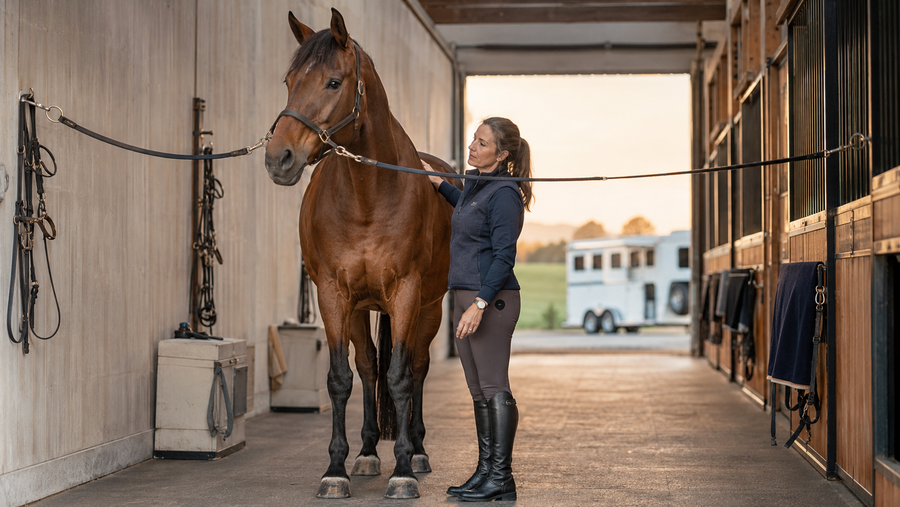
Consistency begins with a small nonnegotiable sequence. Look at the horse before the day becomes a ride, turnout, lesson, or chore list. Check eyes and attitude, confirm feed and water behavior, look at manure, watch the first steps, pick the feet, and compare the legs. Run a hand over common rub and tack areas when appropriate.
The routine should take only a few focused minutes. It is not a full examination and does not replace professional care. Its value comes from repetition. When the same person checks the same horse in the same order, small changes become easier to notice.
- Attitude, appetite, water interest, and normal manure pattern
- First steps, turning, and willingness to move
- Feet, shoes, digital pulse when relevant, and packed debris
- Leg heat, filling, cuts, and left-to-right differences
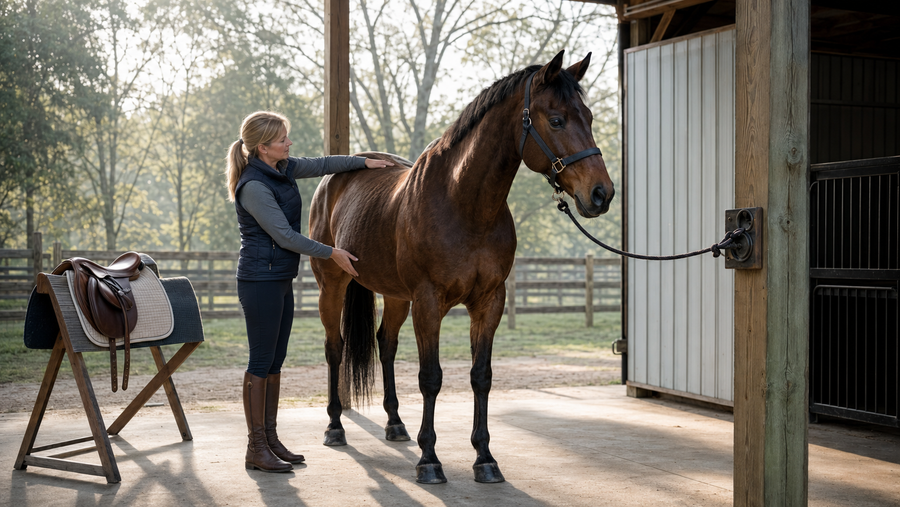
- Skin, back, withers, girth area, and other contact points
Add a before-work and after-work loop
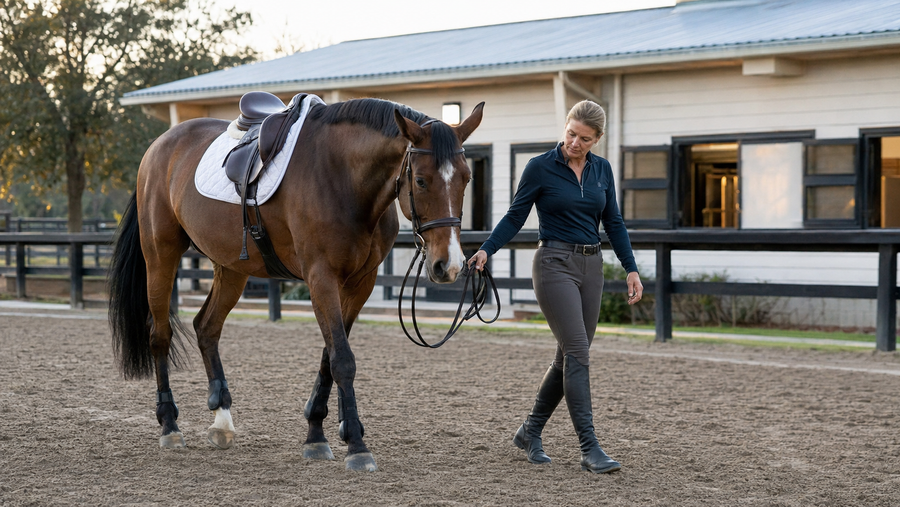
Before work, confirm the horse is appropriate for the planned workload. Check tack condition and fit, footing, temperature, recent hauling, and whether yesterday's effort changed today's baseline. A warm-up is part of the check, not permission to force abnormal movement until it looks better.
After work, walk until breathing and attitude move toward normal. Remove boots, wraps, and tack before judging the areas underneath. Check legs, feet, back, girth area, sweat pattern, rubs, water interest, and behavior. Recheck later after a hard, hot, long, or unfamiliar session. The daily horse leg-care routine provides a deeper leg-specific path without turning this general system into a duplicate guide.
Design the routine for the busiest day
A routine that works only when the barn is quiet is not a system. Write a five-minute version for ordinary busy days. Put tools where the check occurs. Keep a hoof pick at the cross ties, a clean towel near the wash rack, and a note board or phone form where staff can record changes immediately.
- Use one order. Horse, movement, feet, legs, body, tack, then plan.
- Assign ownership. Name who checks water, feed, turnout, medications, and the post-work recheck.
- Define the handoff. A note must reach the person making the ride or care decision.
- Keep the record short. Date, finding, side or location, action, and next check.
- Close the loop. Confirm whether the horse returned to baseline or needs help.
Use weekly maintenance to prevent daily failures
Once a week, restock and clean the system. Wash wraps and towels, inspect bottles, check expiration dates, clean buckets, review tack, confirm emergency contacts, and replace missing first-aid supplies. Review each horse's recent notes for repeated changes that were easy to dismiss one day at a time.
Seasonal and travel adjustments belong here. Heat may require more cooling and water observation. Mud may increase foot and skin checks. Cold can change water intake and warm-up time. Hauling adds trailer rubs, stocking up, respiratory observation, and post-unload checks. Add only the steps that match the current job.
Put products after the observation
A product shelf is not the routine. Start with the horse, decide whether the finding belongs to normal care, and then choose a label-matched product if appropriate. A liniment gel may fit routine external post-work support when the horse is moving normally and the skin is suitable. It does not replace evaluation for lameness, heat, swelling, wounds, hoof pain, fever, or abnormal behavior.
Use the Solution Finder when a normal-care concern needs product routing. Use the Horse Health Library when the observation needs education. Use a professional when the finding is clinical, persistent, unexplained, or unsafe.
Red flags that change the plan
- Lameness, non-weight-bearing behavior, weakness, stumbling, or a sudden gait change.
- Heat, rapid swelling, a strong digital pulse, puncture concern, drainage, or an open wound.
- Fever, abnormal breathing, colic signs, not drinking, appetite loss, or abnormal manure.
- Severe pain, dangerous behavior, depression, or a horse that is not acting like itself.
- A repeated small change that is becoming more frequent or taking longer to resolve.
Frequently asked questions
How long should a daily horse-care check take?
A focused baseline check can take a few minutes. The goal is consistency and comparison, not rushing past a concern or performing a full examination.
What should I write down?
Record the date, exact finding, side or location, workload, relevant changes, action taken, and when the horse will be checked again.
Should every horse have the same routine?
Every horse can share a minimum baseline, but age, workload, medical history, travel, weather, turnout, and management may require added steps.
Where do horse-care products belong?
After observation and safety decisions. Choose a product only when the concern fits normal care and the label matches the intended use.
When should the routine stop and a professional take over?
Stop normal care for lameness, significant heat or swelling, wounds, hoof pain, illness signs, severe pain, dangerous behavior, or a persistent unexplained change.
Educational note: This article provides general information and does not replace veterinary diagnosis, farrier care, saddle assessment, nutrition advice, or qualified training help.