Draw It Out® Horse Health Care News · July 2, 2026 · Jon
Horse Stocked Up Overnight? What to Check Before You Ride
A stocked-up leg can be a simple standing-and-management clue, or it can be the first sign that your horse needs a harder stop. The difference is in the check you do before the saddle ever hits the pad.
Short answer
If your horse looks stocked up overnight, do not just saddle up and hope it walks off. First check whether the swelling is symmetrical or one-sided, whether the leg is hot or painful, whether the horse is lame, whether there are wounds or scabs, whether the digital pulse feels stronger than normal, and whether the swelling changes with calm movement. Skip the ride and call your veterinarian when swelling is sudden, severe, hot, painful, one-sided, tied to a wound, paired with lameness, or not normal for that horse.
Some barn mornings start with a bad little feeling. You walk down the aisle, glance at your horse’s legs, and something is fuller than it was yesterday. Maybe both hind legs look puffy around the fetlocks. Maybe one leg looks thicker below the knee. Maybe your horse is bright, eating, and acting normal, but the legs do not match the horse you turned out or put up the night before.
Horse people often call that “stocking up.” The phrase is useful, but it can also make riders too casual. A stocked-up horse does not need panic. It does need a real check. The point is not to diagnose from the aisle. The point is to separate a routine barn-management clue from a reason to stop, document, and call the vet.
That is where good horsemanship lives. Not in pretending every puffy leg is a crisis. Not in pretending every puffy leg is nothing. In looking at the horse in front of you and making a clean next decision.
What “stocked up” usually means in plain barn language
When riders say a horse is stocked up, they usually mean the lower legs look full, puffy, or swollen after a period of standing or reduced movement. It is commonly noticed in the morning after stall time, after hauling, after weather changes, after a hard workday, during heat, or after a routine disruption.
That does not make it harmless by default. It just gives you a starting point. The real question is not, “Is this stocking up?” The better question is, “Is this a soft, even, movement-related fullness, or is this heat, pain, lameness, injury, infection, hoof trouble, or something that needs professional eyes?”
The rider-first rule
If a horse’s legs look different today, your first job is observation. Product comes later. Riding comes last. Look, compare, touch, walk, reassess, and decide.
Step 1: Stand back before you put hands on the leg
Do not start by squeezing the swollen area. Start by looking. Stand the horse on level, safe footing and compare all four legs. Look from the front, the side, and behind. Make note of where the swelling sits and whether the horse is standing normally.
More routine-looking
- Soft, even fullness in both hind legs.
- Horse is bright, eating, and comfortable.
- No obvious heat, pain, wounds, or lameness.
- Recent stall time, hauling, reduced turnout, or weather shift.
More concerning
- One leg is clearly different from the others.
- Swelling is hot, tight, painful, or rapidly changing.
- Horse is lame, dull, unwilling to move, or not eating.
- There is a wound, puncture, scabbed skin, or strong digital pulse.
Symmetry matters. Two softly filled hind legs after a quiet night in a stall tell a different story than one hot front leg with a horse that is short-striding. One is often a management conversation. The other may be a veterinary conversation before you ever think about tacking up.
Step 2: Run your hands with purpose
Use both hands and compare left to right. Start above the swelling and work down. Feel for heat, tenderness, tightness, scratches, scabs, crusting, cuts, punctures, rubs, or any spot the horse tries to guard. Check the tendons, fetlock area, pastern, heel bulbs, coronet band, and hoof.
Do not mash on the leg trying to prove a point. Do not aggressively rub, thump, flex, or force a reaction. A good check is steady and respectful. You are gathering information, not negotiating with the horse’s body.
Step 3: Check the foot, not just the leg
Lower-leg swelling can make riders stare at the cannon bone and miss the foot. Pick the hoof. Look for a shifted shoe, missing nail, stone, sole bruise, thrush odor, crack, abscess-looking drainage, heat at the hoof capsule, or a stronger-than-normal digital pulse. A leg can look puffy because the horse is compensating for something lower down.
If you find hoof soreness, a sprung shoe, a puncture concern, or a horse that does not want to load the limb normally, stop the riding plan. That is not a “walk it off” moment.
Step 4: Watch the first few steps
If the horse is calm, bright, and not showing obvious pain, watch a few easy steps on safe footing. This is not a longe session. This is not a test of toughness. Walk forward, turn both directions, and stop. Look for shortness, toe dragging, uneven tracking, reluctance, head bob, guarding, stumbling, or a horse that feels mentally wrong.
If the horse is lame, uneven, unwilling, or worse after movement, the ride is done. If the horse walks comfortably and the swelling begins to soften with quiet movement, keep evaluating. Do not let one better-looking lap talk you into ignoring the rest of the horse.
Ride, wait, or call: a practical decision table
| What you see | What it usually means for the ride | Next move |
|---|---|---|
| Soft, even swelling in both hind legs; horse is bright, sound, and comfortable. | Possible routine stocking up after standing or reduced movement. | Hand-walk, reassess, adjust turnout or movement, and keep notes. Ride only if the horse remains fully sound and normal. |
| One leg is swollen, but the horse is not obviously lame. | Needs more caution because one-sided swelling can point to a localized problem. | Check carefully for heat, wounds, pain, foot trouble, and changes during walking. When in doubt, skip the ride and call your vet. |
| Swelling is hot, painful, sudden, severe, or tied to a wound. | Do not treat this like normal stocking up. | Do not ride. Call your veterinarian. |
| Horse is lame, dull, off feed, reluctant to bear weight, or not acting normal. | The leg is not the only thing talking. | Stop. Call your veterinarian and document what changed. |
Red flags that deserve a vet call before riding
Call your veterinarian before riding when swelling is sudden, severe, hot, painful, one-sided, paired with lameness, connected to a cut or puncture, associated with fever or depression, or not normal for that horse. Also call if the horse has a strong digital pulse, is not bearing weight normally, has swelling that climbs quickly, or if your gut says something is off.
There is no prize for being casual with a leg that is trying to tell you something. Good riders are not dramatic. They are observant.
Common causes to think through without guessing
You are not trying to diagnose the horse from a blog post. You are trying to build a clean picture for your next decision. Think through the last twenty-four to forty-eight hours.
- Stall time: Did the horse stand longer than normal?
- Turnout: Was turnout reduced because of heat, mud, weather, bugs, or scheduling?
- Workload: Was the horse worked harder, longer, deeper, faster, or differently than usual?
- Hauling: Did the horse ship, stand tied, or spend longer in the trailer?
- Footing: Was the arena deep, slick, hard, rocky, or uneven?
- Skin: Are there scratches, scabs, bug bites, rubs, or pastern irritation?
- Hoof: Is there a shoe, sole, frog, heel, or pulse clue?
- Weather: Did heat, humidity, cold, or storms change the horse’s routine?
Patterns matter. A horse that stocks up after every long stall night may need a management adjustment. A horse that suddenly stocks up in one leg after never doing it before needs more caution.
What to write down
Notes make you better, and they make your vet’s job easier. Write down the date, which legs are involved, where the swelling sits, whether it is hot or painful, whether the horse is sound, what changed with walking, recent work or hauling, and any product or wrap used. Take clear photos from the same angle if the swelling is noticeable.
Simple message to your vet
“This morning I noticed swelling in [leg/location]. It is [one-sided/both hind/both front/all four], [hot/not hot], [painful/not painful], and the horse is [sound/lame/short-strided]. There is [a wound/no wound]. It changed [this way] after [minutes] of hand-walking. Photos attached. Do you want to see this before I ride?”
Where Draw It Out® fits in a stocked-up-leg routine
Draw It Out® products belong after the check, not before it. They are part of a thoughtful care routine, not a way to talk yourself into riding a questionable horse.
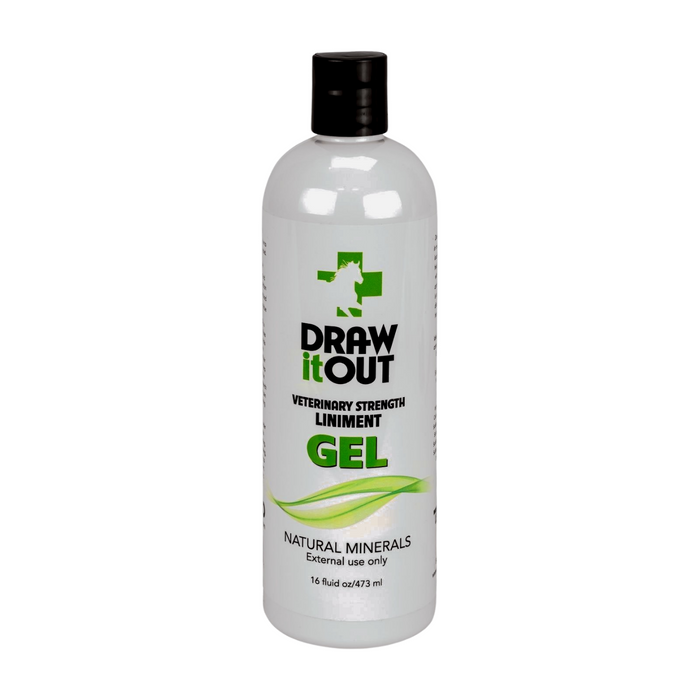
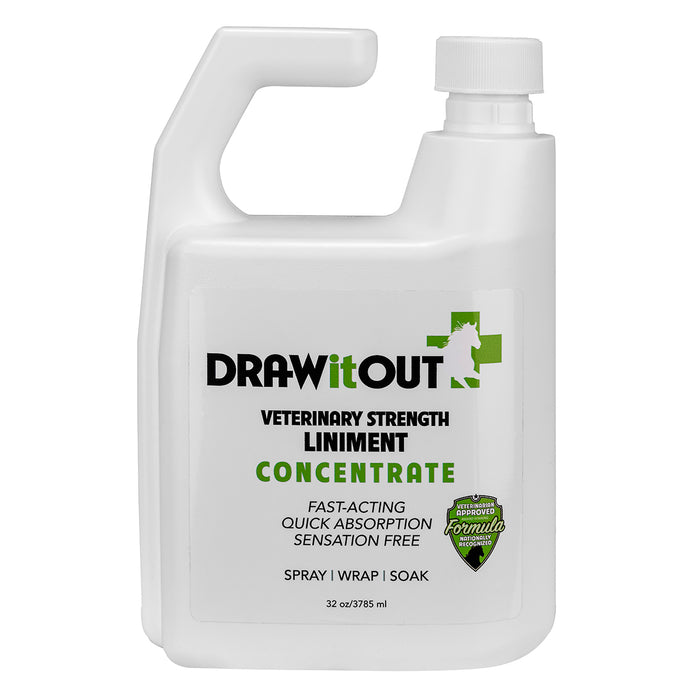
If the horse is sound, comfortable, and you are using product as part of a normal leg-care or post-work routine, Draw It Out® 16oz Liniment Gel is the targeted shelf bottle for legs, backs, shoulders, hips, and daily barn use. For barns that prefer a mix-to-use routine for spray bottles, sponge work, wash-rack coverage, or larger areas, Draw It Out® 32oz Horse Liniment Concentrate gives you more flexibility.
If you are dealing with surface-level skin irritation around the lower leg or pastern area, check the skin first and use only products that fit the label and the condition of the skin. Draw It Out® Rapid Relief Restorative Cream can fit a barn shelf for intact-skin support, while Silver Hoof EQ Therapy® belongs in the hoof-and-skin lane when the concern is around hoof, heel, pastern, or lower-leg care. Do not put product into deep wounds, punctures, eyes, or anything that needs veterinary care.
One more straight answer: do not use liniment, cream, boots, or wraps to hide a problem. If the horse is lame, hot, painful, rapidly swelling, or not acting right, the product is not the decision-maker. Your vet is.
Internal links for deeper checks
If this is part of a broader pattern, these related Draw It Out® resources can help you sort the next question without cannibalizing the decision in front of you:
- Draw It Out® Safety Guide for use rules, red flags, and when product should not replace professional care.
- Draw It Out® Ingredients & Formula Philosophy for what is, and is not, in the formula lane.
- Horse Kicked by Another Horse? What to Check Before You Ride when swelling follows a known impact.
- Horse Slipped in Pasture? What to Check Before You Ride when swelling follows a slip, fall, or turnout incident.
- Horse Lost a Shoe? What to Check Before You Ride when hoof imbalance or soreness may be part of the picture.
A simple stocked-up-leg checklist
- Compare all four legs before touching.
- Note whether swelling is symmetrical or one-sided.
- Feel for heat, pain, tightness, wounds, scabs, scratches, or rubs.
- Pick the feet and check shoes, soles, heels, and digital pulse.
- Watch the horse walk on safe footing without forcing movement.
- Check attitude, appetite, manure, water intake, and overall comfort.
- Think through turnout, stall time, hauling, weather, footing, and workload.
- Take photos and notes if the swelling is new or noticeable.
- Skip the ride and call your vet when anything is hot, painful, sudden, one-sided, lame, or not normal.
What not to do
Do not assume all swelling is harmless. Do not assume all swelling is catastrophic. Do not ride first and evaluate later. Do not hide a concern under boots, wraps, or wishful thinking. Do not let a product routine outrun your common sense.
The smartest barn move is often the least glamorous one: slow down, check the horse, and make the next decision from what is actually in front of you.
The bottom line
A stocked-up horse needs your attention before your ambition. Most good routines start with observation, not product. Look, feel, walk, compare, and decide. If the horse is comfortable and the situation fits a normal standing-related pattern, adjust the routine and keep notes. If the leg is hot, painful, sudden, one-sided, tied to a wound, or linked to lameness, call the vet and skip the ride.
That is not overthinking. That is horsemanship.
Build the right routine
Not sure whether your horse needs a leg-care routine, skin-care support, hoof-care help, travel prep, or a simple daily shelf reset? Start with the Draw It Out® Solution Finder and build the routine around the horse in front of you.
FAQ
What does it mean when a horse is stocked up?
“Stocked up” is barn language for visible fullness or swelling, often in the lower legs. It may show up after standing, reduced movement, hauling, weather changes, or routine changes, but it still needs a careful check before riding.
Can I ride a horse that is stocked up?
Only consider riding after you check the horse and the horse is sound, comfortable, bright, and not showing heat, pain, wounds, one-sided swelling, strong digital pulse, or behavior that is not normal. If there is lameness, heat, pain, sudden swelling, or anything unusual, do not ride. Call your veterinarian.
Is one swollen leg more concerning than both hind legs being puffy?
One swollen leg can be more concerning because it may point to a localized issue such as a wound, strain, hoof problem, infection, or impact. Any one-sided swelling, especially with heat, pain, or lameness, should be treated seriously and discussed with your vet.
Should I hand-walk a stocked-up horse?
If the horse is bright, comfortable, not lame, and not showing heat or pain, quiet hand-walking on safe footing can help you observe whether the swelling changes with normal movement. Do not force movement, longe hard, or use exercise to push through pain.
Should I use liniment on a stocked-up leg?
Only use liniment as part of a normal care routine after you have checked the horse and ruled out obvious red flags. Follow the product label. Do not use a rubdown to mask pain, heat, wounds, lameness, or a situation that needs veterinary care.
What should I track if my horse stocks up often?
Track turnout time, stall time, work level, hauling, heat, footing, feed changes, bedding, leg appearance, soundness, digital pulse, and how quickly the swelling changes with normal movement. Patterns help you and your vet make better decisions.
Article brief
Primary keyword: horse stocked up overnight what to check
Secondary keywords: horse stocked up legs, stocked up horse before riding, horse leg swelling overnight, horse puffy fetlocks morning, when to call vet for swollen horse leg
Search intent: Rider sees leg swelling in the morning and needs a fast, practical decision path before riding.
Product tie-in: Draw It Out® Liniment Gel and Concentrate for normal leg-care routines after red flags are ruled out, plus Rapid Relief Restorative Cream and Silver Hoof EQ Therapy® for appropriate intact-skin and hoof-area support.