


Jul 26, 2026
Hydrocortisone for Horses: When It Helps and When It Does Not
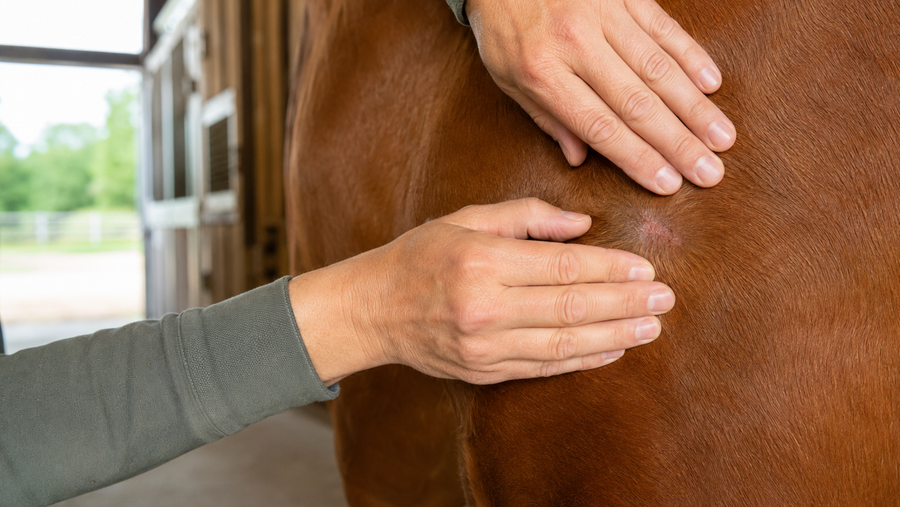
Can you use hydrocortisone on a horse? Learn what it does, when itching needs a veterinarian, and how to route intact skin versus broken ...
Free U.S. shipping at $50+
No code needed.
Shipping details
Quick answer: Eastern equine encephalitis (EEE) and Western equine encephalitis (WEE) are mosquito-borne neurologic diseases. Fever, sudden depression, behavior changes, weakness, incoordination, tremors, trouble swallowing, seizures, or recumbency require an immediate veterinary call. Vaccination and mosquito-pressure reduction work together; neither replaces the other.
Reviewed September 1, 2026.
August 31, 2026 Michigan signal: The Michigan Department of Agriculture and Rural Development reported the state's first 2026 EEE case in a domestic animal. The under-vaccinated one-year-old Quarter Horse colt from Clare County was taken to a specialty hospital and humanely euthanized. The report does not prove that another horse was exposed, and EEE is not spread directly from horse to horse. For Michigan barns and horses traveling through mosquito-active areas, the practical response is to review EEE vaccination with a veterinarian, remove standing water, use fans or equine-labeled repellent where appropriate, and treat new neurologic signs as an emergency. Read the August 31 MDARD report.
These diseases can progress quickly. Do not wait for every sign on the list before calling your veterinarian.
Call now: Any new neurologic sign is a veterinary emergency. A horse that is falling, seizing, unable to swallow, or unable to rise also creates an immediate handler-safety risk.
EEE and WEE circulate primarily between mosquitoes and birds. Horses become infected through the bite of an infected mosquito. Horses are considered dead-end hosts, meaning they do not develop enough virus in the bloodstream to infect mosquitoes and continue the transmission cycle.
That distinction matters at the barn: an affected horse is not the source of EEE or WEE infection for barnmates. The shared exposure is mosquito activity in the area. Veterinary evaluation still matters because several contagious and noncontagious conditions can cause similar neurologic signs.
The American Association of Equine Practitioners classifies Eastern and Western equine encephalomyelitis vaccination as core protection for horses. Build the schedule with your veterinarian and follow the vaccine label. Timing can differ for previously unvaccinated horses, foals, broodmares, horses with incomplete records, and horses living or traveling where mosquito seasons are long.
Vaccination lowers risk but does not make mosquito management optional. No vaccine or repellent creates a zero-risk barn.
The strongest barn plan removes breeding sites, reduces mosquito access, and adjusts routines when local pressure rises.
Repellent is one layer. It does not replace vaccination, habitat control, veterinary guidance, or current local disease information.
For the separate West Nile virus intent, use the West Nile Virus in Horses guide. For broader emergency and seasonal education, visit the Horse Health Library.
No. Horses are dead-end hosts and do not spread EEE or WEE directly to barnmates. Mosquito exposure is the shared risk. Because other neurologic diseases can look similar, follow veterinary biosecurity instructions until a diagnosis is established.
New weakness, stumbling, incoordination, behavior change, impaired vision, head pressing, tremors, swallowing difficulty, paralysis, seizures, collapse, or recumbency require immediate veterinary attention.
Yes. AAEP includes Eastern and Western equine encephalomyelitis in its core vaccination recommendations. Your veterinarian should set timing from the horse's history, vaccine label, location, travel, and mosquito exposure.
No. Repellent is one layer. A practical plan combines veterinarian-directed vaccination, breeding-site reduction, screens or fans where practical, routine adjustments, and label-directed repellent use.
Confirm vaccination records and entry requirements, review current disease alerts, inspect the destination for mosquito pressure, carry identification and veterinary contacts, and record a baseline temperature and attitude before departure.
American Association of Equine Practitioners vaccination guidance; USDA APHIS equine encephalitides guidance; Equine Disease Communication Center disease information and July 2026 alerts; and CDC Eastern equine encephalitis transmission and surveillance guidance.
Educational note: This guide does not diagnose or treat disease and is not a substitute for veterinary care. Sudden neurologic signs belong in the emergency lane.
Conditioning works best when the horse gets time to adapt, not just more work to survive.
Can you use hydrocortisone on a horse? Learn what it does, when itching needs a veterinarian, and how to route intact skin versus broken ...

A Real Rider Resource guide for handling rides that start wrong by simplifying the ask and protecting the horse’s try.
A practical rider checklist for a horse that is not acting normal, covering baseline behavior, appetite, water, manure, movement, legs, f...
Want a smarter way to handle soreness, heat, swelling, and post-ride leg care? Visit our Performance Recovery Hub for clear routines and product guidance.
Visit the Recovery Hub!