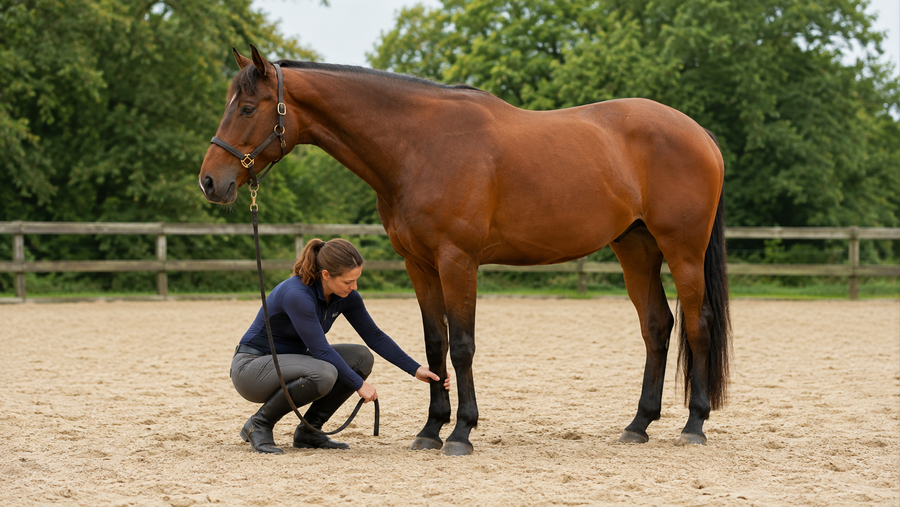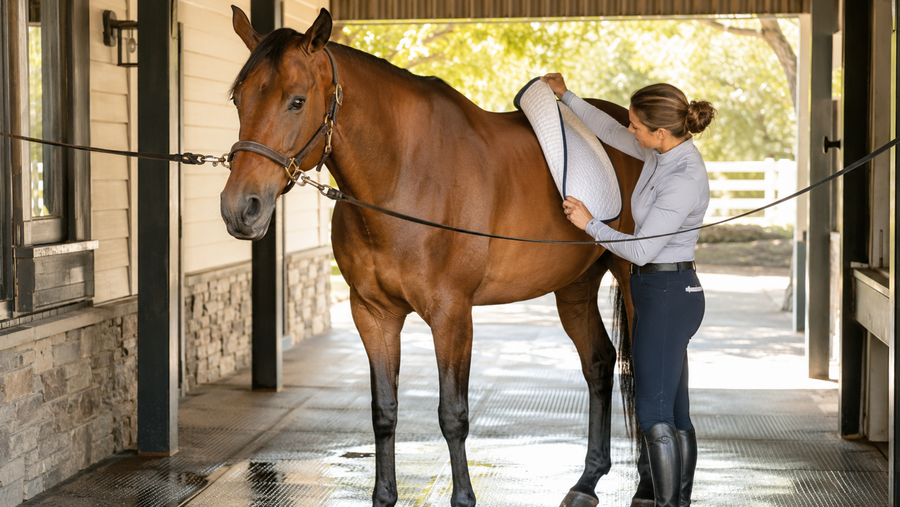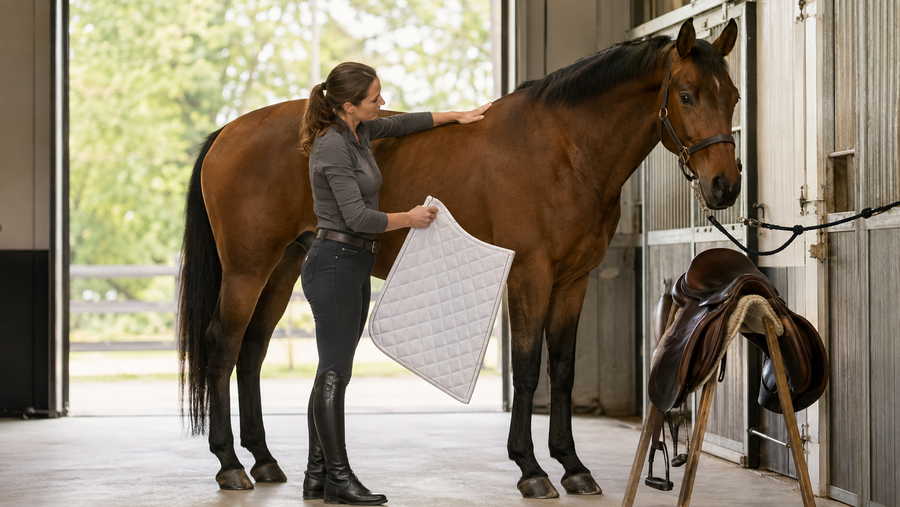
Horse Sensitive After a New Saddle Pad? What Owners Should Check
A practical horse health guide for sensitivity after a new saddle pad: sweat marks, dry spots, pad edges, saddle balance, and when to call for help.

Draw It Out® Horse Health Care
Wet ground does not just make a mess. It changes how a horse travels, loads, dries, and recovers.
Rain changes the whole ride.
The arena feels different. The pasture pulls different. The trail grabs different. The horse may still do the job, but the body often tells the truth afterward.
Wet footing can make a horse shorten stride, brace through the shoulder, work harder behind, slip a little without making a scene, or come back with grit packed into places nobody checks unless they are paying attention.
That is the job after rain: do not guess from the wash rack. Look at the horse.
Wet footing is not automatically dangerous. Missed footing changes, trapped moisture, packed grit, and next-day stiffness are where the real problems usually show up.
The obvious stuff is easy. Mud on legs. A dirty belly. Splashed boots. A wet saddle pad.
The useful check is more specific. Wet footing usually leaves clues in the same places.
If the horse is short-strided, reluctant to turn, fussy picking up a foot, stocked up the next morning, reactive to touch, or just not moving like normal, do not shrug it off. Start with a real check.
After a wet ride, muddy turnout, deep footing, or a day where the horse had to work harder than the calendar says, Draw It Out® 16oz Liniment Gel gives riders a simple daily-use option for targeted post-ride leg and body care.
For barns that want a mix-to-use option for larger areas, wash-rack routines, or regular leg care after hard footing, Draw It Out® 32oz Liniment Concentrate is the practical bottle to keep on the shelf.
Wet wraps, boots, girths, pads, and bell boots can hold grit against the horse the next time you use them. That is how small rubs become repeat rubs.
Rinse what needs rinsing. Dry what needs drying. Check Velcro, seams, edges, and pressure points. A clean horse under dirty gear is still getting dirty gear.
Barn rule
The mistake is thinking the check ends when the horse is dry. Wet footing can show itself later as filling, stiffness, reluctance to move forward, or a horse that just feels guarded.
Make the next-morning pass part of the routine: feet, legs, back, shoulders, attitude, and stride. That five minutes tells you whether yesterday stayed yesterday.
If you see obvious lameness, strong heat, swelling that does not settle, a puncture, open skin, drainage, severe tenderness, sudden unwillingness to bear weight, or a hoof concern you cannot explain, call your veterinarian or farrier. Good barn care starts with observation. It does not replace professional care when something is wrong.
Rain does not have to wreck the routine. Wet footing just demands better eyes, better hands, and a little discipline after the ride. Clean the feet. Check the legs. Dry the pressure points. Then look again tomorrow.
A practical horse health guide for sensitivity after a new saddle pad: sweat marks, dry spots, pad edges, saddle balance, and when to call for help.
A practical horse health guide for fetlock puffiness after deep sand: heat, pain, symmetry, boot marks, footing depth, and vet red flags.
Heat rash under tack can involve sweat, friction, moisture, dirt, pressure, fit, or skin disease. Inspect the area and stop friction before reuse.
!