Horse Sensitive After a New Saddle Pad? What Owners Should Check
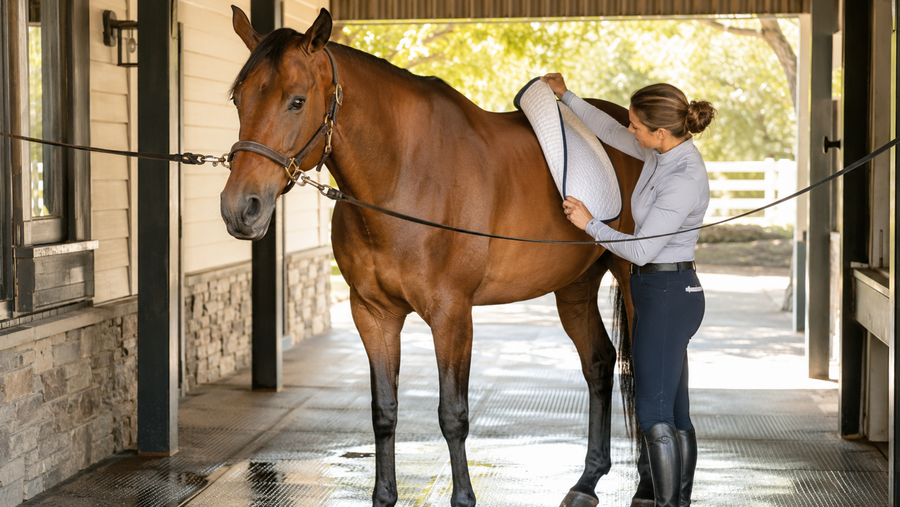
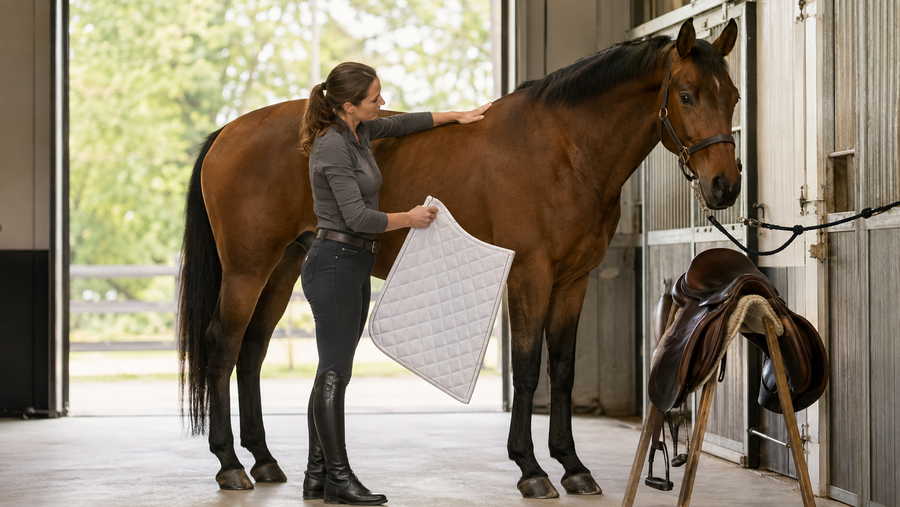
A practical horse health guide for sensitivity after a new saddle pad: sweat marks, dry spots, pad edges, saddle balance, and when to call for help.

A clean horse stall depends on daily manure and wet-bedding removal, dry replacement bedding, fresh water, and good airflow, not a strong fragrance.
Remove feed and water containers if needed, pick out manure, lift wet bedding, check corners and wall edges, and sweep or rake the base. Add clean dry bedding only after the surface is ready. A deep bed over damp material hides the problem instead of solving it.
Dust, moisture, and ammonia can build up even in a tidy-looking stall. Keep vents and fans maintained, avoid blocking airflow with stored hay or blankets, and choose bedding and cleaning methods that limit airborne dust.
Select a product labeled for the surface and setting. Follow dilution, contact time, rinse, drying, personal-protection, and animal-reentry directions. More concentrate is not better. Never mix bleach, acids, ammonia products, or unknown cleaners.
Changes in manure, urine, water use, feed leftovers, bedding disturbance, or how the horse stands can be early clues. Record unusual findings and look at the horse, not just the stall.
Contact your veterinarian for reduced manure, repeated loose manure, blood, straining, colic signs, marked drinking or urination changes, cough, nasal discharge, or a horse that appears dull or distressed.
No. A neutral, dry, well-ventilated stall is a better goal than fragrance.
Inspect them daily and clean often enough to prevent slime, feed residue, and contamination, using methods appropriate for the bucket and water system.
This article is educational and does not replace diagnosis, treatment, or individualized advice from your veterinarian, farrier, qualified professional, or insurance adviser.
A practical horse health guide for sensitivity after a new saddle pad: sweat marks, dry spots, pad edges, saddle balance, and when to call for help.
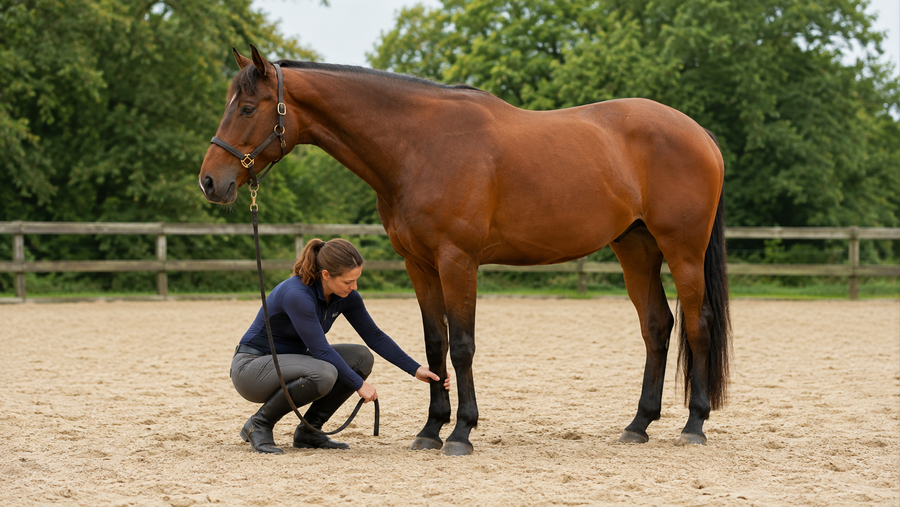
A practical horse health guide for fetlock puffiness after deep sand: heat, pain, symmetry, boot marks, footing depth, and vet red flags.
Heat rash under tack can involve sweat, friction, moisture, dirt, pressure, fit, or skin disease. Inspect the area and stop friction before reuse.
!