
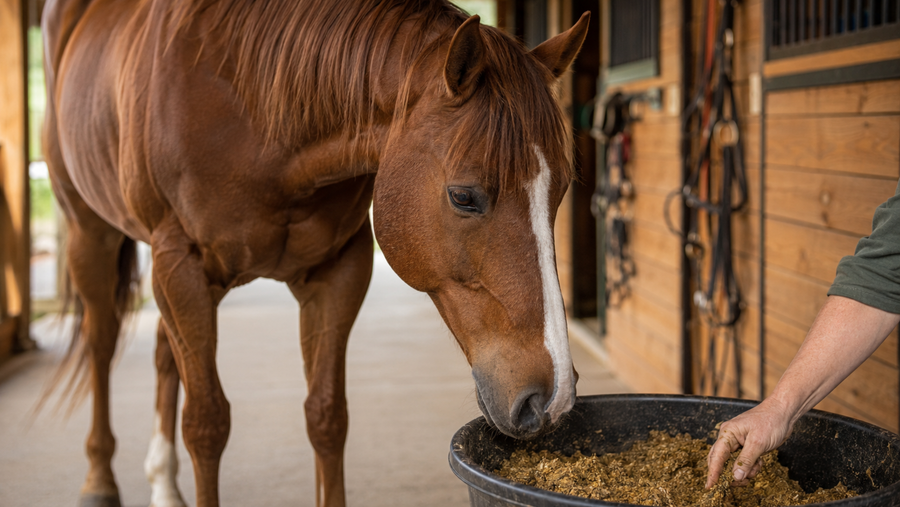
Horse Won't Eat a Joint Supplement? What to Check
A practical feed-acceptance guide for introducing horse joint supplements, checking residue, protecting appetite, and knowing when refusal needs a veterinarian.

Quick answer: Support equine mobility by building the basics first: clean water, forage-centered nutrition, suitable body condition, regular hoof care, appropriate movement, and a workload matched to the horse. Supplements belong inside that plan, not in place of it.
Movement reflects the whole horse. Feet, fitness, muscle, tack, pain, neurologic function, nutrition, footing, and workload can all matter. A single feed ingredient cannot diagnose the reason a horse moves differently.
Fluid Flex EQ® provides 100 mg sodium hyaluronate per label serving and should be fed according to its current label. Hydro-Lyte® availability can fluctuate; when available, use its current label and professional feeding guidance. Neither product replaces unrestricted clean water or veterinary evaluation.
Bottom line: Mobility support starts with the whole daily system. Add products only when their job, label, and place in the feeding plan are clear.
Educational content only. This article does not replace veterinary diagnosis, treatment, farrier care, qualified tack fitting, emergency services, or current competition rules.
A practical feed-acceptance guide for introducing horse joint supplements, checking residue, protecting appetite, and knowing when refusal needs a veterinarian.
Separate muscle loss from fat loss, record topline changes, recognize veterinary red flags, and plan nutrition and exercise around the cause.
A new grooming flinch is information, not attitude. Use this calm checklist to separate skin irritation, pressure sensitivity, tack clues, and veterinary red flags.
!

