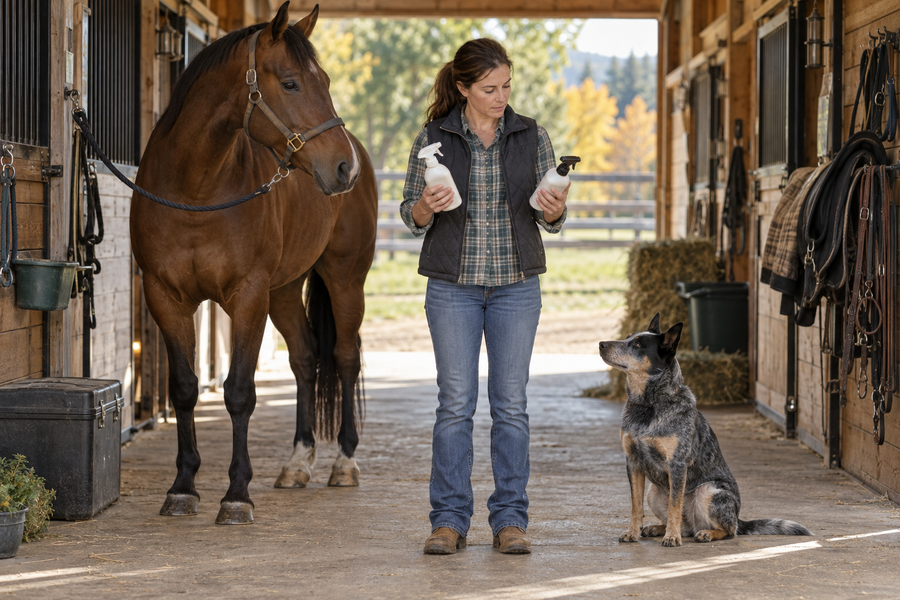
Can Horses and Barn Dogs Use the Same Tick Spray?
Can horse tick spray be used on dogs? Use this label-first checklist to compare species, directions, warnings, and show rules before applying any product.

Seasonal horse care
Quick answer: Start changing the routine when the weather starts swinging, not when the calendar says fall. Keep water, fly and mosquito pressure, coat changes, footing, workload, blanket fit, and recovery checks in the same daily conversation.
Warm afternoons can keep flies and mosquitoes active after the first cool nights arrive. Continue the barn sanitation, airflow, barriers, turnout timing, and horse-specific protection that still match the conditions. Reassess the routine as insect pressure changes instead of stopping it all at once.
Use Fly Protection for Horses for a practical barn routine. Fly and mosquito management cannot guarantee prevention of insect-borne disease, so keep vaccination and veterinary guidance separate from comfort products.
Cool nights, warm afternoons, wind, rain, and sudden dry spells can make one rigid routine fail. Check the actual conditions along with shelter, coat, clipping, age, body condition, health, and workload.
Cooler air can make one horse feel fresh while another starts tight. Footing and recovery still decide the workload.
For the broader seasonal checklist, including mud, hoof, coat, and movement checks, read Fall Horse Care: Hydration, Mud, Movement and Coat Checks.
Cooler weather can reduce voluntary drinking even while forage intake and digestive needs remain steady. Keep water clean and accessible, watch manure and appetite, and review salt or electrolyte use against the current label and your veterinarian's guidance.
Do not assume a horse needs less water because it is sweating less visibly. Hauling, dry air, heavier forage intake, and changing work can still affect the daily picture.
Late-summer and fall smoke can overlap with cooler mornings. A lower temperature does not make smoky air safe for exercise. Check local conditions and use the Horse Air Quality Index Guide before deciding whether to ride, haul, or return a horse to work.
Contact your veterinarian for fever, persistent cough, labored breathing, colic signs, marked lameness, significant swelling, weakness, neurologic changes, reduced appetite, or abnormal recovery. Call the farrier when changing ground exposes a hoof-balance, shoeing, traction, or foot-soreness concern.
For additional veterinarian-first education, visit the Horse Health Library.
Start when daytime and nighttime conditions begin changing the horse's coat, water intake, footing, workload, turnout, or recovery. Use the horse and the actual weather rather than a fixed calendar date.
No. Warm afternoons and warm spells can keep flies and mosquitoes active into fall. Continue the parts of the fly-control routine that match current conditions, then reduce them as pressure actually declines.
Blanket decisions depend on coat, clipping, age, body condition, health, shelter, wind, precipitation, and acclimation. Check beneath the blanket for heat, dampness, rubs, and fit instead of assuming one setup works all day.
Not necessarily. Horses still need clean, accessible water, and some drink less as temperatures fall. Monitor water intake, manure, appetite, attitude, and recovery, and ask your veterinarian about individual concerns.
Call for fever, persistent cough, labored breathing, colic signs, marked lameness, significant swelling, weakness, neurologic changes, reduced appetite, or recovery that is not normal for the horse.
Bottom line: The best fall routine stays flexible. Watch the weather, watch the horse, and keep lingering summer risks in the plan while cooler-weather habits come online.
Educational content only. This article does not replace veterinary diagnosis, treatment, farrier care, product directions, or current competition rules.
Can horse tick spray be used on dogs? Use this label-first checklist to compare species, directions, warnings, and show rules before applying any product.
Still fighting flies as summer winds down? Learn how to spot gaps in your barn routine, evaluate fly-spray claims, and decide where Citraquin® fits.
Current New World screwworm guidance for horse owners: what to inspect, when to call a veterinarian, how to report suspected cases, and how to verify travel restrictions and...
!