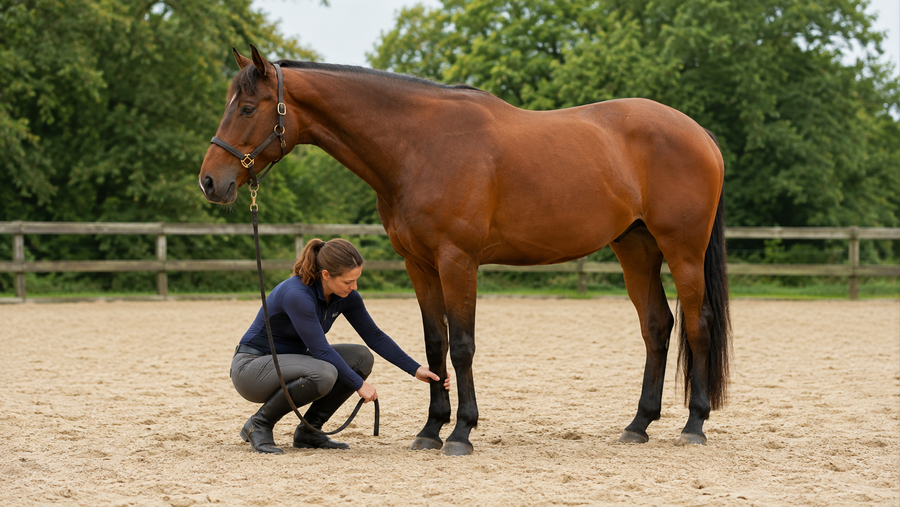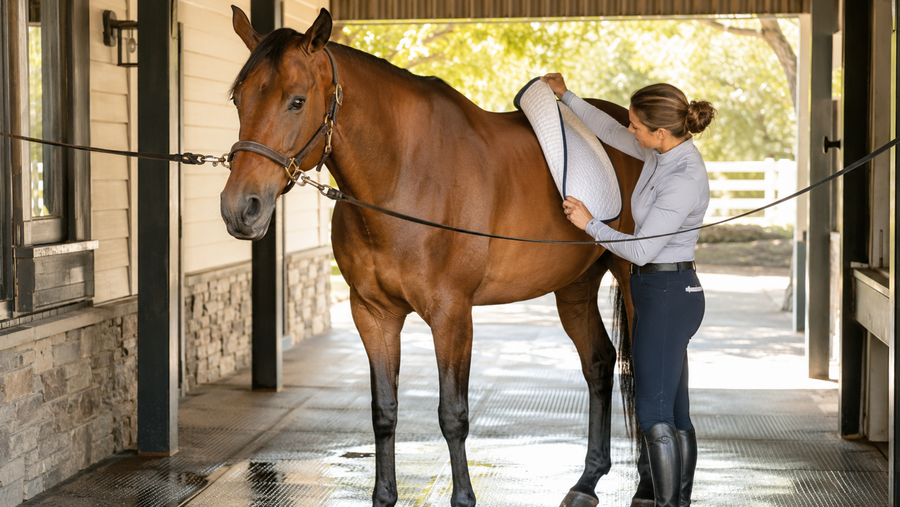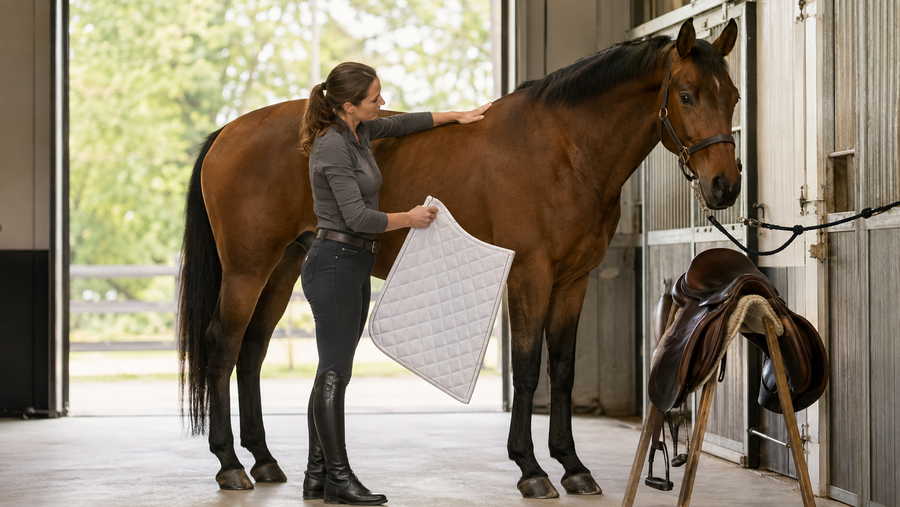
Horse Sensitive After a New Saddle Pad? What Owners Should Check
A practical horse health guide for sensitivity after a new saddle pad: sweat marks, dry spots, pad edges, saddle balance, and when to call for help.

Quick answer: When ground freezes, inspect the surface before turnout or work, watch the horse’s first steps, pick every foot, and reduce speed or intensity when traction and consistency are poor. A familiar route can become a different surface overnight.
Frozen ruts, concealed ice, compacted tracks, and uneven transitions between snow, mud, and hard ground can change balance and confidence. The horse’s response matters more than the planned session.
A topical does not create traction. After the horse is assessed, Draw It Out® 16oz Liniment Gel may fit label-directed external care on clean, intact skin, but footing, hoof care, and diagnosis come first.
Bottom line: Frozen-ground management is a judgment call made before the horse is asked to cope with the surface.
Educational content only. This article does not replace veterinary diagnosis, treatment, farrier care, qualified instruction or tack fitting, emergency services, or current competition rules.
A practical horse health guide for sensitivity after a new saddle pad: sweat marks, dry spots, pad edges, saddle balance, and when to call for help.
A practical horse health guide for fetlock puffiness after deep sand: heat, pain, symmetry, boot marks, footing depth, and vet red flags.
Heat rash under tack can involve sweat, friction, moisture, dirt, pressure, fit, or skin disease. Inspect the area and stop friction before reuse.
!