Dry-weather hoof care
Horse Hoof Cracks After Dry Weather? What to Watch First
A dry spell may make hoof-wall chips and cracks easier to see, but weather alone does not explain every crack. Location, depth, direction, movement, shoe security, hoof balance, and soreness determine how quickly the farrier or veterinarian should be involved.
Quick answer: clean the hoof, photograph the crack, note where it starts and ends, and call your farrier early rather than waiting for it to travel. A small surface chip at the ground edge is different from a crack that widens under weight, reaches the coronary band, bleeds, drains, moves, or comes with heat, a strong digital pulse, tenderness, or lameness. Do not fill, glue, carve, soak, wrap, or repeatedly oil an unexplained crack before the hoof has been professionally assessed.
Dry weather is context, not a complete diagnosis
Hoof horn responds slowly, and the wall visible today reflects months of growth and management. A stretch of hard, dry footing can increase chipping at the bottom edge or make an existing line easier to notice. Repeated wet-to-dry changes may also affect the way the wall looks and behaves. Even so, the weather may be only one part of the picture.
Trim timing, hoof balance, shoe fit, old nail holes, a loose shoe, wall quality, repeated impact, conformation, workload, nutrition, injury at the coronary band, and disease can all influence a crack. That is why a photo labeled “dry hoof” is not enough to choose a remedy. The first job is to describe the crack accurately and determine whether the horse is comfortable.
Describe the crack before trying to change it
Where is it?
Record whether the crack is at the toe, quarter, heel, bar, or another area. Location affects loading and the farrier's questions. Do not assume every vertical line belongs to the same category.
Where does it begin?
Note whether it starts at the ground edge and travels upward, begins at the coronary band and travels downward, or appears within an old nail-hole area. A crack near the coronary band deserves prompt attention.
How deep and active is it?
Look for a shallow surface line versus a gap with visible depth. Watch from a safe position while the horse loads the foot; widening or movement is important information for the farrier.
Is the horse comfortable?
Compare movement, hoof temperature, digital pulse, and ordinary hoof-picking response. Pain, a shortened step, reluctance to turn, or an altered stance makes the concern more urgent.
A safe five-minute hoof check
- Stand the horse safely. Use a clean, level, well-lit area and a handler when needed. Do not crawl under the horse or force a painful limb.
- Pick out the foot. Remove loose dirt and packed material without digging into sensitive tissue or probing the crack with a sharp tool.
- Inspect the shoe. If the horse is shod, look for a shifted or loose shoe, raised clinches, missing nails, or wall damage around old or current nail holes.
- Compare all four feet. Note wall texture, chips, growth rings, heel condition, frog condition, odor, drainage, and whether more than one foot changed during the same weather cycle.
- Check the horse, not only the crack. Watch the walk and easy turns on safe level ground. Compare heat and digital pulse with the opposite foot if you know how to do so safely.
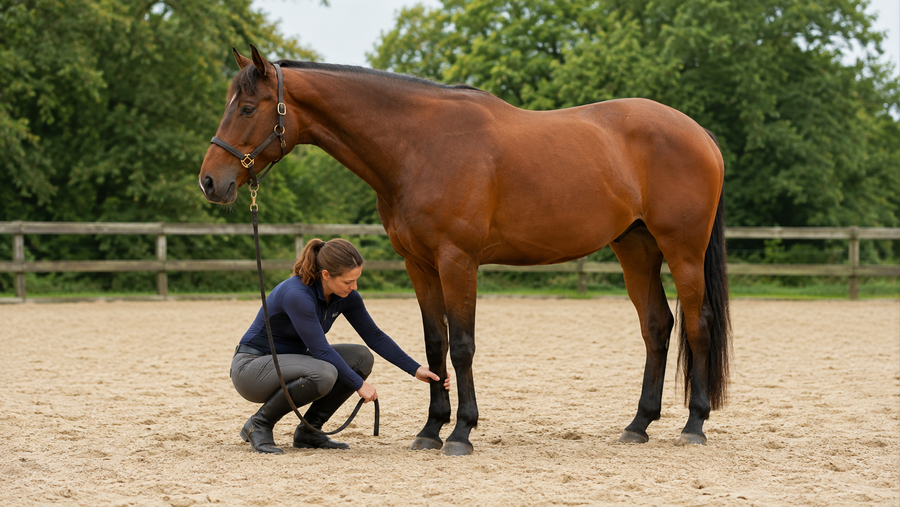
- Take useful photos. Photograph the whole hoof from the front and side, the sole if safe, and a close view of the crack. Include a ruler beside—not inside—the crack and repeat from the same angle over time.
Send the images and notes to your farrier. Early guidance may be as simple as scheduling the next visit sooner, or the farrier may want the horse seen promptly. The correct response depends on structure, loading, and the individual hoof—not on how dramatic the photo looks online.
Farrier or veterinary red flags
- Lameness, refusal to bear weight, a shortened step, or marked pain when turning.
- New heat, a strong or bounding digital pulse, swelling above the hoof, or sudden severe tenderness.
- Bleeding, drainage, foul material, a puncture, exposed sensitive tissue, or a crack that appears contaminated.
- A crack reaching or starting at the coronary band, a horizontal split after a coronary-band injury, or rapid structural change.
- A gap that widens or moves when the horse bears weight, or a crack associated with a loose or displaced shoe.
- Fever, depression, loss of appetite, or another sign that the horse is unwell beyond the hoof.
Call your veterinarian when pain, infection concerns, a puncture, systemic illness, or possible abscess is part of the picture. Call the farrier for structural, balance, trim, and shoeing assessment. The two professionals may need to coordinate.
What not to do while you wait
Do not cut a groove, rasp away wall, pull a shoe, drive a nail, or open the crack unless a qualified farrier is directing the work. Do not pack a deep crack with an unapproved material or seal moisture and debris inside it. Avoid household glue, hard fillers, aggressive disinfectants, and internet recipes that make later examination harder.
Repeated soaking is not a neutral step. It can create another wet-to-dry swing, soften structures that need inspection, or delay the correct plan. Likewise, coating the entire wall over and over does not correct imbalance, excessive leverage, a loose shoe, poor horn growth, or an injury at the coronary band. Keep the foot reasonably clean and follow the professional's instructions for turnout, exercise, and surface management.
Build a steadier dry-weather routine
Consistency matters more than chasing a quick cosmetic change. Keep farrier intervals appropriate for the horse rather than waiting until the wall is long, flared, or breaking away. Pick out feet daily, remove rocks and packed material, and notice shoe security before each ride. Review whether hard ground, increased roadwork, long dry-lot hours, or a new workload coincided with the crack.
Provide constant access to clean water and a balanced diet appropriate to the horse. Hoof growth is slow, so dramatic supplement promises should be treated cautiously. Ask your veterinarian or an equine nutrition professional to review the full ration before adding nutrients that may duplicate or unbalance what the horse already receives.
Environmental changes should be practical and repeatable. A clean, well-managed standing area, suitable footing, and attention to long wet-dry cycles may be more useful than occasional extreme soaking. Your farrier can advise whether the hoof needs a different trim or shoeing strategy, protection from excessive wear, or simply closer observation while healthy wall grows down.
Track progress without guessing
Use dated photographs from the same angle and record farrier visits, shoe changes, footing, weather swings, work level, and any soreness. A mark that moves downward as the hoof grows may tell a different story from a crack that repeatedly opens in the same loaded area. If the crack worsens between appointments, do not wait for the calendar; send the update.
Improvement is not only a smoother-looking wall. The horse should remain comfortable, the structure should remain stable, and new healthy wall should grow as expected under the farrier's plan. Cosmetic covering that hides movement or debris is not the same as a stable hoof.
What riders commonly use next
One external hoof-care option after professional assessment
When the farrier confirms that the concern belongs in the routine external-care lane, Silver Hoof EQ Therapy® 16oz can fit a clean, label-directed hoof, frog, heel, or surrounding-area routine. It does not repair a structural crack, replace trimming or shoeing, or treat lameness, infection, a puncture, or an abscess.
See the 16oz hoof-care option Use the Solution FinderFor the larger care framework, read Hoof Care Tips: Farrier Timing, Daily Checks, and Product Fit. To compare the role of weather and management, use the hoof moisture-balance guide.
Get practical hoof-check notes
Join the rider list for farrier-aware hoof, footing, and seasonal care guidance.
By signing up, you agree to receive Draw It Out® marketing emails relevant to horse care. Unsubscribe anytime.
Dry-weather hoof-crack FAQ
Are dry-weather hoof cracks always serious?
No. Some are superficial chips or surface lines, but depth, location, movement, soreness, shoe security, and direction matter. Ask the farrier early so a small visible change can be classified correctly.
Should I soak a dry, cracked hoof?
Not automatically. Repeated soaking can create another moisture swing and may not address the cause. Ask your farrier what moisture and footing routine fits the horse and local conditions.
Can a topical hoof product repair a crack?
No topical can replace structural farrier work, hoof balance, shoe management, or veterinary care. External products belong only in the routine-care lane after the crack and the horse have been assessed.
When does a hoof crack need a veterinarian?
Contact a veterinarian for lameness, severe pain, a puncture, drainage, bleeding, heat with a strong digital pulse, swelling, possible infection, suspected abscess, or a horse that is systemically unwell.
What should I photograph for my farrier?
Capture the whole hoof from the front and side, the crack close up, the sole when safe, and the opposite foot for comparison. Use consistent lighting and angle, include a ruler beside the crack, and add the date.