Quick answer: A horse reluctant to pick up a canter lead may be responding to balance, rider timing, footing, tack, fatigue, training, or pain. Track direction and conditions, simplify the exercise, and stop drilling. Sudden one-sided difficulty, lameness, pain, or a worsening pattern needs professional evaluation.
A missed lead is information. It is not automatically laziness or disobedience. One incorrect strike-off can be a timing error. A repeated refusal on the same side may point to a consistent training, rider, equipment, or physical factor.
Write Down the Pattern
- Is one lead harder than the other?
- Does the problem occur under saddle, on the longe, or both?
- Does it happen from walk, trot, or after a particular exercise?
- Is the horse worse in one direction or location?
- Does the pattern appear as the horse tires?
- Did it begin after shoeing, tack, footing, workload, or rider changes?
“Misses the right lead after ten minutes in deep footing” is better evidence than “Won’t canter.”
Check Footing and Balance
Deep, slick, hard, uneven, or banked footing can make the strike-off harder. A horse that is falling through a shoulder, rushing, or lacking straightness may not be organized enough to answer the cue cleanly.
Return to rhythm and balance at the walk and trot. Use a larger line, a slight incline only when appropriate, or a simpler transition under qualified instruction. Do not increase speed to force the lead.
Review Rider Timing
A rider can accidentally block the lead with uneven rein contact, a collapsed hip, a late outside leg, or a cue given while the horse is crooked. Ask a trainer to observe or review video captured safely. Correcting the rider may be fairer and faster than repeating the transition.
Check Tack, Feet, and Body
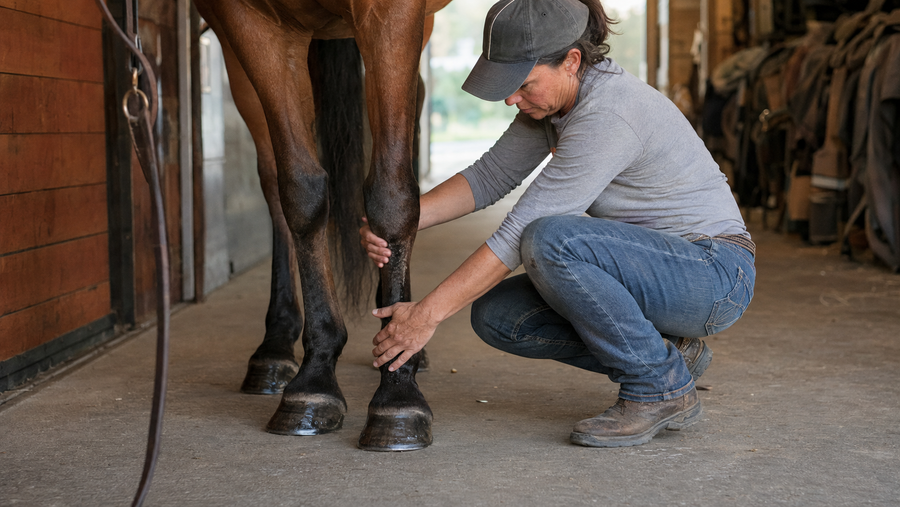
Review saddle balance, pad placement, girth fit, back response, feet, shoeing, legs, and movement. Notice whether the horse is short-strided, swaps behind, cross-canters, pins the ears, kicks out, or becomes unwilling in other work.
Sudden one-sided lead difficulty can accompany discomfort. Stop and ask the veterinarian when there is lameness, pain, heat, swelling, back sensitivity, neurological signs, or a significant performance change.
Stop Drilling the Mistake
Repeated failed transitions can create fatigue, frustration, and anticipation. Return to a task the horse understands, reward a good response, and end with useful work. Then build a plan with the appropriate trainer and veterinarian rather than turning every ride into a test.
The next repetition is useful only when something about the setup has improved.
Where Draw It Out® Fits
Draw It Out® 16oz Liniment Gel may fit a familiar, label-directed external post-work routine for an otherwise appropriate horse. It does not correct lead mechanics, diagnose discomfort, or replace professional assessment.
FAQ
Should I keep asking until the horse gets the correct lead?
No. If the pattern repeats, pause and improve the balance, cue, footing, and comfort assessment before asking again.
Can soreness cause lead problems?
Pain or discomfort can affect canter transitions, but lead reluctance alone cannot identify the source.
Who should evaluate a recurring lead problem?
A qualified trainer can assess rider timing and training. A veterinarian should evaluate pain, lameness, sudden changes, or persistent one-sided difficulty.
General horse-care education only. This article does not diagnose a horse and does not replace veterinary care or qualified instruction.