Barn tool guide
Poultice vs. Liniment for Horses: What’s the Difference?
Quick answer: Poultice is usually a thick, longer-contact material that requires more application time and cleanup. Liniment is a thinner topical format used in a controlled grooming or post-work routine. Neither is a diagnosis, and neither should be the first move when a horse has lameness, marked heat or swelling, a wound, fever, or significant pain.
Poultice and liniment are both familiar barn tools, but they are not interchangeable. The right choice depends on the product label, the condition of the skin, the area being addressed, the amount of contact time, whether wraps are involved, and the rider's ability to monitor the horse.
Poultice vs. liniment at a glance
| Question | Poultice | Liniment |
|---|---|---|
| Format | Thick clay or paste-like material | Gel, concentrate, liquid, or spray format |
| Contact | Often longer contact, according to the label | Usually a thinner topical application, according to the label |
| Cleanup | More removal and cleanup | Generally quicker and cleaner |
| Placement | Often used on lower-leg areas within established barn routines | Can offer targeted placement or broader body-care coverage, depending on format |
| Wrap decisions | Some labels or routines involve paper and wraps | Some products permit use with pads, boots, or wraps when directed |
| Main responsibility | Correct thickness, contact time, removal, skin check, and wrapping skill | Correct amount, placement, skin check, and label-directed use |
When a poultice may fit
A poultice may fit an established lower-leg care routine when the horse is comfortable, the skin is intact, the label matches the intended use, and the barn can manage the required contact time and cleanup. Riders should know whether the specific product is designed to be used with or without paper and wraps.
- Read the exact label instead of relying on barn habit.
- Start with clean skin and inspect it again after removal.
- Use only the contact time and thickness directed by the manufacturer.
- Do not wrap unless the routine and label permit it and you can apply the wrap correctly.
- Remove the material fully and recheck the leg.
When a liniment may fit
Liniment may fit when a rider wants a repeatable topical step after the horse has been checked. A gel can make controlled placement easier. A concentrate can provide broader format flexibility when mixed and applied exactly as the current label directs.
Gel
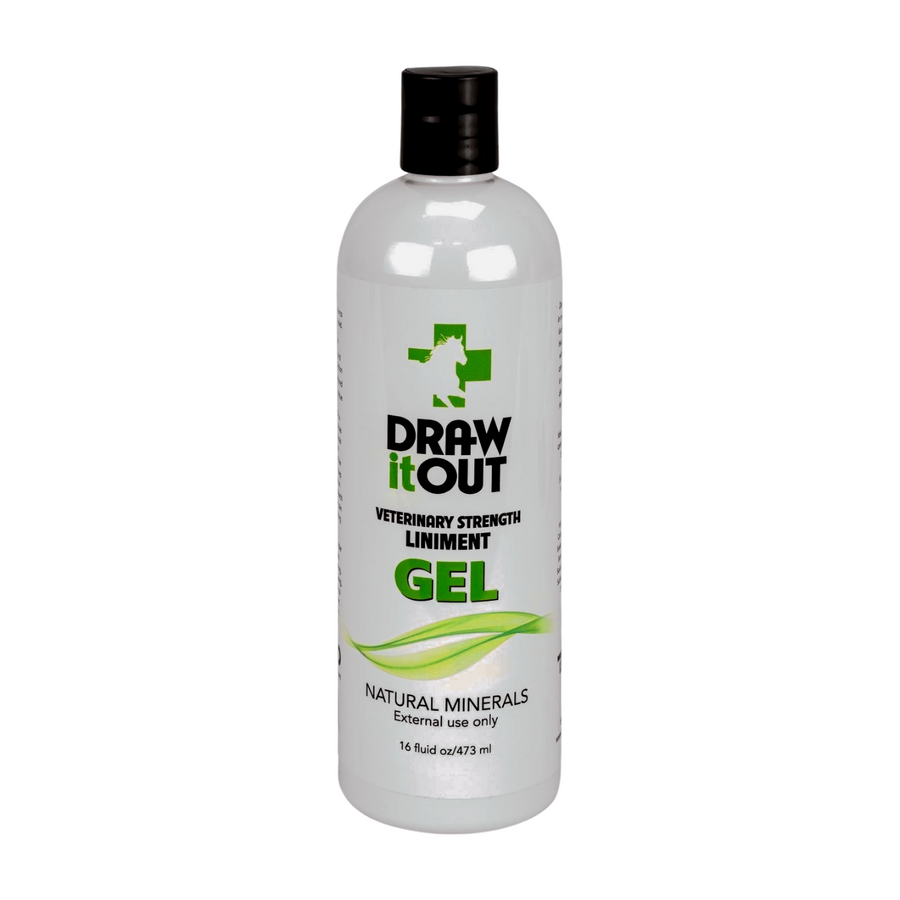
Useful when the routine calls for hands-on placement in a defined area. See Draw It Out® 16oz High Potency Gel.
Concentrate
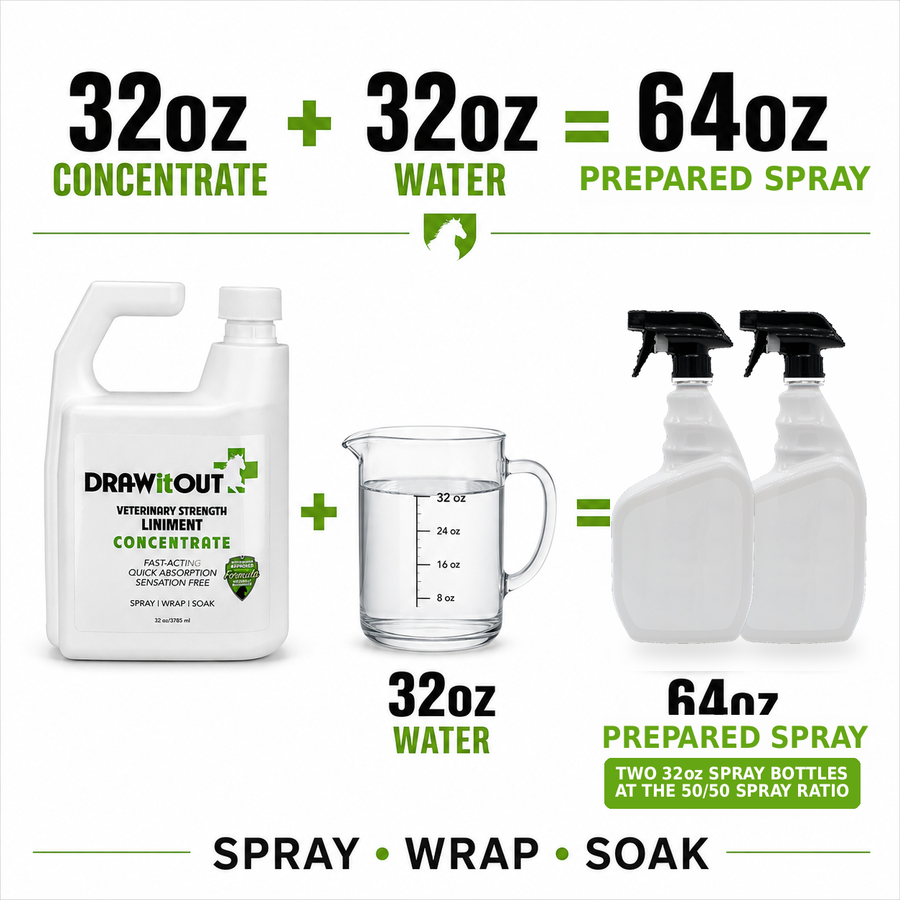
Useful when the routine calls for broader coverage or label-directed dilution options. See Draw It Out® Concentrate.
Draw It Out® liniment is odorless and colorless and is positioned without menthol, capsaicin, alcohol, or witch hazel. A key practical distinction is label-directed use under pads, boots, and wraps. Always follow the current product label and recheck the skin and fit of any equipment.
Wrapping changes the decision
A wrap is not just an accessory. Uneven pressure, wrinkles, trapped grit, excessive tightness, or leaving a wrap on too long can create a problem. If wraps are part of the plan, the person applying them should understand the product directions and have the skill to wrap the specific area correctly.
Before wrapping: confirm that the skin is clean and intact, the leg does not have unexplained heat or swelling, the product permits covered use, the padding is even, and the wrap can be checked on schedule.
Can poultice and liniment be used together?
Do not stack products simply because both are in the tack room. Combining materials can change skin exposure, contact time, moisture, cleanup, and the effect of a wrap. Use both only when the current labels clearly allow the sequence or a veterinarian has given a specific plan for that horse.
If the goal is consistency, one well-chosen, label-directed routine is usually easier to monitor than several overlapping products. Record what was applied, where it was applied, whether it was covered, when it was removed, and how the skin and leg looked afterward.
When neither product comes first
Pause product use and contact your veterinarian when the horse has:
- New or worsening lameness
- Marked heat, swelling, or pain
- A puncture, deep cut, draining area, or injury near a joint
- Broken, blistered, infected-looking, or unusually sensitive skin
- Fever, lethargy, reduced appetite, or abnormal behavior
- A rapidly changing problem or a concern you cannot confidently assess
Cold water, walking, rest, turnout, wrapping, poultice, and liniment are not universal first steps. The correct response depends on what happened, what the horse shows on examination, and what a professional recommends.
A practical decision sequence
- Observe. Watch the horse stand and walk before touching the area.
- Check. Compare both sides for heat, swelling, sensitivity, skin changes, and hoof findings.
- Escalate red flags. Do not let a product delay veterinary evaluation.
- Choose the format. Match the job, skin condition, time, cleanup, equipment, and label.
- Recheck. Inspect the skin and horse again after the routine.
For additional product guidance, use the horse-care solution finder or compare the current options in the liniment collection.
Poultice and liniment FAQ
Is poultice stronger than liniment?
That is not a useful comparison. They are different formats with different application routines. Choose by label, job, skin condition, monitoring needs, and professional guidance.
Can liniment replace a veterinary examination?
No. A topical routine does not diagnose the cause of lameness, heat, swelling, pain, or a wound.
Should poultice always be wrapped?
No. Follow the exact product directions. Some routines involve paper and wraps, while others do not. Wrapping also requires correct technique and regular checks.
Can I apply either product to broken skin?
Only if the specific product label explicitly allows that use and the plan is appropriate for the wound. When in doubt, ask your veterinarian before applying anything.
Bottom line
Poultice is a thicker, longer-contact barn tool. Liniment is a thinner topical format. Check the horse first, follow the label, treat wrapping as a skilled task, and let red flags override routine.