Draw It Out® Horse Health Care News
Saddle Soreness in Horses: Fit Checks, Red Flags, and Prevention
Saddle soreness is not solved by padding over pressure or applying a topical after every ride. The source may involve saddle fit, rider balance, conditioning, workload, skin, hooves, or pain elsewhere.
If a horse shows back pain, behavior change, uneven sweat, white hairs, swelling, or altered movement, stop and assess the full system. A qualified saddle fitter and veterinarian may both be needed.
Check before you tack up
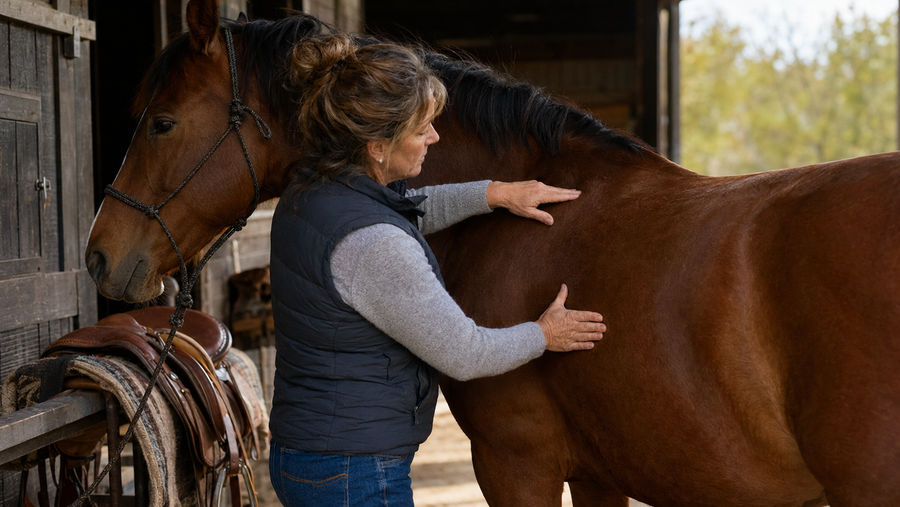
- Look and feel along the topline, withers, girth area, and back.
- Note heat, swelling, sensitivity, skin changes, rubbed hair, or new white hairs.
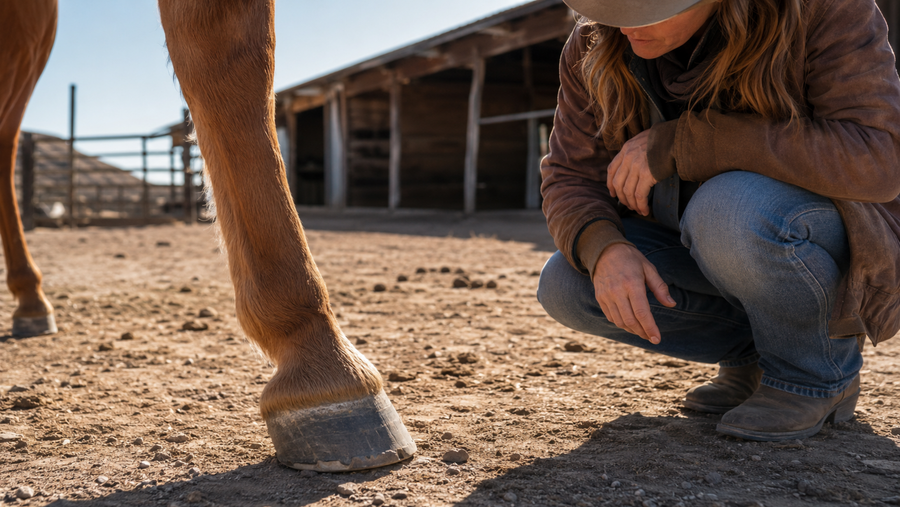
- Watch the horse walk and turn before mounting.
- Confirm the saddle, pad, and girth are clean and placed correctly.
- Pay attention to pinned ears, moving away, biting, or guarding during grooming and tacking.
Fit changes over time
A saddle that once appeared suitable may stop fitting after changes in muscle, body condition, age, workload, hoof balance, rider, or discipline. Pads cannot correct every tree or balance problem and can sometimes reduce needed space.
Have fit evaluated dynamically, with the horse moving and the rider aboard when appropriate. Static clearance in the aisle is only part of the picture.
Rider and workload matter too
Asymmetry, instability, poor balance, and fatigue can change pressure under the saddle. So can long rides, hills, speed work, deep footing, and sudden increases in workload.
Build fitness progressively, include warmup and cooldown, and review rider position with a qualified instructor. Track when the problem occurs rather than assuming every sore back has the same cause.
Where topical care fits
A label-directed topical routine may accompany normal post-work grooming when the skin is intact and the horse is otherwise comfortable. It cannot correct saddle fit, diagnose back pain, reduce a damaging pressure point, or make a painful horse fit to ride.
When to stop and call a professional
- Pain or guarding during palpation or tacking
- Swelling, heat, skin damage, white hairs, or a dry pressure spot
- Bucking, rearing, refusing to go forward, or a sudden behavior change
- Lameness, shortened stride, difficulty with transitions, or reluctance to lie down or roll
- Signs that persist after tack is removed or worsen over time