
Dog First-Aid Kit vs After-Activity Care Kit: What Belongs in Each?
Separate emergency supplies from normal after-activity care for hunting, barn, trail, and working dogs, then know when the veterinarian comes first.

Camping changes everything for a dog. New ground, new smells, new water, poor sleep, more walking, campfire smoke, other dogs, and long truck time can make a dog act off when you get home.
If your dog acts off after camping, check movement, paws, belly, coat, ticks, appetite, water, stool, sleep, and attitude. Give a quiet reset day and keep activity light. Call your veterinarian for vomiting, diarrhea that persists, limping, wounds, ticks you cannot safely remove, abnormal breathing, or unusual behavior.
At camp, dogs often run on excitement. They sleep lightly, guard the tent, chase kids, walk rough ground, swim, eat things they should not, and spend more time on leash or tied out. The bill often comes due after the ride home.
Offer water, a normal meal if appropriate, and a short controlled walk. Brush or comb the coat before mats tighten. Wipe paws. Dry wet areas. Check for ticks and debris. Give the dog the rest of the day to decompress unless something needs a vet.
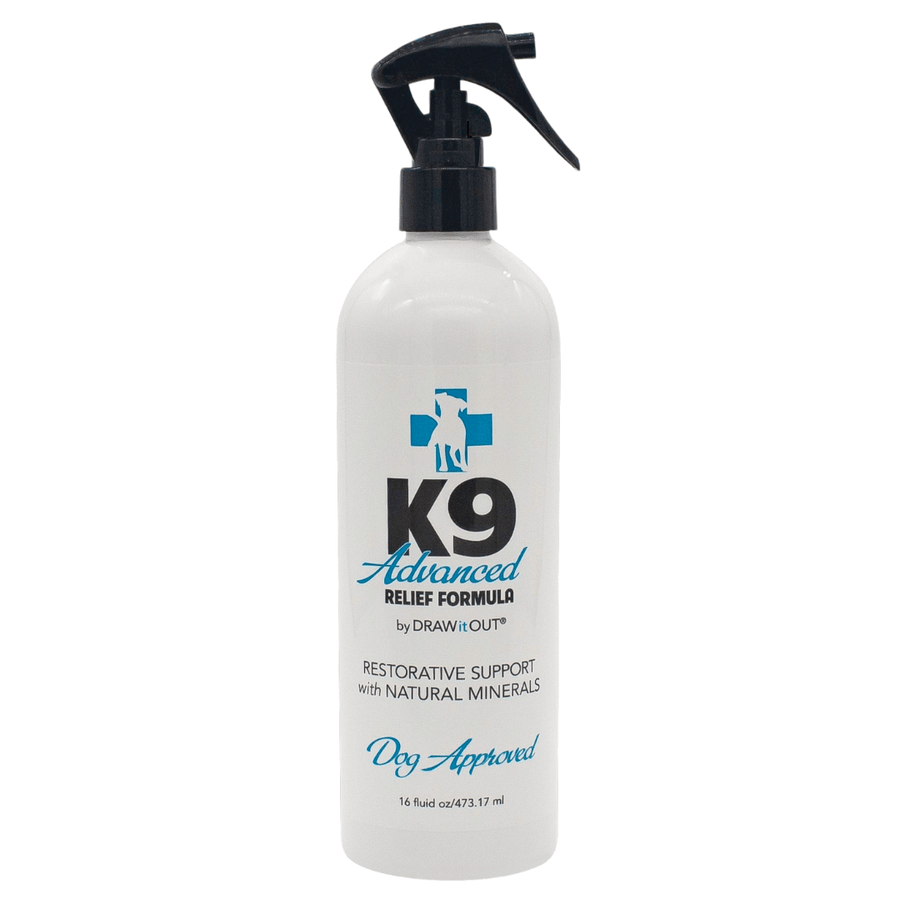
When your dog is alert, eating and drinking normally, moving normally, and free of wounds or suspected illness, the K9 Barn Dog Care Kit can support a label-directed cleanup and ordinary post-activity care routine. It is not a substitute for veterinary evaluation of vomiting, diarrhea, lameness, heat illness, wounds, or unusual behavior.
See the K9 Barn Dog Care Kit or compare K9 care options.
By signing up, you agree to receive relevant Draw It Out® dog-care emails. Unsubscribe anytime.
Call your veterinarian for persistent vomiting or diarrhea, limping, swelling, wounds, abnormal breathing, severe lethargy, heat concerns, or any sudden behavior that does not feel like your dog.
They may have slept poorly, walked more, stayed alert longer, and dealt with new surfaces and weather.
Check coat and skin first. Rinse or bathe if there is mud, smell, residue, or skin risk.
Paws, ears, belly, collar line, coat debris, ticks, water intake, and movement.
Pack the dog shelf like you pack the cooler. Better to have the routine ready than to guess tired at midnight.
Separate emergency supplies from normal after-activity care for hunting, barn, trail, and working dogs, then know when the veterinarian comes first.
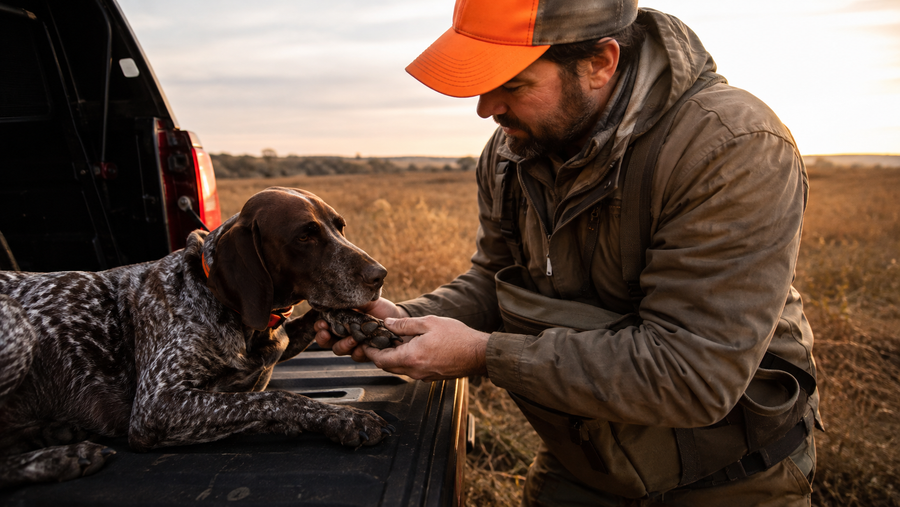
Use this three-minute tailgate paw check after every hunt to catch worn pads, burrs, torn nails, swelling, and gait changes before the next field.
A paw-to-back check for hunting dogs after the first hard weekend, including next-morning decisions, conditioning fixes, veterinary red flags, and dog-specific care.
!