K9 by Draw It Out®
Dog Care Before a Summer Road Trip: What to Pack and Check First
A safe dog road trip starts before the engine turns over. Plan restraint, temperature, water, breaks, identification, medication, loading, and emergency contacts around the dog you are actually taking, not an ideal traveler.
Quick answer: Before a summer road trip, confirm that your dog is healthy enough to travel, securely restrained, comfortable in the vehicle setup, and easy to identify if separated. Pack water, food, current medications, records, cleanup supplies, a leash, and a basic first-aid kit. Stop for breathing trouble, collapse, repeated vomiting, severe anxiety, overheating signs, pain, weakness, or any change that makes continued travel unsafe.
Start with the dog, route, and weather
Age, heart or breathing disease, motion sickness, anxiety, arthritis, recent surgery, pregnancy, and current illness can change whether a long drive is reasonable. Ask your veterinarian before travel when health or medication timing is uncertain. Do not start a new sedative, supplement, or motion-sickness plan on departure morning.
Map the route with the day's heat, traffic, road closures, safe stopping areas, and destination rules in mind. A dog that handles a cool two-hour drive may struggle with a longer hot-weather trip. Build extra time so breaks are calm instead of rushed.
- Confirm identification. Check the collar tag, microchip registration, phone number, and a current photo that shows the dog's markings.
- Rehearse the restraint. Use a secured crate or vehicle restraint designed for dogs and sized so the dog can stand, turn, and lie comfortably.
- Plan loading and unloading. Use a stable non-slip ramp or steps when jumping from the vehicle is not appropriate. Attach the leash before opening a door.
- Review medications. Pack the original labeled containers and written instructions. Bring more than the exact trip amount in case travel is delayed.
- Save emergency contacts. Include your veterinarian, an emergency clinic near the route and destination, the lodging or campground, and the dog's insurance information if applicable.
Build a vehicle setup that reduces heat and bracing
Keep the dog inside the climate-controlled passenger area or another safe, purpose-built setup. Never allow a dog to ride loose in an open truck bed. Secure crates so they cannot slide, and keep luggage from shifting into the dog's space. Use flat non-slip bedding that does not bunch or trap excessive heat.
Check air flow where the dog is positioned, not only at the front seat. Sun exposure changes as the vehicle turns. Never rely on cracked windows or a short errand to make a parked vehicle safe. If the dog must be left, the safe choice is usually to have a responsible person stay with the dog in controlled conditions.
- Carry water from a familiar source when practical and offer it during appropriate stops.
- Keep food portions and meal timing consistent with the dog's normal routine and veterinary advice.
- Use a leash at every stop, even for a dog with excellent recall at home.
- Keep the dog's head and body inside the vehicle to reduce debris and injury exposure.
- Watch panting, drooling, restlessness, posture, and willingness to settle throughout the drive.
Pack for ordinary care and one bad surprise
Pack a leash and backup lead, harness, waste bags, towels, familiar bedding, food, water, bowls, medications, vaccination or health records, cleaning supplies, and a veterinarian-reviewed first-aid kit. Bring paw protection only if the dog has already been trained to use it. New boots can create rubbing during a trip.
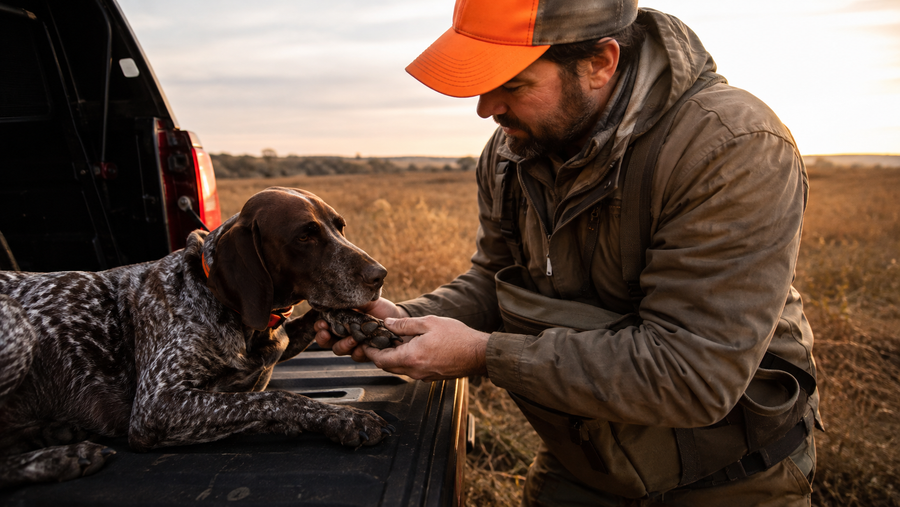
At each break, check paws, nails, gait, collar and harness contact points, belly, coat, and attitude. A break is not a fetch session. Use calm leash movement, bathroom time, water, and a short recheck before loading again.
Use a calm arrival reset
Unload onto level non-slip ground, let the dog orient, and take a slow leash walk. Check first steps, paws, legs, back, skin, appetite, water interest, and bathroom habits. Keep the first hour boring. Hard play immediately after prolonged positioning can hide useful clues and add unnecessary load.
Recheck after rest and the next morning. Travel stiffness should move toward the dog's normal. Painful, one-sided, worsening, or persistent movement change belongs with the veterinarian.
Stop the trip and get veterinary help
- Collapse, inability to stand, severe weakness, disorientation, or seizure activity
- Labored breathing, pale or blue gums, or heavy panting that does not settle in a safe cool environment
- Repeated vomiting, a swollen abdomen, severe diarrhea, or inability to keep water down
- Non-weight-bearing lameness, a swollen limb, marked pain, or a serious wound
- Severe panic that creates danger for the dog, driver, or passengers
Call an emergency clinic before arrival when possible. Do not force food, water, walking, cooling methods, or medication when the dog may be unstable. Follow professional instructions.
Where K9 routine care fits
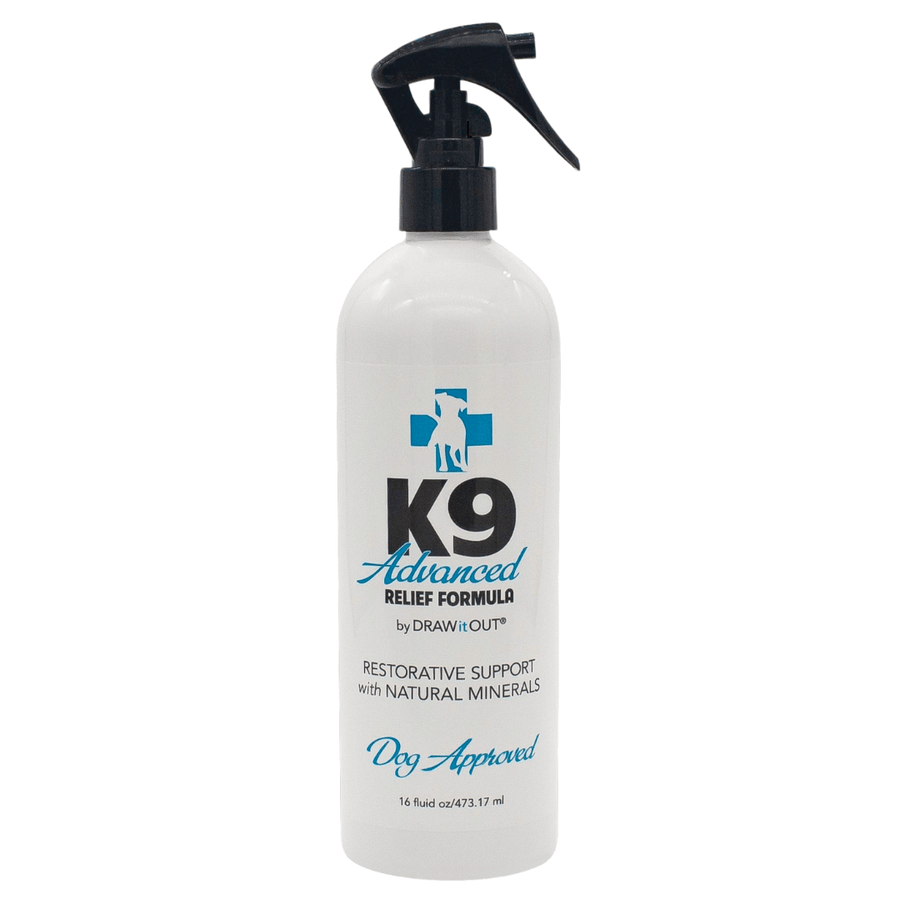
Start with the K9 Dog Care Routine Hub before choosing products. When the dog is moving normally, has no red flags, and the skin fits label-directed external use, K9 Advanced™ Relief Spray can be part of ordinary post-travel body care.
The K9 Barn Dog Care Kit groups the routine spray and coat-care lanes. Neither product replaces vehicle safety, water, rest, prescribed medication, or veterinary care.
Frequently asked questions
How often should a dog stop on a road trip?
There is no single interval for every dog. Age, health, medication, heat, trip length, and normal bathroom routine matter. Plan regular safe stops and adjust sooner when the dog is restless or uncomfortable.
Can I leave my dog in the car for a quick stop?
Vehicle temperature can become dangerous quickly and conditions are not made safe by cracked windows. Arrange stops so a responsible person can stay with the dog in controlled conditions.
Should a dog eat before a long drive?
Keep food timing consistent with veterinary advice and the dog's history. Dogs with motion sickness, diabetes, medications, or other health needs may require an individualized plan.
What identification should my dog wear while traveling?
Use a readable tag with a current phone number, verify the microchip registration, carry a recent photo, and keep vaccination or health records available when the destination requires them.
What should I check after the road trip?
Check first steps, paws, nails, legs, back, collar and harness areas, coat, appetite, water, bathroom habits, and attitude. Call the veterinarian for persistent or painful change.
Educational note: This article provides general information and does not diagnose or treat an animal. Follow product labels and work with the veterinarian or other qualified professional when health, pain, injury, or safety is uncertain.