K9 by Draw It Out®
Dog Paws Smell After Wet Grass? What to Check
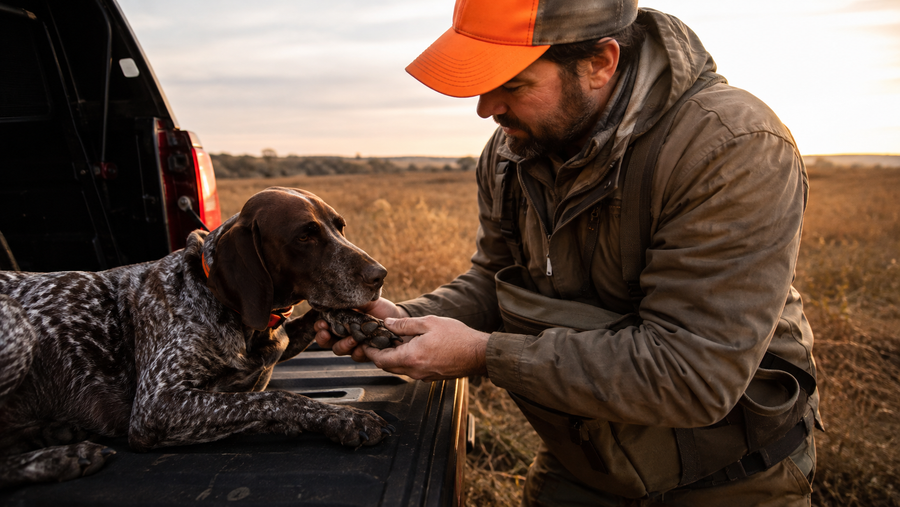
Wet grass leaves paws looking clean from above while moisture sits between toes and around pad edges. Odor is a signal to spread the toes, dry the hidden areas, and watch what the dog does next.
Start with the dog, not the bottle
Compare all four paws. One problem paw often looks different when you slow down: more licking, darker moisture, redness between toes, a cracked pad edge, or tenderness when the dog shifts weight.
Think about repetition. Irrigated pasture, morning dew, sprinklers, creek crossings, wet kennel runs, and daily grass walks can keep the same spaces damp even when each exposure seems minor.
Between the toes
Spread gently and look for moisture, redness, grass seeds, grit, and matted hair.
Pads and edges
Check for cracks, soft spots, cuts, discoloration, or packed debris.
Nails and nail beds
Look for a split nail, swelling, tenderness, or dirt trapped at the base.
Licking pattern
Occasional cleanup is different from focused, repeated chewing of one paw.
A calm step-by-step routine
- Rinse or wipe away dirt only when needed.
- Use a clean towel to dry the top, bottom, and every space between toes.
- Let the paws air out before the dog settles on damp bedding.
- Keep hair and nails maintained according to your groomer or veterinarian’s guidance.
- Use a dog-specific topical step only on intact external areas and according to the label.
- Recheck after the next wet-grass exposure to see whether the pattern repeats.
Where K9 TheraMud™ fits
K9 TheraMud™ may fit as a controlled mud-style skin-and-coat grooming step on appropriate intact external areas. It is not an ear, wound, infection, or between-the-toes treatment; follow the label and keep the application away from broken or seriously irritated skin.
What a topical routine cannot answer
Odor can reflect trapped moisture, debris, licking, irritation, yeast or bacterial overgrowth, a foreign body, nail trouble, or another issue. Home inspection can spot the pattern but cannot name the diagnosis.
If odor returns quickly despite careful drying, if more than one paw is involved, or if the dog is chewing hard enough to damage skin, get professional guidance.
Frequently asked questions
Should I use a dog-care product right away?
Check and clean the area first. Use K9 TheraMud™ only when the skin is intact, the dog is otherwise acting normally, and the product fits the job described on the label.
Can I use horse liniment on this area?
Use dog-specific products for dogs. K9 Advanced™ is the canine lane; horse liniment remains the horse-care lane.
When should I call my veterinarian?
Call your veterinarian for persistent strong odor, swelling, discharge, bleeding, open skin, marked redness, pain, limping, a suspected foreign body, a damaged nail, or licking that continues despite cleaning and drying.
Keep the K9 routine simple
K9 products and ingredient guide · K9 routine hub · K9 blog
General dog-care education only. Follow current product labels. K9 Advanced™ products do not diagnose, treat, cure, or prevent disease and do not replace veterinary care.