Dog First-Aid Kit vs After-Activity Care Kit: What Belongs in Each?
Separate emergency supplies from normal after-activity care for hunting, barn, trail, and working dogs, then know when the veterinarian comes first.

People use “loyal” to mean different things: staying nearby, responding readily, enjoying shared activities, or forming a close bond. There is no single ranking on this page that can tell you which dog will be the best companion for your household.
Describe the life you hope to share. Do you want a dog for long outdoor days, a quieter home, training activities, or family companionship? Then consider the individual dog’s needs and behavior, not just a breed’s reputation.
The AKC guide to choosing the right dog offers a useful starting point for matching a dog with your lifestyle.
When speaking with a responsible breeder, rescue, or shelter, ask what they have actually observed: settling indoors, reactions to unfamiliar situations, handling, and interactions with other animals. Ask what remains unknown. A brief meeting is useful, but it does not show every part of life in a new home.
Plan consistent daily care, appropriate training, and time to learn the dog’s preferences. If behavior raises a concern, seek qualified help rather than treating it as a failure of loyalty. Choose a dog whose needs you can meet, and let the relationship develop through shared experience.
Separate emergency supplies from normal after-activity care for hunting, barn, trail, and working dogs, then know when the veterinarian comes first.
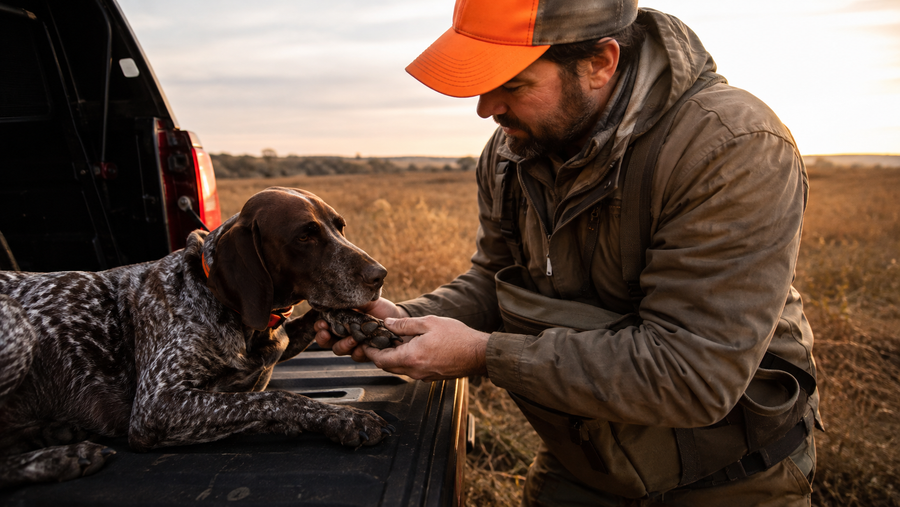
Use this three-minute tailgate paw check after every hunt to catch worn pads, burrs, torn nails, swelling, and gait changes before the next field.
A paw-to-back check for hunting dogs after the first hard weekend, including next-morning decisions, conditioning fixes, veterinary red flags, and dog-specific care.
!