Real Rider Resource
Quick answer: During fall mud season, give your horse the driest practical place to stand, pick and inspect every hoof daily, let ordinary surface mud dry enough for gentle removal, part the hair to check lower-leg skin, and keep boots, wraps, towels, and bedding clean and dry. Change the plan when you find pain, heat, swelling, odor, discharge, lameness, or a puncture.
Manage the ground first
Mud care starts before you touch the horse. Walk the turnout routes after rain and look at gateways, waterers, hay areas, shelters, and the lanes horses use most. Deep churned footing, manure, standing water, and crowded access points can keep feet and lower legs wet far longer than a short rain shower.
- Provide a stable, well-drained standing area where horses can get out of the deepest mud.
- Move hay or feeding points when practical so one area does not become a permanent mud bowl.
- Keep stalls, run-ins, and resting areas dry enough that horses are not standing or lying in saturated bedding.
- Repair drainage, fencing, or footing hazards instead of relying on a topical product to compensate for the environment.
- Adjust turnout when footing is unsafe. A dry alternative is useful, but movement and social needs still matter.
For broader rain, shelter, blanket, water, and turnout decisions, use the fall horse-care transition guide.
Use a calm daily check
Start by watching the horse walk on a firm, level surface. Compare stride length, willingness to turn, and how each foot lands. Then work from the hoof upward so you notice differences between all four limbs.
- Pick the feet. Remove packed material and look at the sole, frog, collateral grooves, white line, wall, shoes, and heel bulbs.
- Use your senses. Note unusual heat, a stronger-than-normal digital pulse, tenderness, new odor, discharge, or a foreign object.
- Let routine mud dry. When there is no urgent wound or painful area, allow surface mud to dry enough for gentle brushing. Avoid aggressive scrubbing.
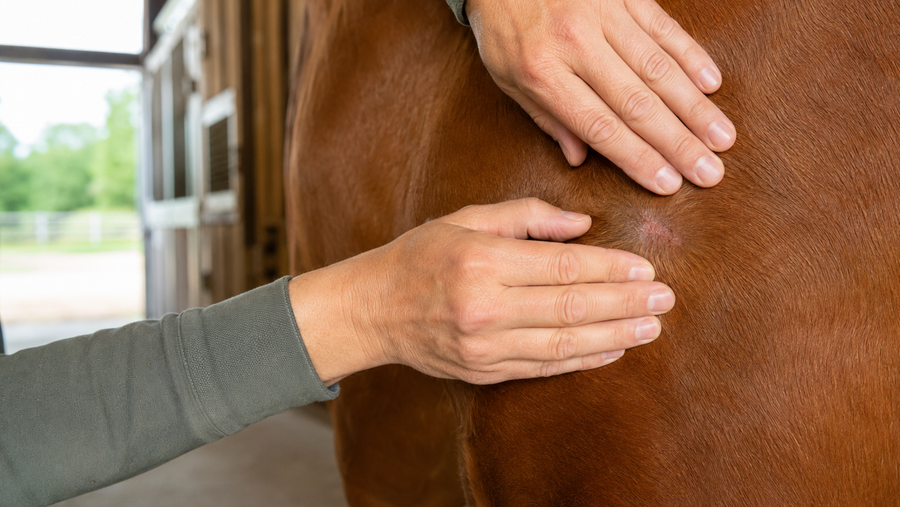
- Part the hair. Check pasterns, heels, fetlocks, and any feathering for heat, swelling, cracks, crusts, moisture, or sensitivity.
- Record changes. A quick photo and date make it easier to tell whether an area is improving, spreading, or simply different after the next turnout.
Inspect hooves without guesswork
Pick every hoof at least daily during wet periods, and more often when deep mud keeps packing into the feet. Do not dig aggressively into the frog or sole. If you find a puncture or embedded object, do not pull it out unless a veterinarian directs you to do so; protecting its position can help the professional assess the injury.
Odor alone does not diagnose thrush, and a soft sole is not automatically an abscess. Compare all four feet and involve your farrier or veterinarian when a change is deep, painful, persistent, or paired with lameness. The practical hoof-care guide covers daily inspection and professional red flags in more detail.
Dry and inspect lower-leg skin
Repeated wetting, grit, friction, and trapped debris can make lower-leg skin harder to assess. If there is no urgent wound, let heavy mud dry enough to remove gently. When washing is necessary, use a mild method, rinse thoroughly, blot instead of rubbing hard, and allow the skin and hair to dry fully before putting boots or wraps back on.
- Do not pick scabs or scrub sore skin just to make the leg look clean.
- Do not seal unexplained, broken, or weeping skin under a heavy layer or tight wrap.
- Clip or shorten heavy feathers only when it improves inspection and drying without irritating already-sensitive skin.
- Pause routine topical use until the label, skin condition, and veterinary plan all fit.
If the issue is centered on pasterns or heels, the scratches and pastern-dermatitis guide is the more specific owner. If you are unsure whether the problem belongs to the coat, pastern, or hoof, use the rain rot, mud fever, and thrush routine comparison.
Keep gear and bedding from carrying moisture
Clean, dry equipment is part of the horse-care routine. Boots and wraps that go back onto damp hair can trap moisture and add friction. Towels that are shared while wet can spread grime from one limb or horse to another. Grooming tools should be assigned or cleaned appropriately, and heavily soiled items should dry completely before reuse.
- Dry standing area available
- All four feet picked and compared
- Pasterns and heels visually checked
- Wet boots, wraps, towels, and brushes separated for cleaning and drying
- Stall or shelter bedding checked for saturation
- Any heat, swelling, pain, odor, discharge, or lameness recorded
Know when to escalate
Call promptly for a puncture, embedded object, sudden or marked lameness, refusal to bear weight, strong abnormal digital pulse, unusual heat, spreading swelling, pain, discharge, foul odor, fever, or a horse that becomes dull or loses appetite. The Horse Health Library can help route other care questions, but it does not replace an examination.
Frequently asked questions
Should I wash muddy horse legs every day?
Not automatically. If there is no urgent wound and the horse is comfortable, let surface mud dry enough for gentle removal. Repeated washing and hard scrubbing can add moisture and friction. If you must wash, use a gentle method and dry the skin fully.
How often should I pick hooves during mud season?
Pick and inspect every hoof at least daily, and more often during deep or persistent mud when practical. Check the sole, frog, collateral grooves, heel bulbs, shoes, odor, heat, tenderness, and any packed debris.
Are scratches, rain rot, and thrush the same problem?
No. Scratches or mud fever usually affect pastern skin, rain rot usually affects the coat and skin, and thrush involves the hoof, especially the frog and sulci. Similar wet conditions can contribute to all three, but the location and next steps differ.
Should I clip leg feathers during mud season?
It depends. Shortening heavy hair can improve visibility and drying for some horses, but clipping irritated skin can add friction or make the area harder to manage. Ask your veterinarian or an experienced grooming professional when the skin is already sore.
When should mud-season changes go to a veterinarian or farrier?
Get prompt help for a puncture or embedded object, sudden or marked lameness, refusal to bear weight, strong abnormal digital pulse, unusual heat, spreading swelling, pain, discharge, foul odor, fever, or skin changes that are worsening.
Reviewed September 10, 2026. Educational content only. This guide does not replace veterinary diagnosis, treatment, farrier care, emergency services, or current competition rules.