
Aug 23, 2026
Horse Stocked Up After Standing Overnight: What to Check First
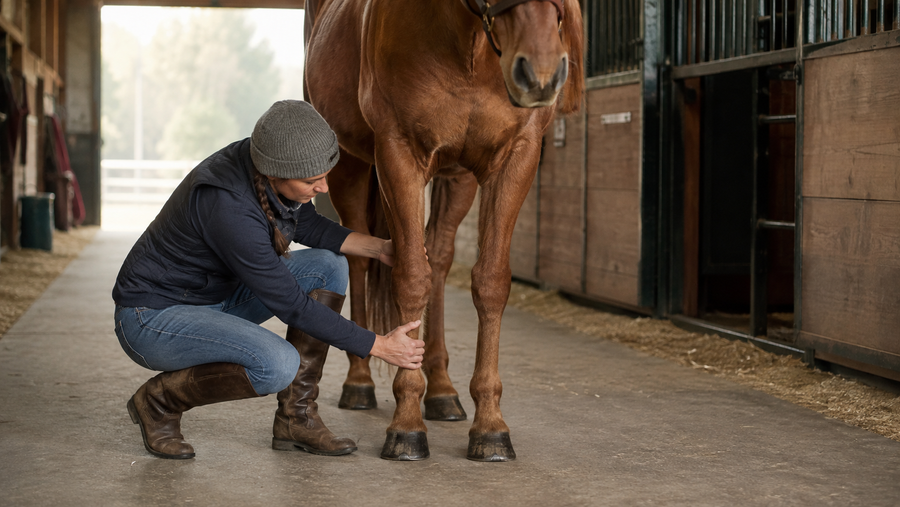
A calm check-first guide for a horse stocked up after standing overnight, including symmetry, heat, movement, skin, wrapping, and veterin...

Real Rider Resource
Pigeon fever is a bacterial infection caused by Corynebacterium pseudotuberculosis. It can appear as external abscesses, internal infection, or ulcerative lymphangitis. Suspicious swelling, fever, drainage, lameness, or a horse that is not acting normally calls for veterinary guidance.
Pigeon fever is sometimes called dryland distemper or false strangles. The bacteria can persist in contaminated soil and barn material, and it may enter through small breaks in the skin. Flies can help move contaminated material, which is why cases often rise from summer into early winter and why fly control and clean handling matter.
Call your veterinarian before squeezing, opening, or treating a suspicious swelling. Diagnosis may require an examination, imaging, bloodwork, or a culture. The right plan depends on which form is present.
These signs do not confirm pigeon fever on their own. They are reasons to involve your veterinarian and keep the barn from improvising.
Current AAEP guidance notes that pigeon fever occurs across the United States and that outbreaks have appeared in new areas during drought. Fly control cannot guarantee prevention, but it is a key part of limiting risk because insects can carry bacteria to small skin breaks. Pair insect control with manure removal, clean equipment, prompt wound care, and careful handling of any drainage.
For broader barn-health planning, use the Horse Health Library. For a separate, non-disease-specific insect routine, see Fly Protection for Horses.
The bacteria can move through contaminated drainage, soil, equipment, hands, clothing, and insects. Treat a suspected case as a biosecurity concern and follow your veterinarian's isolation and handling instructions.
No. Call your veterinarian. The timing and method of drainage depend on the location and maturity of the abscess, and uncontrolled drainage can contaminate the environment.
There is no single safe timeline for every case. Your veterinarian should base the decision on the form of disease, drainage, healing, the horse's condition, and the barn setup.
Fly control can reduce one route of exposure, but no fly product can guarantee prevention. Use an integrated plan that includes manure management, physical barriers, wound care, clean equipment, and veterinarian-directed biosecurity.
Pigeon fever is not an ordinary bump-and-wait problem. Call your veterinarian, prevent contaminated material from moving around the barn, reduce fly pressure, and keep tools and handling routines separated until your veterinarian clears the horse.
Educational only. This article is not a substitute for veterinary diagnosis or treatment. Seek prompt veterinary care for suspicious swelling, fever, drainage, lameness, colic signs, breathing changes, or a horse that is worsening.
A calm check-first guide for a horse stocked up after standing overnight, including symmetry, heat, movement, skin, wrapping, and veterin...
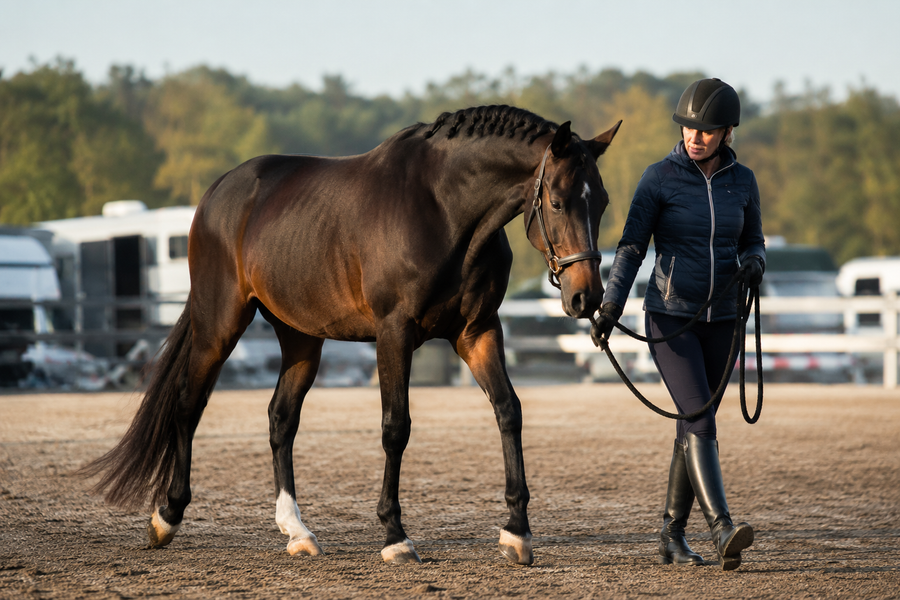
A daily mobility baseline helps riders notice small changes in a mature horse and gives the veterinarian better information than “he seem...
Anthrax is rare but can progress rapidly in horses. Learn who is at risk, what signs require urgent veterinary action, why suspected carc...
!