Real Rider Resource
Spring Horse Energy vs Fitness: A Conditioning Guide
A horse can feel electric on the first warm day and still lack the conditioning for a long or demanding ride. Fresh energy describes behavior in the moment. Fitness is the capacity to do a specific workload, recover normally, and move comfortably the next day.
Quick answer: Build spring work from the horse's recent workload, not from how forward the horse feels. Begin with a controlled warm-up, add one demand at a time, and watch breathing, coordination, sweat, cooling, legs, back, appetite, and next-day movement. Freshness can hide fatigue. Repeated slow recovery, unevenness, pain, or a marked behavior change calls for professional evaluation before harder work.
Stop the ride and escalate
Stop for lameness, stumbling that is new or repeated, loss of coordination, weakness, collapse, severe distress, breathing that seems disproportionate or does not improve with appropriate cooling, signs of colic, dark urine, inability to sweat in hot conditions, a very high temperature, or rapidly increasing heat and swelling in a limb. Contact the veterinarian promptly and follow emergency cooling instructions. Do not push on to finish the plan.
Energy and fitness answer different questions
Energy asks, "How eager or reactive does this horse feel right now?" Fitness asks, "Can this horse complete this exact work and recover predictably?" Cooler air, turnout changes, spring grass, herd activity, fewer winter miles, and a rider's own excitement can make a horse feel powerful. None of those proves that muscles, tendons, lungs, coordination, or heat management are ready for a sudden jump in work.
Fitness is specific. Arena flatwork does not fully prepare a horse for deep footing, long hills, repeated jumps, cattle work, speed, or a full show day. Look at the previous four to six weeks: frequency, duration, gait, terrain, footing, time off, illness, travel, and recovery. That record is a better starting point than the first ten energetic minutes.
The first ten minutes are information
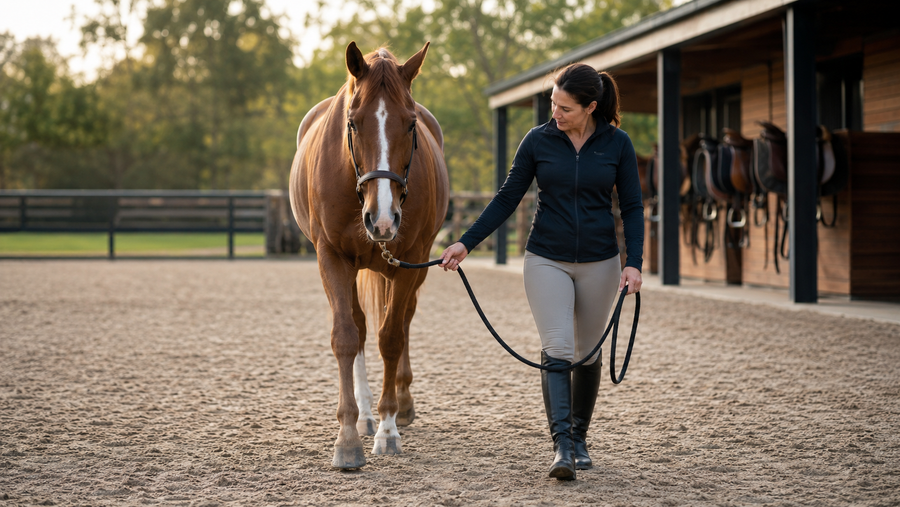
Use an active but controlled walk to assess rhythm, straightness, steering, attention, and how the body begins to loosen. Check whether the horse takes even steps, tracks normally, and accepts ordinary aids. A long rein is not safe for every fresh horse, so choose a setup that maintains control without turning the warm-up into a fight.
Add simple bends and transitions appropriate to the horse. Notice whether breathing rises smoothly, whether tension decreases, and whether impulsion remains organized. More speed is not the solution for a horse that feels braced, unbalanced, or mentally overloaded. Groundwork, a smaller safe space, instructor help, or a shorter session may be the better training decision.
A practical spring progression
- Establish the baseline. Write down what the horse has actually done recently, including easy rides, turnout, days off, and any health interruption.
- Choose today's main demand. Increase duration, terrain, gait, technical work, or speed, but avoid increasing all of them together.
- Use planned recovery points. Walk, reassess breathing and coordination, and decide whether the next work block still makes sense.
- Cool for the conditions. Reduce intensity gradually, loosen tack when safe, offer water according to the horse's normal veterinary plan, and use shade, airflow, or water as weather requires.
- Check after untacking. Look at sweat and pressure patterns, palpate legs and back gently, inspect feet, and note appetite, drinking, manure, and attitude.
- Recheck the next day. Watch the horse walk and turn before assuming recovery is complete. Compare movement, filling, heat, behavior, and willingness with the normal baseline.
Breathing and cooling tell part of the story
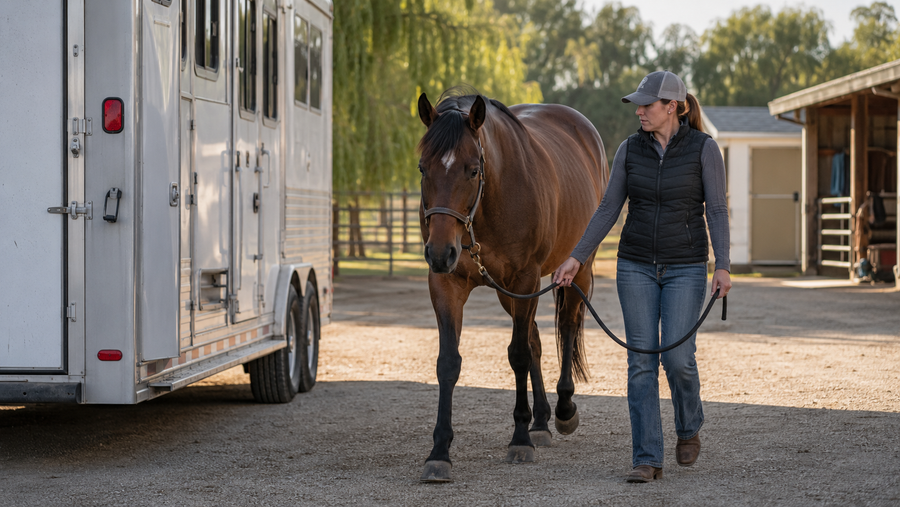
Know the horse's normal response to a familiar workload. Weather, humidity, coat, body condition, acclimation, excitement, and health all influence recovery. Count or observe breathing consistently at the same checkpoints instead of relying on a vague impression. A rapid initial rate can be expected after hard work, but the trend should improve with rest and suitable cooling. A worsening trend or recovery that is repeatedly slower than normal needs veterinary discussion.
Sweat alone does not measure fitness. Heavy sweat may reflect heat or anxiety, while little sweat in a hot, working horse can be dangerous. Cooling advice changes with conditions, so use a veterinarian-approved plan and do not withhold water based on barn myths.
Legs, back, and next-day movement
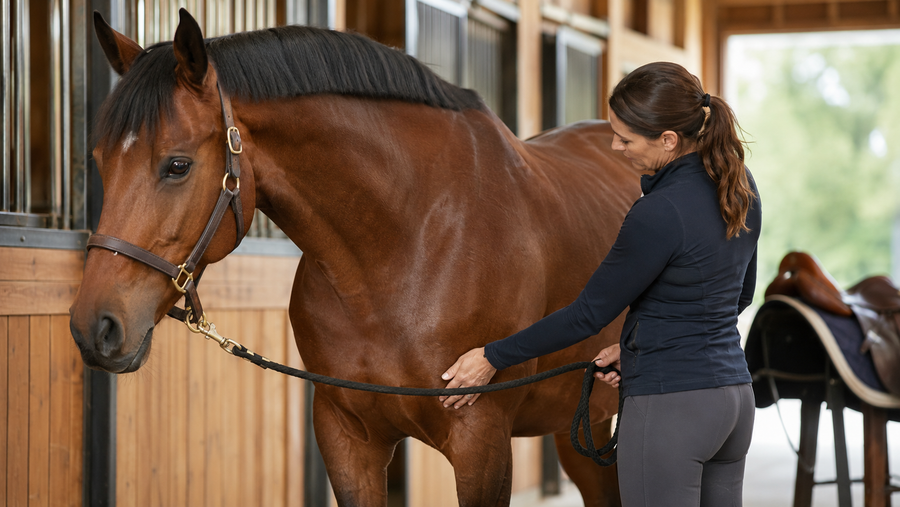
After the horse is settled, compare all four limbs for new heat, filling, tenderness, or hoof changes. Check the back and girth area for sensitivity or tack patterns. The verified daily horse leg-care routine gives a repeatable inspection sequence. If the horse is sound and the skin is intact, a label-directed liniment gel can be one optional step in routine aftercare. It does not establish fitness, repair an injury, or make it safe to work through pain.
For uncertainty about the next care route, use the horse solution finder. Repeated stiffness, declining willingness, abnormal recovery, or the same limb filling after work deserves a veterinarian-led investigation rather than a harder warm-up.
Common spring mistakes
- Mistaking spooking or rushing for cardiovascular readiness.
- Recreating last autumn's workload during the first week back.
- Adding hills, speed, duration, and deep footing together.
- Skipping warm-up because the horse feels loose and forward.
- Watching only the ride and ignoring cooling or next-day movement.
- Using liniment gel to cover a pattern that needs examination.
Spring energy and fitness FAQ
How can a fresh horse still be unfit?
Freshness is short-term behavior and available energy. Fitness reflects recent, specific conditioning and the ability to complete work, cool normally, and move comfortably later and the next day.
How quickly should I increase spring work?
There is no universal calendar. Begin from the horse's actual recent workload, change one major demand at a time, and let breathing, cooling, legs, back, behavior, and next-day movement guide progression.
What should I watch during warm-up?
Watch rhythm, straightness, coordination, steering, attention, breathing, and whether tension decreases. Repeated stumbling, unevenness, distress, or worsening control is a reason to stop and reassess.
How do I know whether my horse recovered well?
Use a familiar baseline. Breathing and temperature should trend appropriately, the horse should cool and resume normal behavior, and appetite, legs, back, feet, and next-day movement should not show a concerning change.
Can liniment gel make an unfit horse ready?
No. Liniment gel can be an optional, label-directed step for routine care on intact skin, but it cannot create conditioning, diagnose soreness, repair injury, or make it safe to push through abnormal recovery.
Educational note: This guide supports observation and workload decisions. It does not diagnose poor performance or replace an individualized veterinary and conditioning plan.