Tight Calves After Riding? Check the Ride Before You Stretch
Calf tightness after riding is often a workload or position clue. Review stirrup length, gripping, boots, hydration, recovery, and medical red flags first.
Free U.S. shipping at $50+
No code needed.
Shipping details
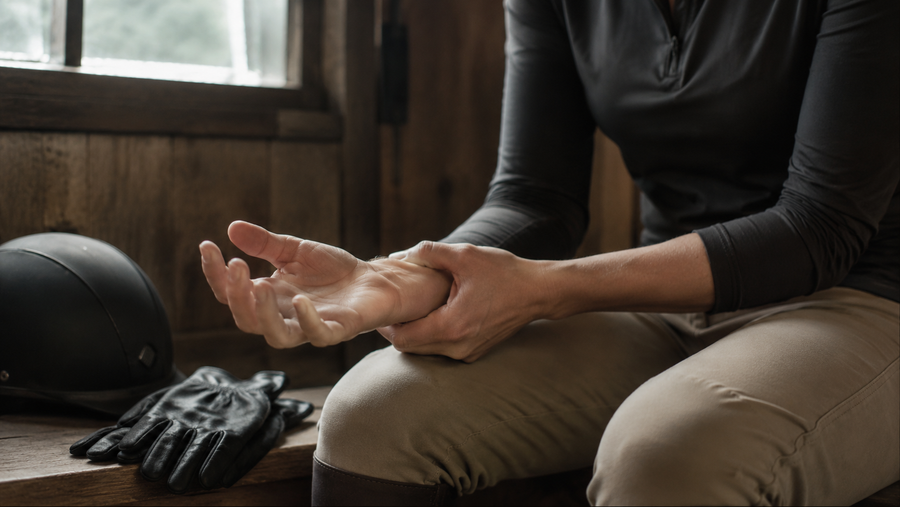
Quick answer: Pain on the thumb side of the wrist after fastening winter blankets often points to repeated gripping, pinching, pulling, and twisting, especially with stiff webbing, cold hardware, wet straps, or several horses in a row. Stop forcing the painful motion, identify the exact task that triggers it, and get medical care for swelling, weakness, numbness, deformity, severe pain, or loss of grip. Do not assume every thumb-side pain is simple overuse.
The blanket may be the last task you notice, not the only load. Water buckets, feed bags, lead ropes, phone use, typing, lifting, and riding can all add repetitions to the same hand.
Do not work around an unsafe horse to spare the wrist. Ask for another handler, use a safe tying arrangement, and keep ordinary horse-handling rules in place.
Pain near the base of the thumb that worsens with gripping, pinching, making a fist, or turning the wrist can have several causes. One is de Quervain tenosynovitis, a condition involving tendons on the thumb side of the wrist. Mayo Clinic notes that repeated hand and wrist motion can worsen the condition and that symptoms can include pain, swelling, trouble gripping, and a catching feeling. See the Mayo Clinic de Quervain guide for medical context.
That does not mean blanket buckles diagnose the condition. A healthcare professional must sort out tendon irritation, joint problems, nerve symptoms, sprain, fracture, and other causes.
Seek prompt medical care for:
Call emergency services for hand or wrist symptoms that occur with chest pressure, shortness of breath, fainting, sudden one-sided weakness, facial droop, or trouble speaking.
For ordinary post-task soreness without red flags, stop the aggravating movement and give the hand a lower-load window. Use the other hand only when it is safe and does not simply move the same problem across the body. A clinician may recommend a brace, exercise, or other care after evaluating the cause. Avoid aggressive stretching or self-testing a painful tendon.
Our one-sided barn-work audit can help identify other repeated carrying and twisting patterns. If numbness or tingling is part of the picture, use the red flags in our hand numbness after riding guide.
For normal external comfort after routine activity, ReJüv™ Gel 8oz EZ Squeeze is a human-labeled, low-odor, colorless topical gel made without menthol or capsaicin. Use it only on clean, dry, intact skin according to the current label. It does not diagnose or repair a tendon, joint, nerve, sprain, or fracture. Do not combine it with heat or cover it unless the label or a healthcare professional specifically directs you. Our topical gel and heating-pad guide explains why that boundary matters.
Cold hands, stiff hardware, wet webbing, gloves, and more frequent layer changes can increase the force and repetition required. Those factors explain workload, not the medical cause of pain.
Do not force a painful stretch. Reduce the triggering task and ask a healthcare professional for an appropriate plan when symptoms persist or affect grip.
Continuing the exact motion that triggers pain may worsen an overuse problem. Modify the task, reduce repetitions, and seek care if symptoms return, worsen, or limit function.
No. A topical gel can fit a routine comfort step on intact skin, but it cannot identify or correct the underlying cause.
Calf tightness after riding is often a workload or position clue. Review stirrup length, gripping, boots, hydration, recovery, and medical red flags first.
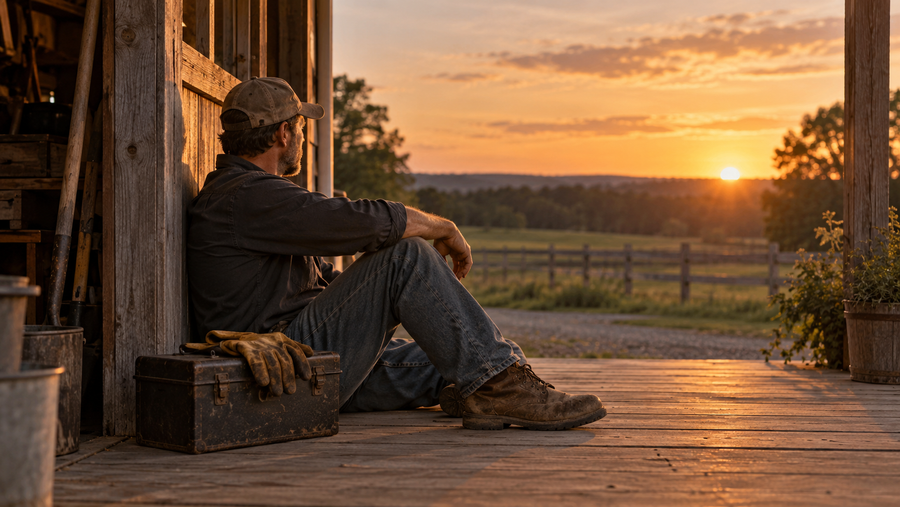
A Labor Day reflection for the people who carry the load all year: honest work deserves respect, and the worker deserves a moment to set it down.
Numbness or tingling after riding is a nerve symptom, not ordinary muscle tightness. Use this rider-first checklist to know when to stop, track, and seek care.
!