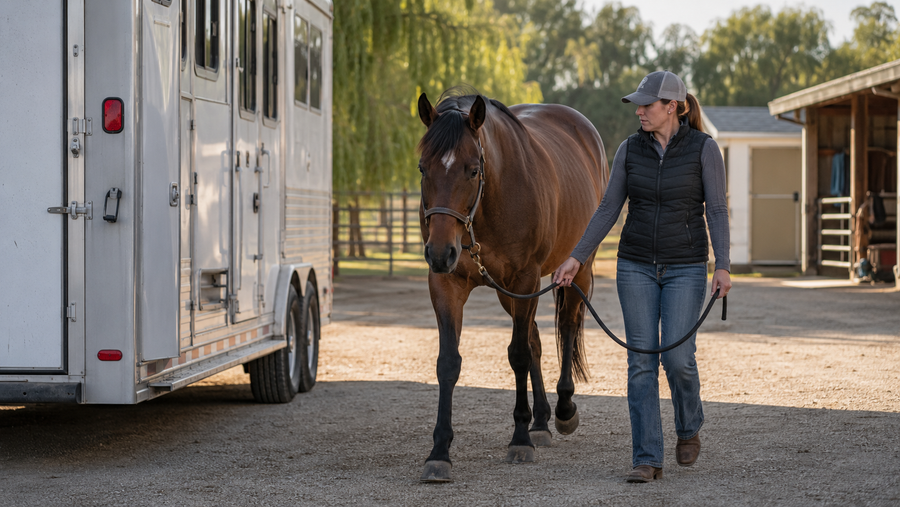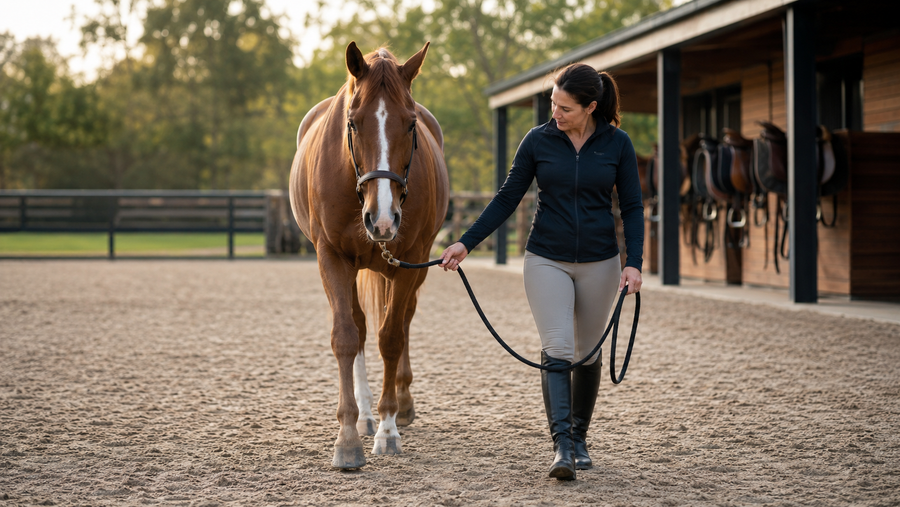
Rider grooming gray horse in barn

Quick answer: Post-ride grooming should do more than make the horse look clean. It is one of the best times to compare both sides of the horse, notice new heat or swelling, find tack rubs, check legs and feet, and catch small changes before they become bigger problems. The brush gives you a reason to put your hands on the whole horse while the ride is still fresh in your mind.

Good horsemen do not finish the ride when they step out of the saddle. They finish it when the horse has cooled down, been checked over, and given a chance to tell you what the work actually cost.

Why grooming is part of recovery

After a ride, your memory is still useful. You know whether the horse felt heavier on one rein, stumbled more than normal, resisted a transition, got tired on a hill, or felt unusually strong behind. Grooming lets you compare those ride impressions with what your hands and eyes tell you on the ground.

That does not mean every flinch is an injury. It means you are collecting information.

A simple post-ride check while you groom

  1. Start with the saddle and girth area. Look for sweat patterns, rubs, hair disturbance, tenderness, or dry spots that are unusual for that horse.
  2. Compare shoulders and withers. Use a flat hand, not a poking finger, and compare left to right.
  3. Run your hands down all four legs. Feel for heat, swelling, filling, cuts, and anything that is different from baseline.
  4. Pick the feet. Check for rocks, packed debris, loose shoes, hoof wall damage, and unusual sensitivity.
  5. Check the back and hindquarters. Note any new guarding, asymmetry, or reluctance to stand square.
  6. Watch the horse walk away. A few straight steps on level footing can tell you more than another ten minutes of poking.

What riders should write down

A five-second note beats a vague memory three days later. Record the date, workload, footing, anything unusual in the ride, where you noticed a change, and whether it was better, worse, or unchanged the next morning.

If you need to show a veterinarian what you are seeing, our guide on how to film a useful trot-up video gives you a simple structure.

Where routine topical care fits

If the horse is comfortable, weight-bearing normally, and the concern fits ordinary post-work care, a horse-labeled topical can be part of the routine after the check is complete. The order matters: observe first, then apply.

For riders who want a targeted, stay-put format, Draw It Out® 16oz Liniment Gel is the practical choice for clean, intact skin after normal work. It is ready to use and easy to place exactly where you want it without turning the grooming routine into a complicated project.

The red flags grooming can uncover

Stop the normal routine and call your veterinarian when you find marked swelling, unusual heat, obvious pain, a new or worsening gait change, reluctance to bear weight, weakness, neurologic-looking movement, or a problem after a fall, kick, trailer incident, or other trauma.

Grooming is useful because it helps you notice changes. It is not a substitute for diagnosis.

Frequently asked questions

Should I groom before or after the horse cools out?

Start the visual check during cool-out, then groom once breathing and body temperature are settling. You can still inspect legs, tack areas, and obvious skin changes immediately.

What should I feel for on the legs?

Compare both sides for heat, swelling, filling, cuts, and changes from the horse's normal. Symmetry and baseline matter more than chasing a single random reaction.

Should I apply liniment before I check the legs?

No. Check and record first so you know what the horse looked and felt like before you changed anything.

How often should I do this?

Every ride. The routine gets faster as you learn what is normal for your horse.

Make the post-ride check easy to repeat

A simple grooming routine plus targeted post-work care is more valuable than a complicated system you will not follow consistently.

See Draw It Out® 16oz Liniment Gel

Educational horse-care information only. Follow the current product label. This article does not replace veterinary diagnosis or treatment.

Leave a comment

Please note, comments need to be approved before they are published.

Start here

Reading first? Here is the clean path.

This article gives you the background. If you are ready to put the idea into a real horse care routine, these are the next places most riders should go.

Daily recovery

Liniment Gels

Explore the Draw It Out® liniment gel lineup for everyday use, post-work routines, and targeted recovery support.

Shop liniment gels
Find the fit

Solution Finder

Match your horse’s workload, age, routine, and care goals to the Draw It Out® products that make the most sense.

Use the finder
Routine first

Prehabilitation

Learn how riders support soundness, comfort, and consistency before little issues become bigger problems.

Read the guide
Simple rule: read the article for context, use the Solution Finder for direction, then build the routine around the product format your horse will actually use consistently.

Real Barn Proof

What this looks like in real barns.

Real riders. Real horses. Real routines. These clips rotate automatically so the proof stays fresh without weighing the page down with a long feed.

Random rider clips

Why this matters: good horse care should make sense outside the ad. These clips show the kind of everyday use that builds trust one barn at a time.

Further Reading

Keep building the routine.

Horse care works better when the next step is clear. These related reads help connect today’s topic to better daily decisions in the barn.

Horse health news

Start with the principle, then build the habit. The right article should make the next barn decision easier, not more complicated.

Next Step

Keep your barn dialed in.

Simple care guides, practical product paths, and rider-trusted tools built for real horses and real routines.

Good care gets easier when the next step is obvious. Read the guide, match the routine, then choose the format that fits how your barn actually works.

Recovery Routine

Build a complete recovery routine.

Want a smarter way to think through post-ride care, heat, swelling, leg support, and daily recovery decisions? Start with the Performance Recovery Hub.

Better recovery starts with a repeatable routine. The hub gives riders a clearer path from workload to product format to aftercare timing.

Rider Favorites

Always in the kit.

Four core Draw It Out® staples riders keep close for daily recovery routines, wash rack use, targeted support, and quick barn-side care.

Core barn staples
Draw It Out® 16oz Liniment Gel | Daily Horse Care

Stay-Put Gel

16oz Liniment Gel

The everyday liniment gel format riders reach for when they want targeted, no-mess application.

View product
Draw It Out® 32oz Horse Liniment Concentrate | Spray, Wrap & Soak

Mix Your Way

32oz Concentrate

A flexible concentrate for riders who want to mix their own routine around workload and barn needs.

View product
Draw It Out® RTU Spray 24oz | Ready-to-Use Liniment Spray

Ready To Use

24oz RTU Spray

A ready-to-use spray format for quick application after work, travel, turnout, or daily care.

View product
CryoSpray® by Draw It Out® 24oz | Cooling Body Brace for Horses

Cooling Brace

CryoSpray

A cooling body brace spray for riders who want a fast, practical option after hard work or hot days.

View product

Format matters. Gel, concentrate, ready-to-use spray, and cooling spray each solve a different barn problem. Pick the one your routine will actually use.

Where To Go Next

Turn the idea into a routine.

If this topic connects to what you are seeing in your horse, these are the three cleanest next steps. Start with direction, then choose the product format that fits the way your barn actually works.

Next steps

Best next move: use the Solution Finder first when the issue is unclear. Go straight to the liniment gel collection when you already know the format you want.