How Long Does a 16oz Horse Liniment Gel Bottle Last?
There is no universal application count. Use this seven-day bottle-life test to choose between 16oz single, two-pack, four-pack, and 64oz Gel.

Quick answer: Horse liniment belongs after the basic post-ride check, not before it. Cool the horse out, watch the walk, compare both sides, feel for unusual heat or swelling, and check the skin. If everything looks like normal post-work fatigue, a horse-labeled topical can fit the routine. If something looks new, one-sided, painful, swollen, hot, or mechanically wrong, stop guessing and move into the evaluation lane.
A good post-ride routine is not about applying more products. It is about catching changes early, knowing what is normal for your horse, and using topical care only when the horse is actually in the routine-care lane.
Start with the horse, not the bottle. A fast, consistent check gives you better information than rubbing a product into every area that worked hard.
For normal post-work care, apply after the horse has cooled out and after you have completed the initial check. Clean and dry the target area, then follow the current product label. Do not use a topical to cover up a movement change you have not assessed yet.
If the horse worked in heavy sweat, dust, or mud, get the skin clean first. A clean surface makes the hands-on check more useful and helps you avoid trapping dirt under a topical product.
Choose the format based on the job. A gel makes sense when you want targeted, stay-put placement on a specific area. A prepared spray makes more sense when you want broader coverage or a faster multi-horse barn routine.
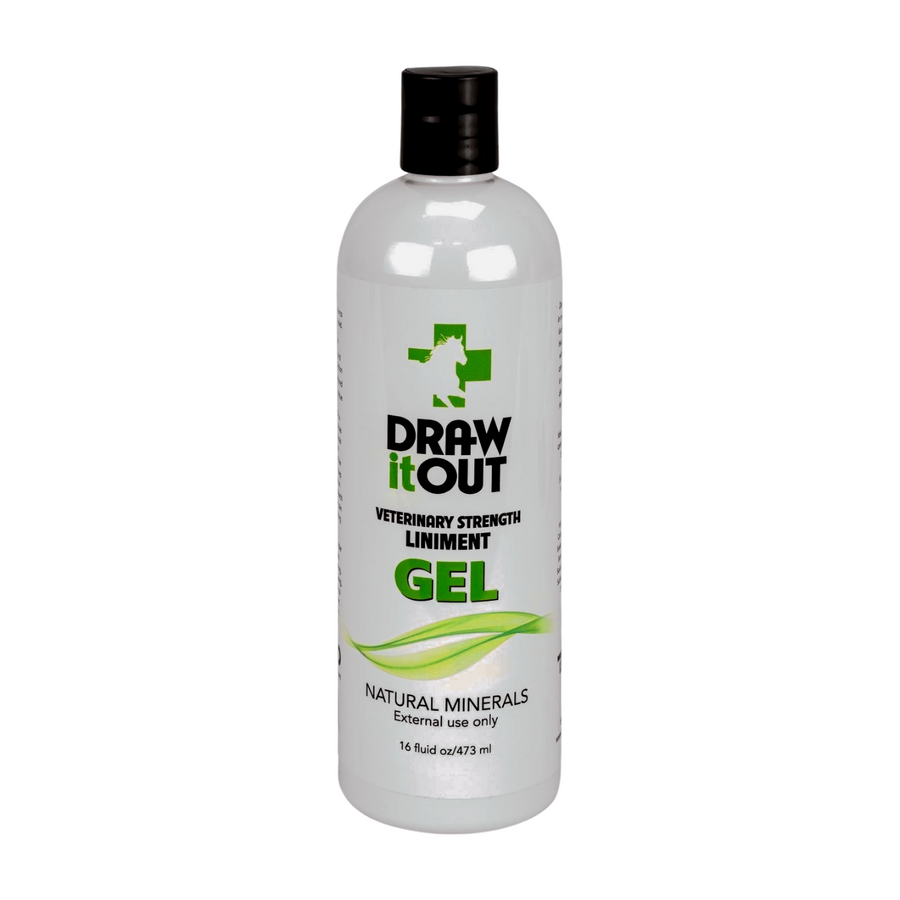
For targeted post-ride care, Draw It Out® 16oz Liniment Gel is the straightforward ready-to-use option. It is odorless and colorless and is made without menthol, camphor, capsaicin, alcohol, or witch hazel. That means the routine does not depend on a dramatic burn, freeze, or smell to feel like something is happening.
If you are deciding between formats, see the full horse liniment gel vs. concentrate guide.
That note is more valuable than it looks. Riders remember the big problems. Written notes catch the small patterns that repeat every Tuesday after hill work or every time the footing gets deep.
Liniment should wait when the horse has a new gait change, marked swelling, obvious heat, significant tenderness, reluctance to bear weight, weakness, an open wound, or a reaction that is getting worse instead of settling. A topical is part of routine care; it is not a substitute for veterinary evaluation.
The same rule applies after a fall, slip, kick, trailer incident, or other significant trauma. Record what you see before changing the picture.
More is not automatically better. Use enough for even coverage according to the label. The goal is consistent application, not a thick layer that takes forever to dry or ends up on your hands, tack, and bedding.
That depends on the specific product label and your horse's skin tolerance. Draw It Out® Liniment Gel is designed for routine horse care, but always follow the current label and monitor the skin.
If the horse is sweaty, dusty, muddy, or needs cooling, clean and cool first. Dry the target area before applying a topical unless the label directs otherwise.
No. Sensation is not a reliable measure of usefulness. Read more in Does Horse Liniment Have to Burn to Work?
Use the Draw It Out® Solution Finder to narrow the routine by what you are actually seeing.
For clean, intact skin and a normal post-work routine, the 16oz gel gives you controlled placement exactly where you want it.
Educational horse-care information only. External use only. Follow the current product label. This article does not replace veterinary diagnosis or treatment.
There is no universal application count. Use this seven-day bottle-life test to choose between 16oz single, two-pack, four-pack, and 64oz Gel.
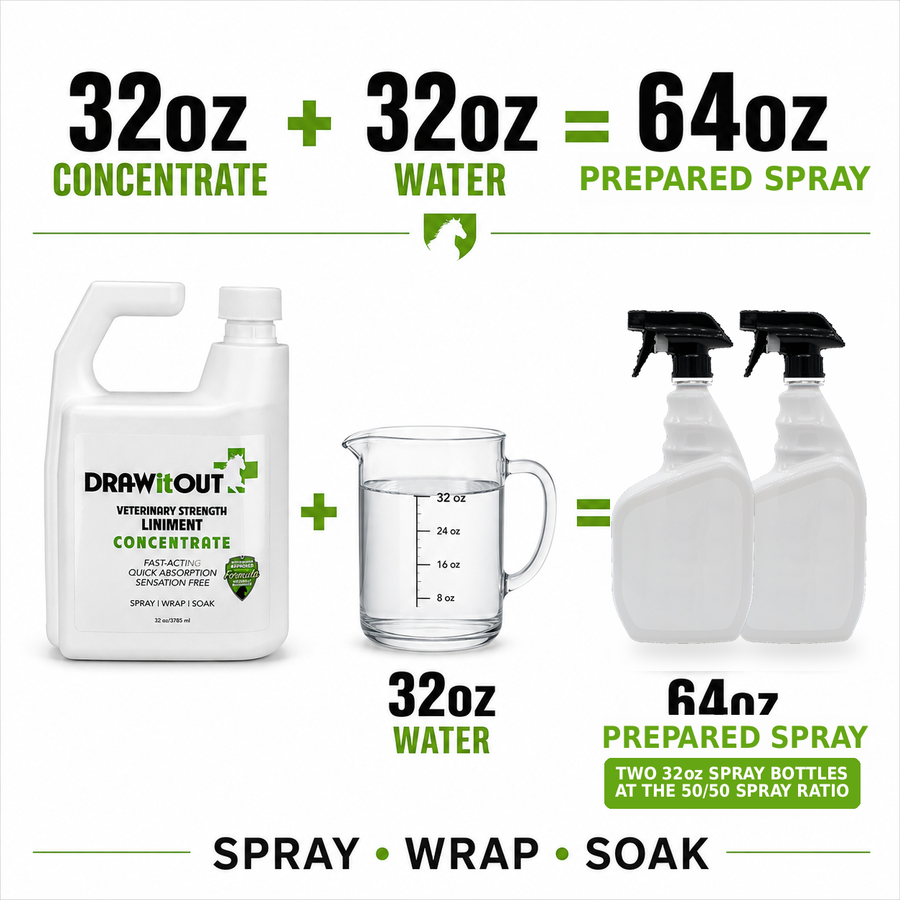
See the 32oz horse liniment concentrate math, cost per prepared ounce, mixing discipline, and the exact barn routines where concentrate earns its space.
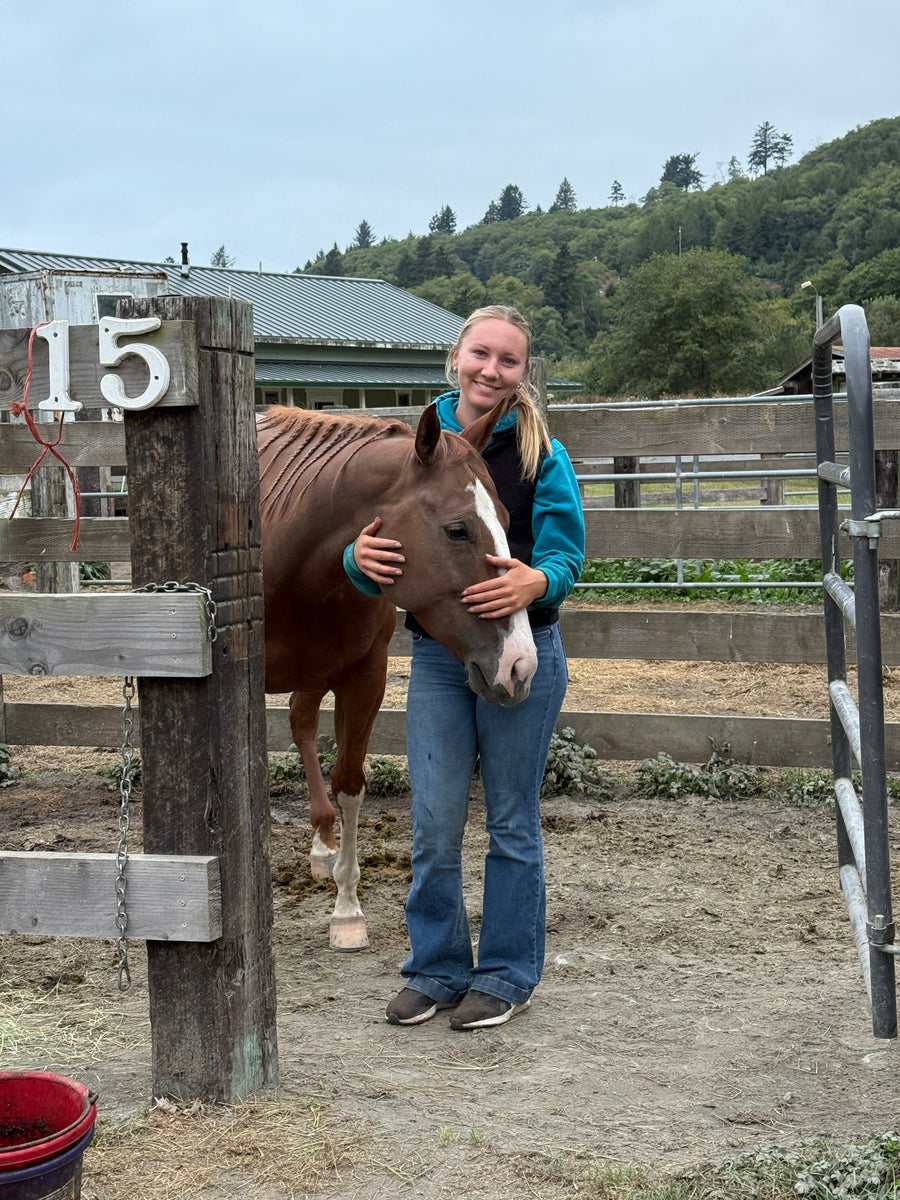
Meet Courtney Sabral of Chico, California, an experienced barrel racer and gymkhana rider whose care routine for Diamond and 26-year-old Ricky is built around consistency.
!