Menthol-Free Horse Liniment: Why It Matters for Daily Barn Care
Menthol-free does not mean weak. It means the product is not relying on menthol’s cooling sensation and familiar smell to persuade the rider that something is happening.
Quick answer
A menthol-free horse liniment is a topical formula made without menthol. Riders often choose this lane when they want less fragrance, less sensory distraction, and a calmer daily routine. Menthol can create a cooling feeling, but sensation alone does not tell you whether a product is the right fit for a horse, a workload, or repeated use. Read the entire label, not just one ingredient claim.
What menthol actually changes
Menthol activates cold-sensitive receptors in skin. That can create a cooling perception even when tissue temperature has not changed in the way the rider imagines. The sensation is real, but the story we attach to it can get ahead of the evidence. “I feel it, so it must be working harder” is a human shortcut—not a complete product evaluation.
Menthol also brings a recognizable odor. In an old-school tack room, that smell may be associated with strength or tradition. Neither smell nor cooling intensity automatically tells you whether the overall formula, concentration, directions, or application is appropriate for your horse.
Why riders choose a menthol-free lane
Less sensory theater
An odorless, sensation-free formula lets the rider focus on placement, hands-on checks, and the horse’s response rather than fragrance or a dramatic skin sensation.
A calmer barn environment
Strong fragrances can be unpleasant in enclosed aisles, trailers, grooming areas, and multi-use barns. Odorless care is easier around riders who prefer a cleaner workspace.
Routine consistency
Daily care works best when it is simple enough to repeat. A formula that does not stain, sting, or overpower the aisle removes friction from the process.
Clearer observation
A horse should still be evaluated for heat, filling, sensitivity, movement, and behavior. Intense sensory ingredients can tempt the rider to judge the product instead of the horse.
Menthol-free is not the whole label
A product can be menthol-free and still contain other ingredients that create heat, cold, fragrance, irritation, or regulatory concerns. Look for camphor, capsaicin, alcohol, witch hazel, essential-oil blends, counterirritants, and any caution about wrapping, broken skin, frequency, or competition use. The right question is not “Does it contain menthol?” It is “What does the complete formula ask of the horse and the rider?”
| Label clue | What it tells you | What it does not prove |
|---|---|---|
| Menthol-free | No menthol is included. | That every other ingredient is mild or appropriate for every use. |
| Natural | Usually a broad sourcing or marketing description. | Safety, gentleness, competition status, or effectiveness. |
| Cooling | The formula or routine is positioned around cooling. | How much actual heat is removed or whether it fits the situation. |
| Veterinary strength | A positioning statement that should be supported by clear directions and formulation context. | That the product diagnoses, treats, or replaces veterinary care. |
| competition-conscious | A claim that still requires current-rule verification. | Automatic compliance with every organization, jurisdiction, or future rule change. |
How to compare horse liniments without using your nose
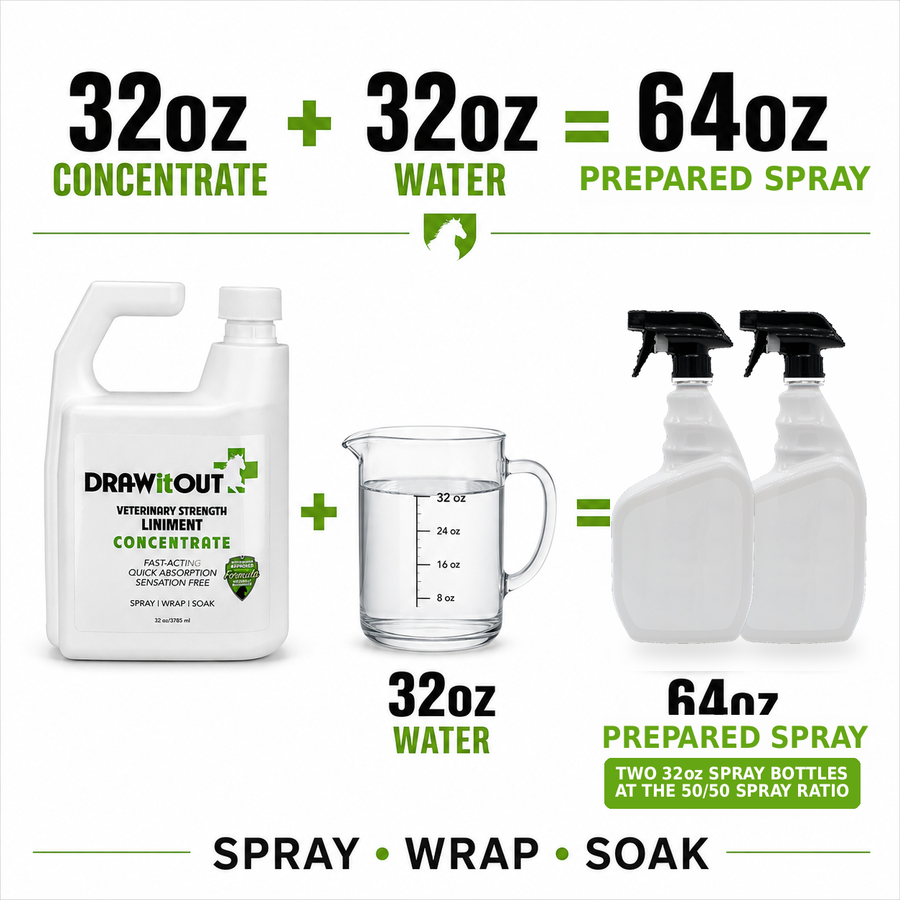
- Define the job. Are you choosing targeted gel, broad spray coverage, a mix-to-use concentrate, or a product for a specific label-approved routine?
- Read every active and inactive ingredient. If the label is vague, ask the manufacturer for clarity before using it.
- Check directions and warnings. Pay close attention to wrapping, frequency, skin condition, equipment contact, eyes, mucous membranes, and wash-off instructions.
- Look at the horse first. Compare left to right for heat, filling, tenderness, skin changes, and movement. A product should never replace that baseline.
- Use the smallest sensible amount. More is not automatically better. Follow the label and record what was used.
- Recheck later and the next morning. A repeatable observation window is more useful than an immediate smell or skin sensation.
Where Draw It Out® is different
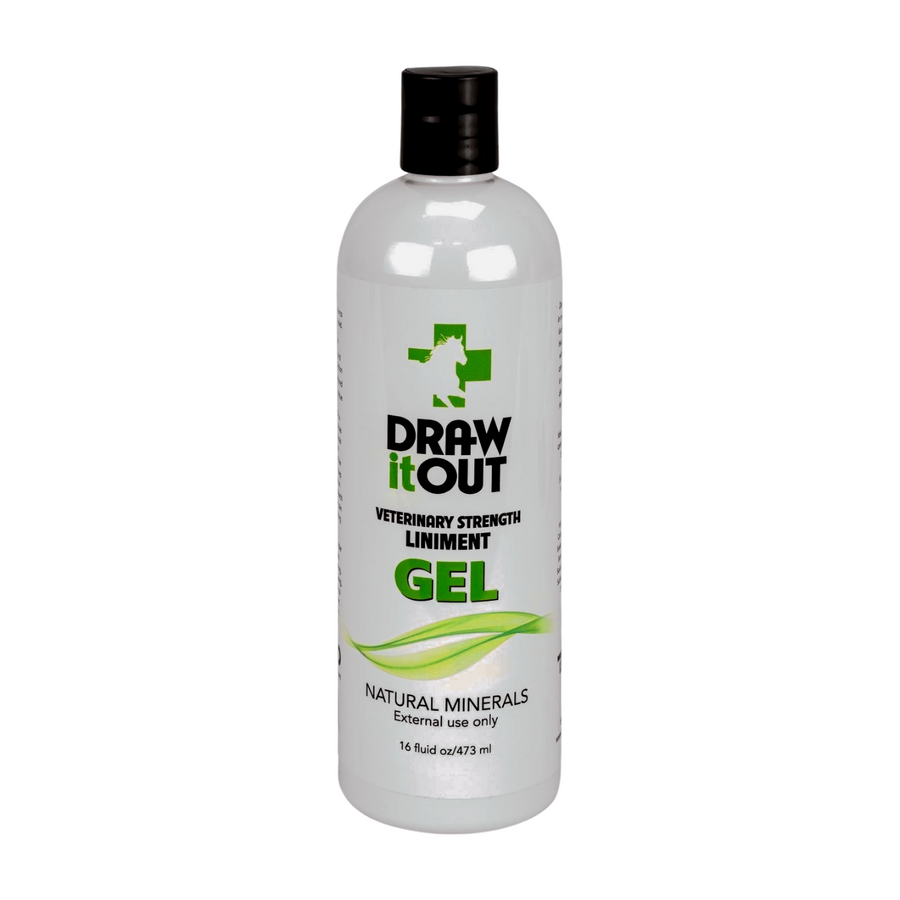
Draw It Out® Liniment Gel is made without menthol, camphor, capsaicin, alcohol, witch hazel, or DMSO. It is odorless and colorless. The gel format is designed to stay where riders place it, making it a straightforward option when targeted application fits the routine.
That does not remove the rider’s responsibility. Use the current label, assess skin first, check governing-organization rules that apply to your event, and stop if the horse reacts poorly. A calm formula is still a product that must be used deliberately.
When sensation can mislead the decision
Behavioral economics calls this a proxy problem: when the outcome is hard to see immediately, people substitute something easy to notice. Smell, sting, warmth, or cooling becomes the proxy for quality. In horse care, that shortcut can be especially persuasive because the horse cannot explain the sensation.
A better scorecard is quiet: Is the label clear? Does the format match the job? Can you apply it consistently? Does the horse tolerate the routine? Can you still assess the horse accurately? Are you respecting red flags and professional care? Those answers matter more than whether the tack room smells medicinal.
A straightforward menthol-free starting point
Draw It Out® 16oz Liniment Gel is the flagship ready-to-use format for targeted horse care. It gives riders an odorless, colorless, sensation-free lane without menthol or the other harsh old-school ingredients listed above.
See the 16oz Liniment GelUse the Solution FinderMenthol-free horse liniment FAQ
Does menthol-free mean a liniment does not work?
No. Menthol provides a cooling sensation and smell; its absence does not determine the value of the complete formula. Judge the product by its entire label, intended use, routine fit, and the horse’s response.
Is menthol bad for horses?
This article does not classify menthol as universally good or bad. It explains why sensory intensity is not a reliable shortcut for choosing a daily-care product. Follow labels and veterinary guidance.
Can a menthol-free liniment be used daily?
Frequency depends on the individual product’s label. Menthol-free is only one formulation detail; it does not override directions, warnings, or the need to reassess the horse.
Is menthol-free automatically competition compliant?
No. Ingredient and medication rules can change and differ among organizations. Check the current rules for the governing body and event, and use products exactly as directed.
What should I look for besides menthol?
Review all ingredients, format, application directions, wrapping warnings, skin guidance, fragrance, staining, frequency, and whether the manufacturer makes clear, supportable claims.
Get practical horse-care guidance
Join the Draw It Out® herd for rider-first notes on stiffness, hauling, skin, hoof care, and recovery routines.
Educational information only. This article does not diagnose or treat a horse and does not replace veterinary advice. Always follow the current product label and the rules that apply to your event.