
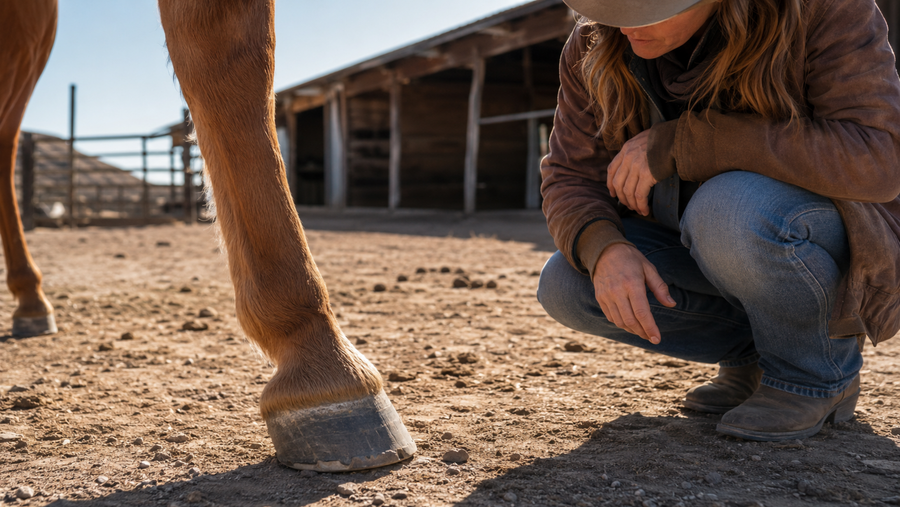
Horse Hoof Wall Chipping in Dry Lots? What Owners Should Watch
A practical horse health guide for hoof wall chipping in dry lots: trim timing, footing, cracks, shoe checks, and farrier or vet red flags.

Silver Hoof EQ Therapy® works best as one small step inside consistent hoof hygiene and professional farrier care.
Stand the horse safely, lift each foot, remove packed material, and compare the sole, frog, heels, white line, wall, and shoe. Smell and moisture are useful observations, but they do not identify the cause of a problem by themselves.
Follow the label for preparation, location, amount, and frequency. Use a clean applicator and avoid spreading debris from one foot to another. Do not apply into punctures, deep separations, or painful tissue without professional direction.
Alternating wet and dry conditions, manure-packed stalls, standing water, frozen ruts, and poor drainage can undermine any topical routine. Give the horse a clean, dry place to stand and address the source of chronic moisture or contamination.
Hoof growth may slow in winter, but balance still changes. Farrier intervals should match the individual horse, season, footing, and shoeing plan. Dated photos help the owner and farrier discuss progress without guessing.
Call your farrier or veterinarian for lameness, increased digital pulse, hoof heat with pain, drainage, strong persistent odor with damaged tissue, deep cracks, puncture, wall separation, or a horse that will not bear weight.
Use the frequency and locations on the current label, and adjust only with professional guidance.
Improve drainage, bedding, turnout surfaces, and cleaning. Product alone cannot fix the environment.
This article is educational and does not replace diagnosis, treatment, or individualized advice from your veterinarian, farrier, qualified professional, or insurance adviser.
A practical horse health guide for hoof wall chipping in dry lots: trim timing, footing, cracks, shoe checks, and farrier or vet red flags.
Separate muscle loss from fat loss, record topline changes, recognize veterinary red flags, and plan nutrition and exercise around the cause.
A new grooming flinch is information, not attitude. Use this calm checklist to separate skin irritation, pressure sensitivity, tack clues, and veterinary red flags.
!

