Draw It Out® Horse Health Care News
Silver Hoof EQ Therapy®: Hoof-Care Context and Farrier-Aware Use
Place Silver Hoof EQ Therapy® inside a daily hoof-care routine built around cleaning, moisture management, farrier timing, and veterinary red flags.
Quick answer: Silver Hoof EQ Therapy® fits routine external hoof care when the hoof is clean, the area is appropriate for product use, and farrier and veterinary needs have already been addressed.
Start with cleaning and inspection
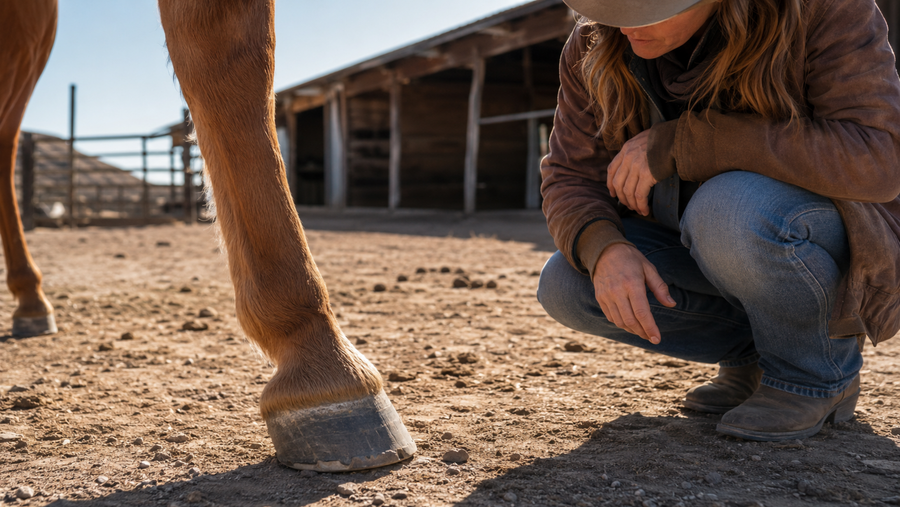
Pick out the frog, sulci, sole, white line, and heel areas. Compare odor, tenderness, heat, digital pulse, cracks, packed debris, and wall changes across all four feet.
Manage moisture and environment
Reduce standing time in urine, wet bedding, and deep mud. Provide dry time after washing or wet turnout. Avoid extreme cycles created by over-soaking or heavy dressing.
Keep the farrier central
Trimming, shoeing, balance, wall support, and mechanical hoof problems belong with the farrier. Send photos early when a crack, shoe, or separation changes.
Use the current label
Apply Silver Hoof EQ Therapy® only as directed and only to appropriate external areas. Do not invent a stronger schedule or combine it with other topicals without guidance.
Know the limits
The product does not diagnose or treat laminitis, punctures, abscesses, canker, deep infection, or unexplained lameness. Those concerns need professional care.
Frequently asked questions
Can Silver Hoof EQ Therapy® replace my farrier?
No. It is a routine external hoof-care product, not a substitute for trimming, shoeing, balance, or diagnosis.
When should I call the veterinarian?
Call for lameness, refusal to bear weight, puncture, marked heat, strong digital pulse, drainage, bleeding, rapid swelling, or sudden severe tenderness.
Educational content only. This article does not replace veterinary, farrier, nutrition, medical, saddle-fitting, training, or other qualified professional guidance.
Explore the Horse Health Library or use the Solution Finder.