Seborrhea in Dogs: Why Flakes, Grease and Odor Need a Closer Look
Seborrhea in dogs can look like dandruff, greasy skin or a strong odor, but the common secondary form usually points to another problem. Learn what to check, what...

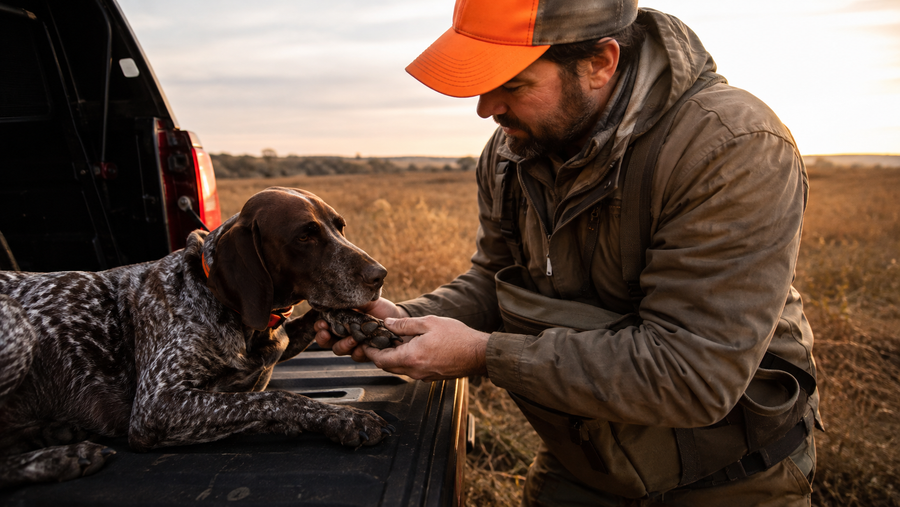
If your dog starts chewing or licking paws after wet grass or irrigated pasture, inspect the feet before assuming it is a habit. Moisture can hold grit and plant material between the toes, while a grass awn or other foreign material may affect only one paw. Repeated chewing can also point to a skin problem that needs veterinary attention.
Move your dog to a clean, dry area. Check the top and bottom of every paw, spread the toes gently, inspect around each nail and pad, and look for redness, swelling, broken skin, seeds or debris. Rinse dirty paws with clean lukewarm water and dry carefully between the toes. Do not dig into the skin or pull material that appears embedded. Contact your veterinarian for pain, limping, swelling, drainage, odor, bleeding, an embedded object or chewing that continues.
Wet vegetation and soil can keep the hair and skin between the toes damp while trapping mud, pollen, small seeds and grit. Friction, moisture and repeated licking can make the area more irritated. Paw chewing may also have another cause, including environmental sensitivity, a damaged nail, an insect sting or a skin condition.
One-sided chewing deserves extra attention. The Merck Veterinary Manual notes that foreign-body lesions, including those caused by grass awns, are often solitary. UC Davis School of Veterinary Medicine explains that barbed foxtails can penetrate skin and should not be treated like ordinary loose debris.
| Area | What to notice | What it may mean |
|---|---|---|
| Between the toes | Redness, damp hair, a bump, seed head, grit or discharge | Trapped debris, irritation or material under the skin |
| Paw pads | Cracks, cuts, peeling, tenderness or a puncture | Surface trauma or a wound that needs closer attention |
| Nails and nail beds | Split nail, bleeding, swelling or a nail sitting at an odd angle | Nail injury rather than a skin-only problem |
| Top of the paw | Swelling, a red-purple bump, thinning hair or drainage | A deeper interdigital problem that warrants veterinary care |
| Gait and behavior | Limping, holding up a paw, flinching or guarding | Pain or a possible foreign body |
Call your veterinarian promptly if your dog is limping, cannot settle, guards the foot, has a torn nail, swelling, a painful lump, bleeding, drainage, strong odor, open skin or suspected embedded material. Veterinary guidance is also appropriate when chewing returns repeatedly, affects several paws or continues after the paws are clean and dry. Those patterns may require examination for an underlying skin, allergy or mobility issue.
This page owns the intent for paw chewing after wet grass or irrigated pasture. If odor is the main concern, use the wet-grass paw odor guide. If the problem began after dry weeds or tall grass, use the tall-grass and foxtail check. For moisture-related sores elsewhere on the body, see the humid-weather hot spot guide.
After dirt has been rinsed away, the paw is fully dry and the skin is intact, K9 TheraMud™ Skin & Coat Mud Mask may fit a normal external grooming routine. It is not a way to remove grass awns, address an infection, close a wound or replace veterinary care. Do not apply it to open, bleeding or visibly infected skin. You can also browse the verified K9 Advanced™ dog-care collection.
Wet grass can leave moisture, grit, pollen and plant material between the toes. Paw chewing can also have other causes, so inspect every paw and watch for pain, swelling or repeated symptoms.
Rinse with clean lukewarm water when the paws are muddy or coated with residue, then dry carefully between the toes. Avoid scrubbing irritated or open skin.
You may lift away loose material sitting on the coat or skin. If a seed is embedded, the area is painful or swollen, or you cannot see the entire object, stop and contact your veterinarian.
One-paw chewing can follow a nail injury, sting, cut, puncture or foreign material. Compare all four paws, but give the affected paw a careful inspection and seek veterinary help for pain or persistent chewing.
Seek urgent veterinary guidance for severe pain, rapid swelling, uncontrolled bleeding, inability to bear weight, significant trauma or a deeply embedded object. For other persistent or worsening signs, arrange a prompt veterinary examination.
Check, rinse when needed, dry thoroughly and recheck. That short routine helps owners catch small paw problems before repeated chewing makes them harder to evaluate.
Seborrhea in dogs can look like dandruff, greasy skin or a strong odor, but the common secondary form usually points to another problem. Learn what to check, what...
On Labor Day, we honor working dogs, faithful companions and the people who train, handle, protect and care for them every day.
Use this three-minute tailgate paw check after every hunt to catch worn pads, burrs, torn nails, swelling, and gait changes before the next field.
!