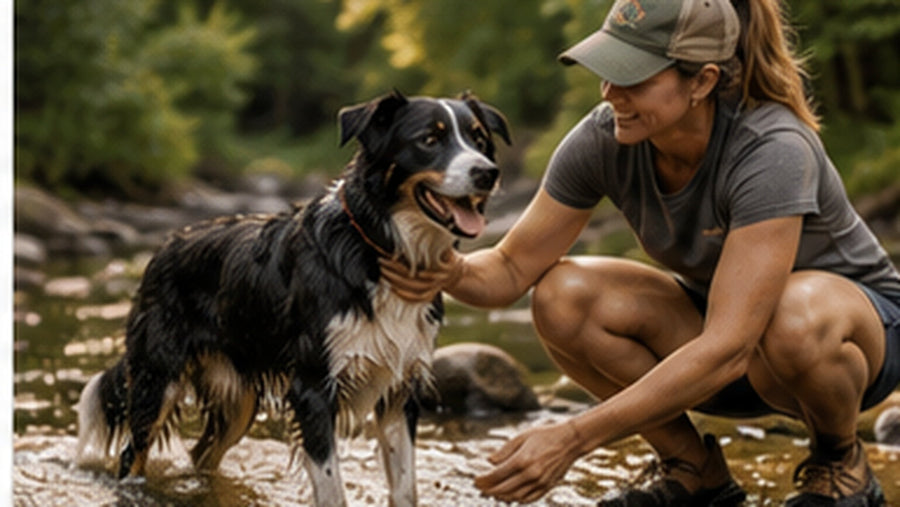
Should you bathe your dog after swimming?
Most dogs do not need a full shampoo bath after every swim. Start with a thorough fresh-water rinse, then dry the coat, paws, collar area, skin folds, and outer ears. Use a dog-specific shampoo when mud, salt, pool residue, odor, or a changed coat feel remains. If the water may contain blue-green algae, skip the ordinary bath decision and treat it as an urgent exposure.
A pool, lake, creek, pond, and ocean can leave very different things behind on a dog. The useful question is not simply whether the dog got wet. It is whether clean water, chemicals, salt, mud, plant material, or suspicious water remains on the coat and skin.
When is a rinse enough, and when does a dog need shampoo?
| Water type | Start here | Use shampoo when |
|---|---|---|
| Maintained pool | Rinse thoroughly with fresh water and dry. | A chemical smell, residue, or changed coat feel remains. |
| Clear lake or creek | Rinse away sand, plant material, and organic debris. | Mud, odor, or visible residue remains after rinsing. |
| Ocean or salt water | Rinse promptly and thoroughly with fresh water. | Salt residue, sand, odor, or tacky coat feel remains. |
| Muddy pond, irrigation water, or silty shore | Rinse until the runoff is clear, including paws and belly. | Dirt or organic residue is still trapped in the coat. |
| Water with a bloom, scum, unusual color, or health advisory | Prevent licking, rinse with clean water, and contact a veterinarian or emergency clinic immediately. | Do not delay urgent guidance to complete an ordinary grooming routine. |
When a bloom or suspicious surface material is possible, use the dedicated blue-green algae dog safety guide. That emergency intent is separate from normal post-swim bathing.
What is a practical five-step routine after swimming?
- Move to clean, stable ground. Keep the dog from licking the coat until you know what the water left behind.
- Rinse with fresh water. Work from the neck toward the tail and include the belly, legs, paw pads, between the toes, skin folds, and collar or harness line.
- Decide whether shampoo adds value. If a clean-water rinse removes the residue and the skin looks normal, a full bath may be unnecessary. If mud, salt, odor, or a changed coat feel remains, use a dog-specific shampoo according to its label.
- Dry the moisture-trapping areas. Towel-dry the coat and check the paws, folds, underarms, belly, and collar line. The wet dog coat check explains where lingering moisture tends to hide.
- Watch the dog, not just the coat. Note new licking, scratching, head shaking, coughing, vomiting, diarrhea, weakness, or breathing changes.
How should you handle a dog's ears after swimming?
Dry the outer ear flap and the area you can see without pushing a towel, swab, or tool into the ear canal. Dogs with ear disease or repeated post-swim problems may need an individual veterinary plan. Use the post-swim ear guide when odor, discharge, redness, repeated head shaking, or discomfort appears.
Does a K9 by Draw It Out® product fit this post-swim routine?
No current K9 by Draw It Out® product is needed for the basic rinse-versus-bath decision. Start with clean fresh water. When a full bath is appropriate, choose a dog-specific shampoo suited to the dog and follow its current label. This guide intentionally does not direct owners to a product. Suspected algae exposure, painful skin, open areas, breathing changes, or illness stay in the veterinarian lane.
For general bath technique and frequency, continue with Dog Bath Day Mistakes. That guide owns routine bathing, while this page owns the post-swim rinse-versus-shampoo decision.
When should a veterinarian evaluate a dog after swimming?
Contact a veterinarian promptly when a dog develops repeated vomiting or diarrhea, unusual tiredness, weakness, coughing, breathing changes, collapse, persistent shaking, painful or open skin, marked redness or swelling, eye irritation, ear discharge or strong odor, repeated head shaking, or behavior that is not returning to normal. Suspected blue-green algae exposure is an emergency even if the dog initially looks well.
Frequently asked questions
Does a dog need a full bath after every swim?
No. A thorough fresh-water rinse and careful drying are often enough when the water was clean, residue is gone, and the dog's skin and behavior remain normal.
Should you rinse a dog after swimming in a chlorinated pool?
Yes. Rinse the coat and skin with fresh water after pool swimming, then dry the dog thoroughly. Use dog-specific shampoo when chemical smell, residue, or a changed coat feel remains.
What should you do after a dog swims in a lake or creek?
Rinse off sand, mud, plant material, and organic debris, then dry the coat, paws, folds, and outer ears. If the water showed scum, unusual color, a bloom, or an advisory, prevent licking, rinse with clean water, and seek urgent veterinary guidance.
How should you dry a dog's ears after swimming?
Dry the outer ear flap and visible entrance gently without inserting swabs or tools. Contact a veterinarian for odor, discharge, redness, discomfort, or repeated head shaking.
When should you use dog shampoo after swimming?
Use a dog-specific shampoo according to its label when mud, salt, pool residue, odor, or a changed coat feel remains after the fresh-water rinse. Do not treat painful skin, open areas, or suspected toxic-water exposure as an ordinary bath.