
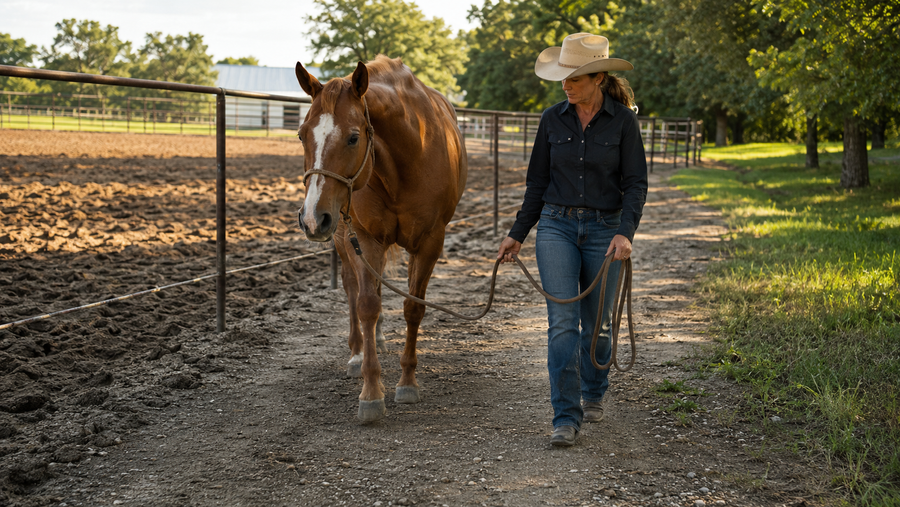
Jul 20, 2026
What Real Riders Notice After Deep Footing
Deep footing changes workload. Check breathing, feet, legs, shoulders, back, hind end, movement after rest, and next-day recovery.

Real Rider Resource
Crow-hopping can be freshness, resistance, poor balance, pain, saddle fit, fear, ulcers, back soreness, hind-end discomfort, or a horse trying to avoid pressure.
Quick answer: Do not just ride through crow-hopping. Check tack, back, hocks, stifles, feet, girth area, workload, freshness, pain signs, and whether the behavior is new, worsening, or tied to a specific gait or transition.
Only after the behavior is evaluated
Crow-hopping can involve tack, pain, hoof balance, freshness, rider cues, or training. A topical product is never the first answer. After the horse is safe, evaluated, and cleared for normal work and external body care, the 16oz Gel is the simplest targeted route for ordinary post-work use.
One bottle — $25.99 • Two Pack — $52 with free U.S. shipping
See the 16oz Liniment GelWeak push or hind-end pattern? Read the Weak Behind Guide
Concern still unclear? Use the Solution Finder
Educational support only. Crow-hopping can be a pain sign. Do not treat dangerous behavior as a product problem.
Deep footing changes workload. Check breathing, feet, legs, shoulders, back, hind end, movement after rest, and next-day recovery.
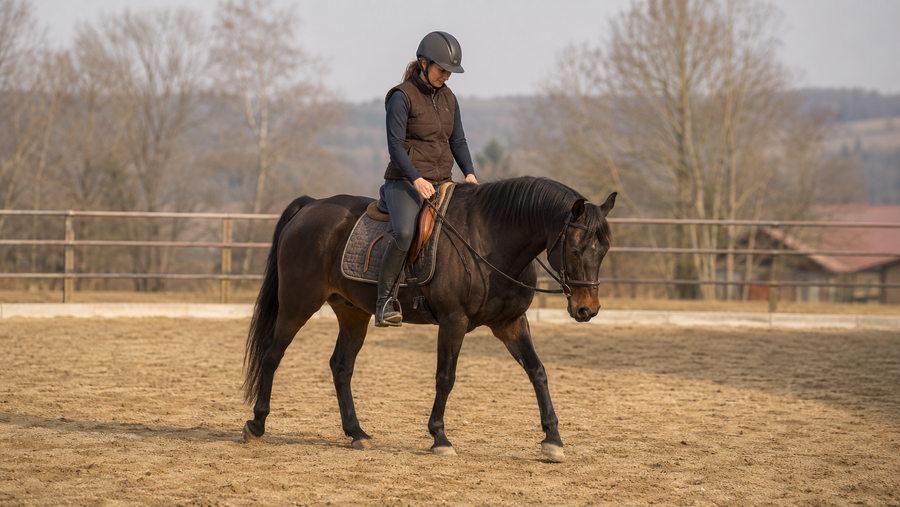
When a horse feels heavy, separate balance, rhythm, rider contact, fatigue, footing, tack, confusion, and pain before adding pressure.
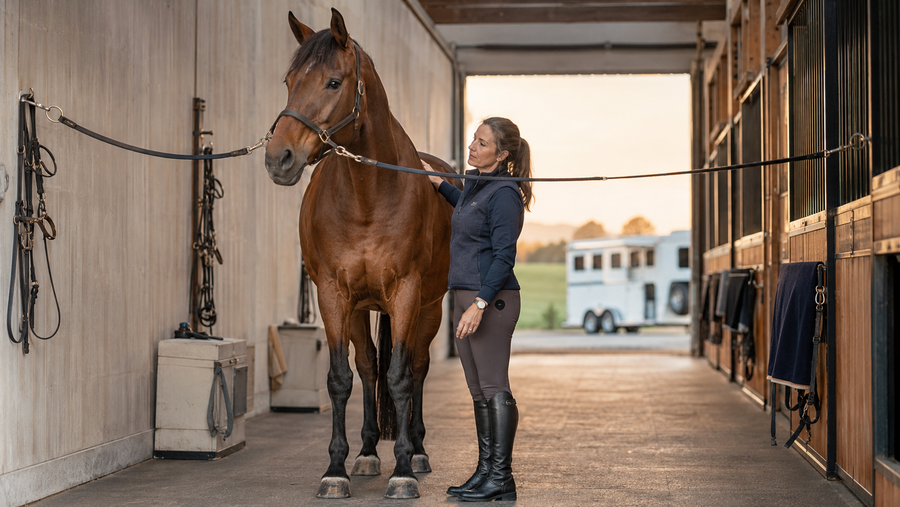
Prepare for a riding clinic with a calm check of health, feet, legs, tack, hauling, water, goals, workload, cooling, and next-day recovery.
!