Real Rider Resource
Horse Not Acting Normal? What to Check Before You Ride
Quick answer: When a horse is not acting normal, pause the original plan and compare the horse with its usual baseline. Check attitude, appetite, water, manure, temperature when appropriate, breathing, first steps, legs, feet, back, skin, tack areas, workload, weather, hauling, and recent routine changes. Do not make an honest horse become dramatically lame, sick, or dangerous before you believe that something changed.
“Not himself” may be the most useful phrase in the barn. It does not diagnose a problem, but it tells you that a rider who knows the horse has noticed a change. The horse may still be quiet, willing, and able to complete the job. That does not make the observation meaningless.
The goal is not to invent a problem. It is to slow down long enough to decide whether the horse needs a normal ride, a changed ride, rest, routine care, or qualified help.
Start with the horse’s normal
A checklist is most useful when it is compared with a real baseline. One horse is naturally bright and vocal at feed time. Another is quiet. One drinks immediately after hauling. Another waits. Knowing the individual keeps you from treating every difference between horses as a problem while ignoring a meaningful change within your own horse.
Daily rhythm
Appetite, water intake, manure, urine, turnout behavior, stall condition, sleep, social behavior, and interest in the normal routine.
Expression
Eyes, ears, jaw, nostrils, posture, alertness, tension, avoidance, dullness, and whether handling feels different.
Movement
First steps, turns, backing, stride length, symmetry, willingness, coordination, and whether movement improves or worsens.
Recovery
Breathing, sweating, hydration, appetite, legs, feet, attitude, and how the horse feels later or the next morning.
A practical pre-ride check
- Watch before touching. Observe the horse in the stall, paddock, or pen. Notice posture, breathing, interest in surroundings, and how the horse approaches or avoids you.
- Review intake and output. Look at feed, water, manure, and urine patterns. A meaningful change belongs in the decision even when no dramatic sign is present.
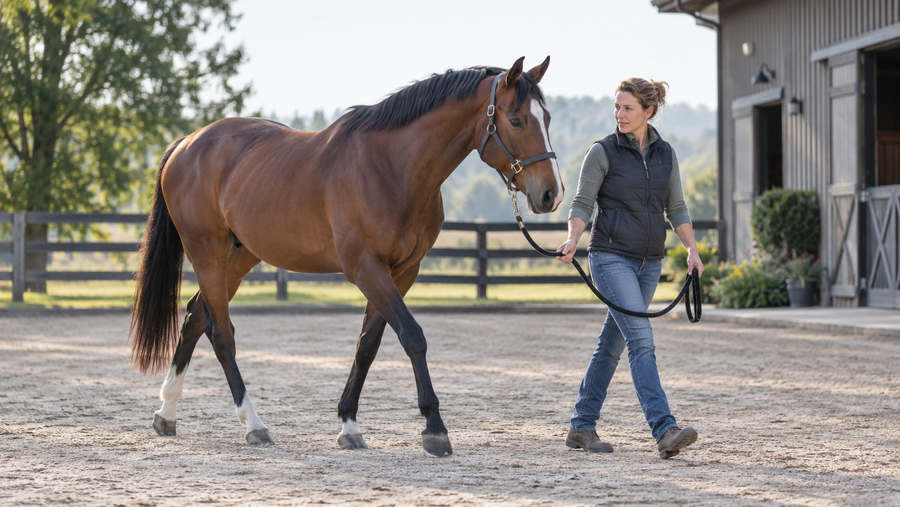
- Watch the first steps. Lead the horse on safe footing. Observe straight lines, a turn in each direction, and backing when appropriate. Do not use work to force a concerning gait change to disappear.
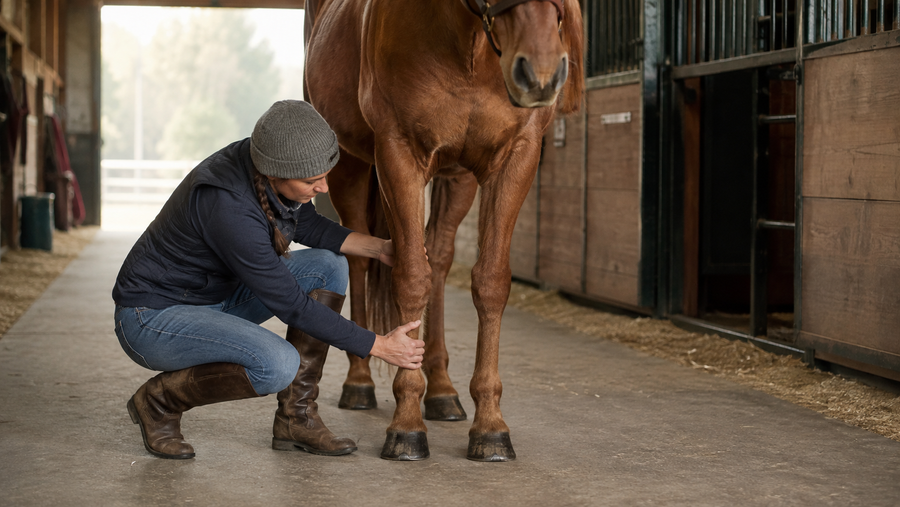
- Use grooming as an examination. Compare legs, feet, back, girth area, shoulders, neck, skin, and tack-contact areas. Look for heat, swelling, wounds, rubs, sensitivity, asymmetry, or a change from yesterday.
- Check the equipment and environment. Inspect tack, pads, boots, wraps, footing, temperature, humidity, wind, insects, arena traffic, and anything recently changed.
- Review the previous 48 hours. Include workload, hauling, turnout, farrier work, feed changes, medications, weather, slips, hard ground, deep footing, and recovery.
Quiet clues horses may give before getting loud
A buck, bolt, refusal, bite, kick, or blowup gets attention. Those behaviors are not always the first information. Earlier clues may be smaller because the horse is still trying to cooperate.
- A different expression or less interest in the normal routine
- Girthiness, stepping away, tail tension, or pinned ears
- A longer warm-up, shorter stride, uneven bend, or guarded turn
- Drifting, bracing, leaning, reluctance to go forward, or a changed response to familiar aids
- A slower cool-out, unusual sweating, reduced drinking, or dullness later
- A repeated tack mark, filling in a leg, hoof sensitivity, or a skin change
Real Rider rule: do not make the horse escalate just to prove the first clue mattered. Pause, check, simplify, and record what changed.
Choose the next step from the evidence
| What you find | Reasonable next step |
|---|---|
| No concerning finding and the horse returns to normal | Use a progressive warm-up, keep the first work simple, and continue observing. |
| Mild uncertainty without pain or altered movement | Change the plan to quiet handling, hand-walking, turnout, grooming, or an easier session when appropriate. |
| A pattern that repeats | Write it down and involve the professional who matches the pattern, such as the veterinarian, farrier, saddle fitter, dentist, or trainer. |
| Pain, lameness, illness, trauma, or neurological signs | Do not ride. Contact a veterinarian promptly and follow professional instructions. |
Let today write tomorrow’s ride
A useful training plan is a sequence, not a calendar printed in stone. Today’s workload, cool-down, attitude, legs, feet, back, hydration, footing, and next-morning response should influence tomorrow’s ask.
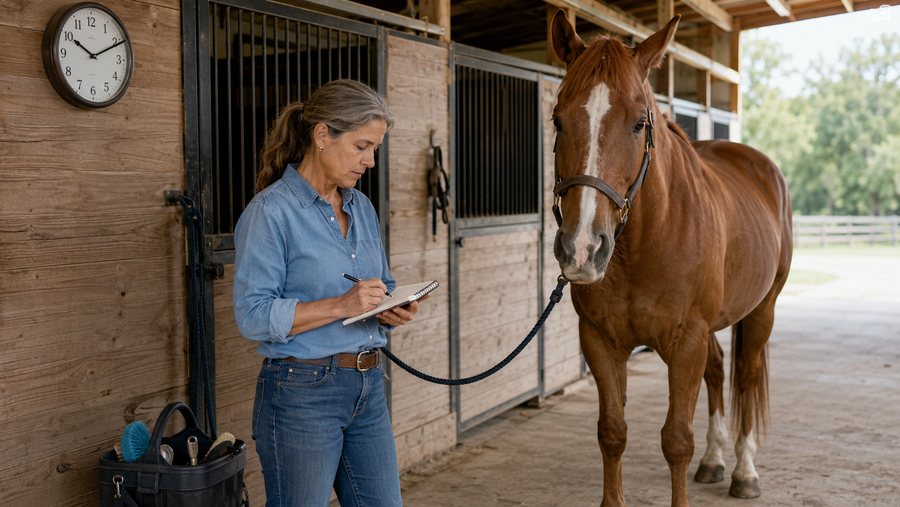
After each ride, write one sentence: What changed? That answer can help decide whether tomorrow is a build day, confidence day, conditioning day, easy day, hand-walk day, full rest day, or help day.
Read the separate guide on choosing an easy day instead of another hard ride when movement remains appropriate but the horse should not take on more training debt. Use the horse warm-up and cool-down guide to make the changed session progressive and observable.
The weekly check that riders can keep
Daily observation catches immediate changes. A structured weekly check reveals gradual patterns. Pick one day, use the same order, and record only what changed.
Feet and legs
Trim or shoe timing, cracks, wear, heat, digital pulse, filling, wounds, boot marks, and left-to-right differences.
Back and tack areas
Skin, coat, muscle symmetry, sensitivity, girth path, saddle and pad marks, and any new behavior.
Body and routine
Weight trend, topline, coat, appetite, water, manure, turnout, workload, travel, and recovery.
Equipment and records
Tack condition, pad cleanliness, boots, wraps, trailer notes, veterinary or farrier timing, and the week’s one-sentence ride notes.
Do not ride and call your veterinarian when
- The horse is lame, unwilling to bear weight, or rapidly worsening.
- There is marked heat, swelling, trauma, a puncture, or another significant wound.
- The horse has abnormal breathing, fever, colic signs, collapse, confusion, weakness, or incoordination.
- Appetite, water, manure, urine, or behavior changes suggest illness or distress.
- The horse reacts dangerously during handling, saddling, or mounting.
- Your knowledge of the horse tells you the situation is outside ordinary barn care.
Where routine topical care may fit
After the horse has been checked and routine care is the appropriate lane, a label-directed topical may fit grooming or post-work body care. It does not explain an altered baseline, diagnose soreness, correct tack, replace recovery, or make an unsound horse ready to ride.
Use the What Does My Horse Need? guide to sort a routine product path. Use only on clean, dry, intact skin and follow the current product label. When competition eligibility matters, check the current governing-body rules.
Horse behavior and baseline FAQ
Should I ride if my horse seems off but is not lame?
Do not use the absence of obvious lameness as the only decision. Complete the baseline check, consider illness, tack, feet, workload, behavior, and environment, then change or stop the ride when the evidence makes the original plan unfair or unsafe.
How do I know whether it is attitude or discomfort?
Do not guess from one moment. Track when it occurs, what changed, how the horse moves, whether the pattern repeats, and how the horse responds when the ask is simplified. Bring in qualified help when the cause is unclear.
What should I write down?
Record only useful changes: appetite, water, manure, temperature when taken, movement, legs, feet, skin, tack marks, workload, weather, hauling, recovery, and what happened when you changed the plan.
Can I wait until tomorrow to recheck?
Only when there are no urgent signs and the horse is stable. Pain, lameness, fever, colic signs, abnormal breathing, trauma, neurological signs, or rapid worsening require prompt veterinary direction.
Bottom line
Knowing a horse means noticing the quiet change and respecting it. Check the baseline, make the next decision from evidence, and ask for help before a small clue has to become a crisis.