Labor Day for Real Riders: The Work Nobody Sees
A Labor Day tribute to the unseen work of real riders: early mornings, late nights, hard choices and the daily responsibility of putting the horse first.

Quick answer: a horse-leg baseline is your record of what is normal for that individual horse before there is a problem. Know the usual temperature, filling, old wind puffs, scars, hair patterns, digital pulse, skin texture, and response to touch on all four legs so a new change stands out faster.
The best time to learn your horse's legs is not when one suddenly looks wrong. Spend a few quiet minutes when the horse is healthy, sound, and relaxed. That gives you a reference point no generic chart can replace.
Horses are not perfectly symmetrical and they are not blank slates. One may carry a cool, soft wind puff that has looked the same for years. Another may have a small scar, thicker hair over one cannon bone, or a naturally stronger digital pulse on a hot day after work.
Knowing the horse's normal does not diagnose anything. It simply helps you recognize when today's leg is different from yesterday's leg.
Pick a safe, familiar place with good light and level footing. Have the horse standing square enough that you can compare matching structures without fighting posture or balance.
Run your hands down each leg in the same order every time. Consistency matters more than speed.
Photos are useful, but they do not replace touch. Heat, subtle filling, skin texture, and tenderness are things a camera can miss.
Do the hands-on check first. Then take reference photos when they will help document a scar, an old bump, a wind puff, or the normal shape of the lower leg.
You do not need a giant photo library. A few clean baseline images can be useful when you later ask yourself, "Was that always there?"
A one-line note in your phone is enough. Example: "Right hind: cool soft wind puff at fetlock, unchanged after work, no pain response." The point is not to create a veterinary chart. It is to preserve the boring details that become valuable when something changes.
Your baseline is the resting reference. It is also useful to know what the horse normally looks like after common stressors such as hauling, a hard arena day, deep footing, long stall time, or a hot-weather ride.
That does not mean every temporary change is harmless. It means you are comparing the horse to a known pattern instead of guessing from memory.
New heat, rapidly increasing swelling, pain, lameness, a stronger-than-normal digital pulse, a wound, drainage, fever, or a horse that is not acting normal should move the conversation from "Is this normal for him?" to "Who needs to look at this?"
Contact your veterinarian when the change is significant, unexplained, worsening, painful, or associated with lameness or illness. Hoof-specific concerns may also need your farrier.
A baseline is the reference. A daily check is the habit that uses it. For a fast repeatable routine, see Daily Horse Leg Check: A 3-Minute Routine.
For a clearer map of the structures under your hands, use the Horse Leg Anatomy guide.
Update it when the horse's normal genuinely changes: after a healed injury, a new long-term bump or scar, a shoeing change that alters what you monitor, or a management change that creates a new stable pattern.
No. Daily photos usually create noise. Use a few good reference images and take new ones when there is a meaningful change worth documenting.
Not every temperature difference has the same meaning, but a new or marked difference deserves attention—especially when it appears with swelling, pain, lameness, a strong digital pulse, a wound, or behavior changes.
No. A baseline helps you recognize change. Diagnosis belongs with the appropriate veterinarian or farrier.
Horsemanship education only. A personal baseline helps identify change; it does not diagnose injury or disease.
A Labor Day tribute to the unseen work of real riders: early mornings, late nights, hard choices and the daily responsibility of putting the horse first.
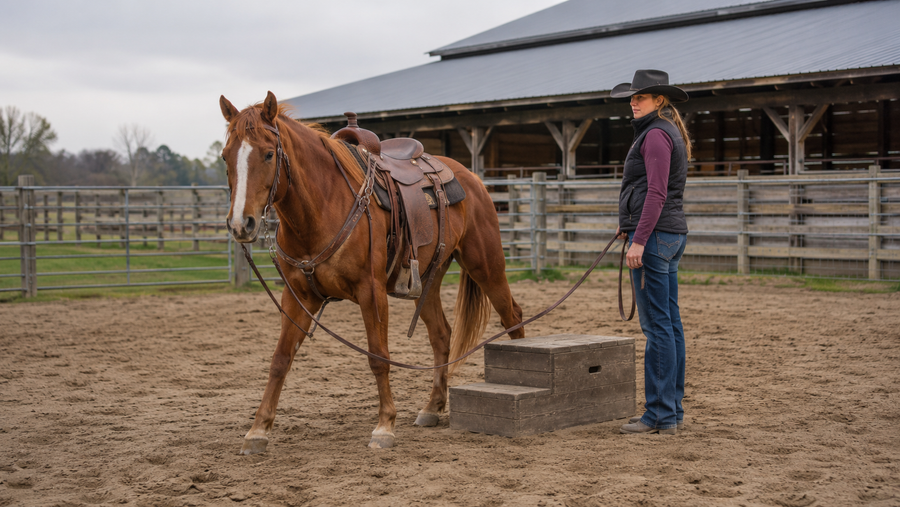
If a horse suddenly steps away from the mounting block, check comfort, tack, footing, rider technique, and the exact pattern before calling it disobedience.
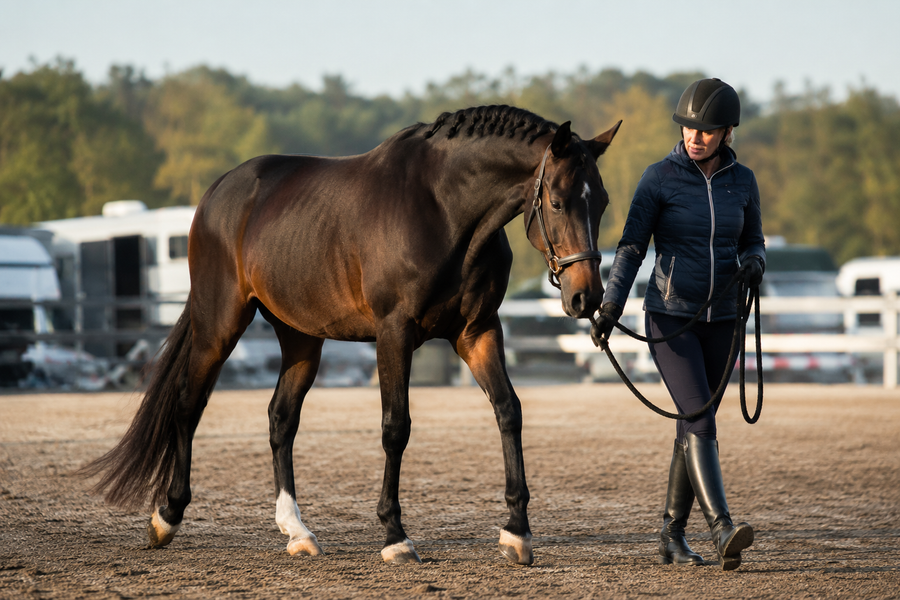
A daily mobility baseline helps riders notice small changes in a mature horse and gives the veterinarian better information than “he seems off.”
!