What’s in Hydro-Lyte® and Fluid Flex EQ®? The Name on the Front Matters
See every declared ingredient in Hydro-Lyte® and Fluid Flex EQ®, why it is included, how each formula differs, and what the Draw It Out® name on the front...

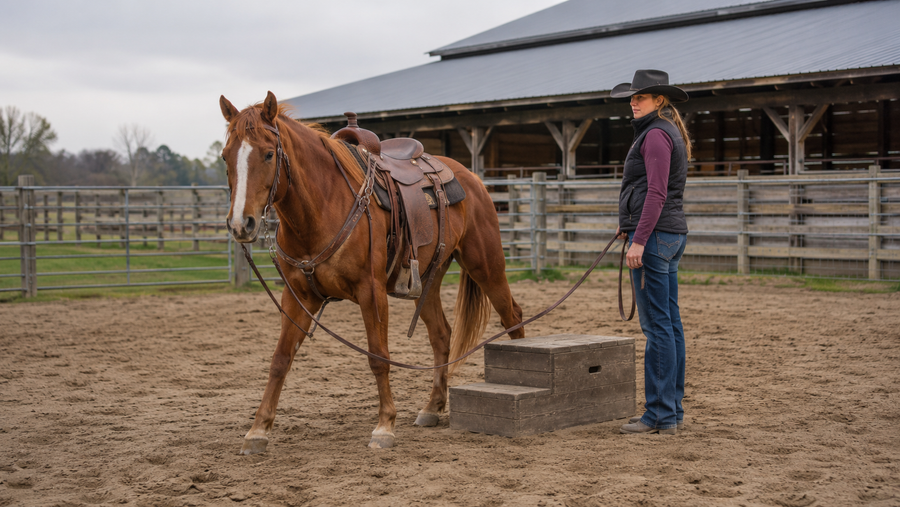
Short answer: A daily mobility baseline is a simple record of how your mature horse normally walks, turns, backs, stands, and warms up. It helps you notice change earlier and gives your veterinarian better information than “he just seems off.” The baseline does not diagnose a joint problem, but it makes small changes harder to miss.
You do not need laboratory equipment. You need the same short observation, on similar footing, repeated often enough to recognize the horse’s pattern.
Label the video with the date, footing, workload, and any recent haul or shoeing change. Over time, those notes turn vague impressions into useful context.
A supplement is not a substitute for conditioning, hoof care, suitable footing, appropriate body condition, or veterinary evaluation. It can be one part of a broader mobility plan when the formula and feeding directions match the horse’s needs.
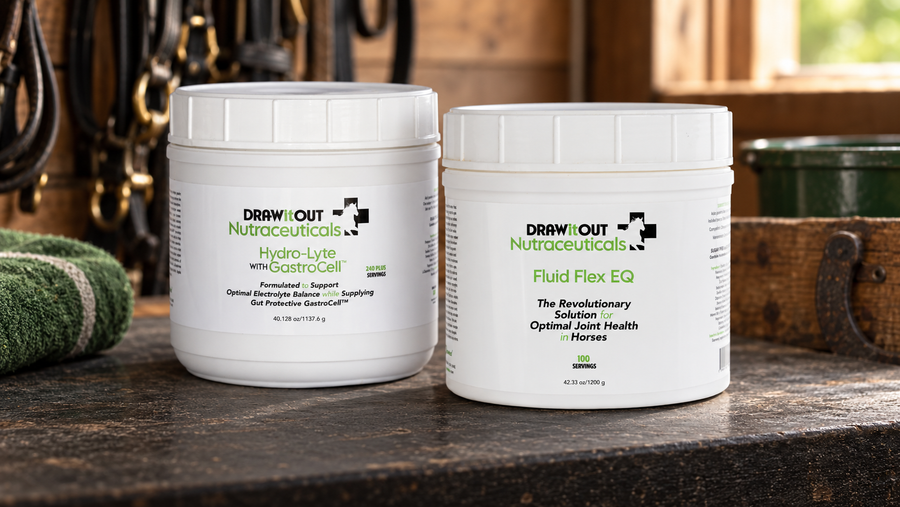
Fluid Flex EQ® is a daily horse joint and mobility support product from Draw It Out Nutraceuticals. Its current 100-serving format is built for consistency, which matters because a routine only works when the barn can follow it without guessing.
When you add or change any part of the routine, record the start date. Keep training, turnout, farrier work, footing, travel, and other supplements in the notes. Otherwise, it is easy to credit one scoop for a change caused by three other things.
Revisit the same observations at two, four, and eight weeks, or on the schedule recommended by your veterinarian. Look for patterns in warm-up time, willingness, stride consistency, and recovery after ordinary work. Avoid promising yourself a dramatic overnight transformation. Mobility management is usually quieter and more disciplined than that.
Contact your veterinarian for sudden lameness, marked swelling or heat, unwillingness to bear weight, a strong digital pulse, repeated stumbling, neurological signs, severe pain, or rapid deterioration. Also call when a subtle change persists. Early professional evaluation is often simpler than trying to manage a growing problem from the feed room.
There is no single age that fits every horse. Work history, breed, health, conditioning, and individual aging matter. Build the baseline around the horse in front of you rather than a birthday alone.
A short monthly video can be useful for a stable horse, with additional clips before and after major workload, shoeing, health, or management changes. Follow your veterinarian’s advice for a horse already under care.
No. Appropriate movement, conditioning, turnout, hoof balance, nutrition, and veterinary care remain foundational. A supplement belongs inside that plan, not in place of it.
Fluid Flex EQ® provides 100 servings of daily horse joint and mobility support for a consistent barn routine.
Shop the practical next stepSee every declared ingredient in Hydro-Lyte® and Fluid Flex EQ®, why it is included, how each formula differs, and what the Draw It Out® name on the front...
A year-round horse joint supplement can fit an individual plan, but consistency, label discipline, seasonal management, and regular review matter.
If a horse suddenly steps away from the mounting block, check comfort, tack, footing, rider technique, and the exact pattern before calling it disobedience.
!