Labor Day for Real Riders: The Work Nobody Sees
A Labor Day tribute to the unseen work of real riders: early mornings, late nights, hard choices and the daily responsibility of putting the horse first.

Ordinary sunburn and photosensitization can start on the same pink or lightly pigmented skin, but they are not the same problem. Sunburn is direct ultraviolet injury. Photosensitization occurs when light reacts with a photodynamic substance in the horse’s body and can become much more painful, widespread, and medically significant.
Move the horse fully out of sunlight and call your veterinarian promptly when you see rapid swelling, blisters, oozing, open or sloughing skin, intense pain, lesions across several white-haired areas, eye involvement, yellowing of the gums or eyes, dark urine, depression, appetite loss, or any other sign that the horse is unwell.
A severe “sunburn” can be the first visible clue that the horse needs a liver, pasture, feed, or medication review.
| What to compare | Ordinary sunburn | Photosensitization |
|---|---|---|
| Basic mechanism | Direct ultraviolet injury to exposed skin. | Light reacts with a photodynamic substance present in the body. |
| Typical distribution | Most obvious on exposed pink muzzles, pale eyelids, ear tips, and thin-haired areas. | Often affects multiple white-haired, unpigmented, or hairless areas and can occasionally extend farther when the reaction is severe. |
| Common appearance | Redness, tenderness, dryness, peeling, or mild cracking. | Rapid redness and edema followed by blistering, serum leakage, ulcers, heavy crusting, necrosis, or skin sloughing in advanced cases. |
| History that raises concern | Predictable exposure of unprotected pale skin during strong sun. | Sudden severe lesions, recurrence, pasture or hay changes, new medication or supplement exposure, or signs consistent with liver or biliary disease. |
Do not rely on appearance alone when the reaction is severe. A veterinarian may need to examine the horse, review exposures, and evaluate liver function to distinguish a routine burn from a phototoxic reaction.
Photosensitization can be primary, meaning a light-reactive agent was eaten, injected, or absorbed, or secondary/hepatogenous, meaning liver or biliary dysfunction prevented normal clearance of phylloerythrin. Phylloerythrin is produced during chlorophyll digestion. When it accumulates in the bloodstream and reaches the skin, sunlight can trigger tissue damage.
That is why a veterinarian may recommend bloodwork or additional liver evaluation even when the first visible problem appears to be “just skin.” It is also why internet plant lists should not be used as a diagnosis. Pasture species, regional conditions, hay sources, toxins, and liver disorders vary.
One documented pasture concern is alsike clover, which has been associated with photosensitization and liver disease in horses. When pasture or hay is suspect, photograph the field, save representative plant or hay samples without handling unknown plants carelessly, remove the horse from the suspected source, and involve your veterinarian and regional extension service. For broader identification and prevention guidance, use the Poisonous Plants for Horses guide.
For any horse with reactive skin, introduce one product at a time and follow the label. The Horse Care Safety & Skin Sensitivity Guide explains a practical patch-test and stop-use routine.
Seek veterinary guidance promptly for any of the following:
Before the veterinary visit, gather the details that can shorten the investigation:
The Horse Health Library can help route related pasture, skin, toxic-plant, and emergency-care questions without replacing veterinary diagnosis.
Yes. Horses can develop ultraviolet injury on unpigmented or lightly haired skin, especially pink muzzles, pale eyelids, ear tips, white markings, clipped areas, and scars.
No. Sunburn is direct ultraviolet injury. Photosensitization requires a photodynamic substance in the body and can be linked to plant or chemical exposure, medication exposure, or impaired liver and biliary clearance.
Secondary or hepatogenous photosensitization can occur when the liver or biliary system does not clear phylloerythrin normally. Bloodwork and other testing help determine whether the skin reaction is part of a larger medical problem.
An equine-labeled or veterinarian-approved sun barrier may help protect intact pink skin when used according to its label. Avoid the eyes and mucous membranes, check for irritation, and ask your veterinarian before applying anything to blistered, oozing, open, or rapidly worsening skin.
Several plants and pasture-related toxins have been associated with primary or liver-related photosensitization, but the relevant species vary by region and circumstance. Do not diagnose from a single online plant list. Remove the horse from a suspected source and involve your veterinarian and regional extension service.
No. Draw It Out® products are not sunscreen and do not treat photosensitization or an underlying liver, pasture, toxin, or medication problem. Remove the horse from sunlight, stop suspected exposures as directed, and follow your veterinarian’s plan.
This guide is general horse-care education and is not a diagnosis or treatment plan. Severe, spreading, recurrent, or unexplained skin reactions require veterinary evaluation.
A Labor Day tribute to the unseen work of real riders: early mornings, late nights, hard choices and the daily responsibility of putting the horse first.
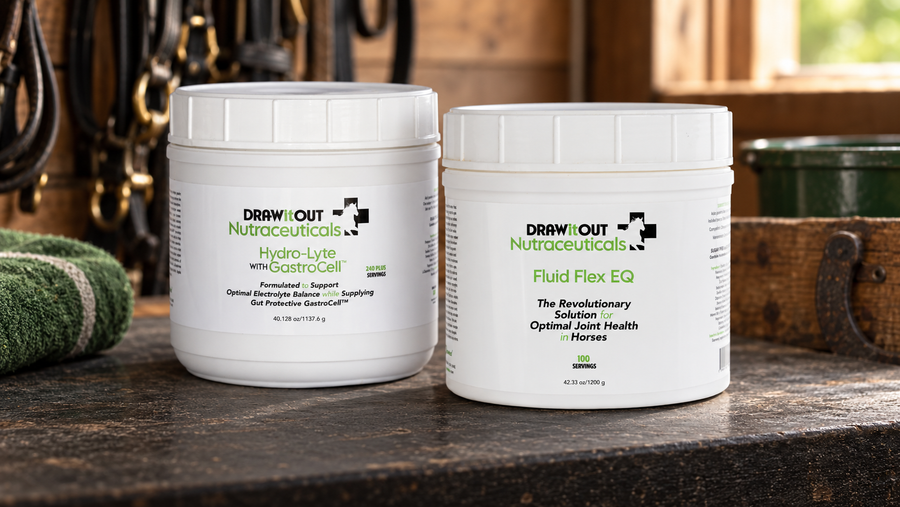
See every declared ingredient in Hydro-Lyte® and Fluid Flex EQ®, why it is included, how each formula differs, and what the Draw It Out® name on the front...
A Real Rider Resource guide for keeping a rider’s heat journal after hot rides: what to track and how to adjust the plan.
!