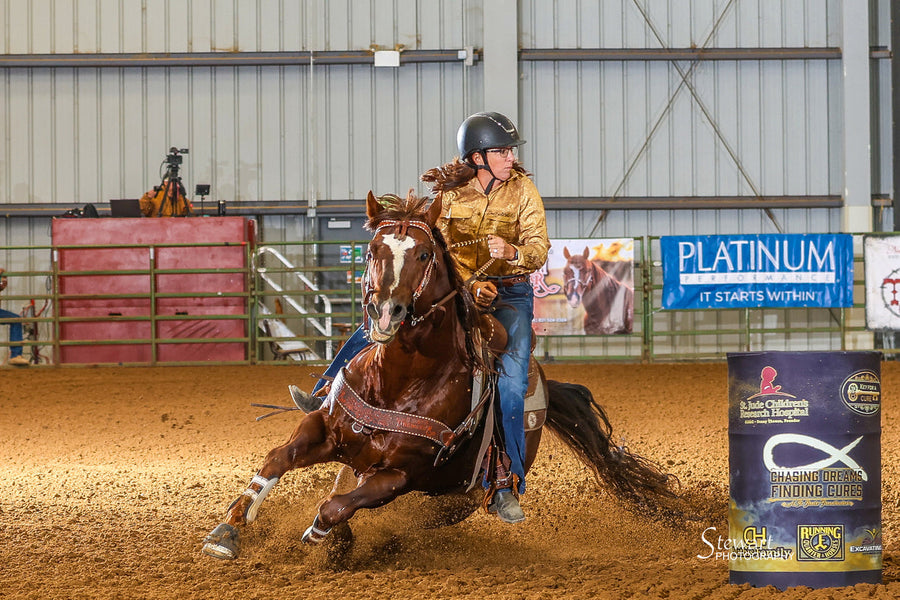
Karly & Asher: October 2026 Real Rider
For Karly Petrossi, the win is getting to see Asher. Meet our October 2026 Real Rider honorees from Willow Creek, Montana, and the belief behind their story: backyard...

Quick answer: If a horse repeatedly stands with one front foot placed ahead of the other, especially with the heel raised or weight shifted away from that limb, treat it as information instead of a harmless quirk. Do not ride first and investigate later. Compare both front feet and legs, check movement on safe level ground, record what changed, and call your veterinarian or farrier when the stance is new, persistent, painful, or paired with heat, a stronger digital pulse, swelling, or lameness.
One photograph does not diagnose a horse. Some horses rest a limb briefly or stand unevenly because of the floor, attention, or habit. The concern rises when the same foot is pointed again and again or when the horse avoids loading it normally.
“Pointing” describes the stance, not the diagnosis. The horse places one front foot farther forward than the other, sometimes loading the toe while easing pressure on the heel. Foot discomfort is one possibility, but the source can also sit higher in the limb. A hoof bruise, abscess, shoeing concern, heel pain, soft-tissue problem, wound, or another painful condition can change how a horse chooses to stand.
The useful question is not “Which diagnosis is this?” The useful question is “Is this horse loading the limb normally, and what other objective changes can I find?”
Start with the horse standing quietly on firm, level, nonslip ground. Keep yourself out of the kick zone and use a competent handler if needed.
A baseline makes these checks more useful. Our horse leg baseline guide shows what to learn before something changes.
Call your veterinarian promptly when you see any of the following:
If a nail or other object has penetrated the foot, do not pull it out unless your veterinarian specifically directs you to do so. Its location and depth may help guide imaging and treatment.
A clean timeline can save time. Write down when you first noticed the stance, which foot is involved, recent work, footing, turnout, shoeing or trimming date, travel, and any heat, pulse, swelling, or movement change. Take a short video of the horse standing and, if safe, walking straight from the front, side, and rear.
Use our horse symptom timeline guide to organize the details your veterinarian may ask for.
A topical liniment is not the first response to unexplained pointing, hoof heat, a strong digital pulse, or lameness. Once an acute problem has been ruled out and the horse is moving normally, Draw It Out® 16oz Liniment Gel can fit a label-directed routine for clean, dry, intact skin over appropriate muscle or leg areas. It does not diagnose foot pain, repair a hoof, or replace veterinary and farrier care.
A brief, occasional shift can happen. Repeatedly pointing the same front foot, avoiding weight, or pairing the stance with heat, pulse, swelling, or lameness is not something to dismiss.
Yes, foot pain such as an abscess or bruise can change stance, but pointing alone cannot identify the cause. Let your veterinarian or farrier localize the problem.
Only if the horse is calm, stable, and normally safe to handle. Do not force the test when the horse is markedly lame or struggling to balance.
A new repeated stance still deserves investigation. Compare the feet and legs, review recent work and shoeing, and get professional guidance if the pattern persists or anything else is abnormal.
Call the veterinarian first for sudden lameness, poor weight bearing, swelling, wounds, illness, or uncertainty. Your veterinarian and farrier often work best as a team when the foot is suspected.
Educational information only. This article does not diagnose or treat lameness, hoof pain, injury, or neurologic disease.
For Karly Petrossi, the win is getting to see Asher. Meet our October 2026 Real Rider honorees from Willow Creek, Montana, and the belief behind their story: backyard...
A new grooming flinch is information, not attitude. Use this calm checklist to separate skin irritation, pressure sensitivity, tack clues, and veterinary red flags.
Meet Janel Flook of Running F Quarter Horses, our September 2026 Real Rider. Her story brings together 46 years with horses, a return to competition, and a commitment...
!