Horse Pins Ears When Riding: What It Can Mean and What to Check
When a horse pins its ears under saddle, most riders feel it immediately. Something changed. The mistake is deciding too quickly what it means. Sometimes it is tension or anticipation. Sometimes it is effort, fatigue, or discomfort showing up early.
Ear pinning under saddle is communication
A horse that pins its ears when ridden is not being random. It is reacting to something in the moment. The job is not to shut it down. The job is to understand what changed.
Common physical drivers
- Back or topline sensitivity
- Saddle pressure or placement issues
- Muscle tightness through shoulder, loin, or hind end
- Effort that feels harder than expected during transitions
Other contributors
- Mixed or unclear rider cues
- Fatigue building through the ride
- Anticipation from repeated hard work
- Learned defensive behavior
Pattern matters more than the expression itself
One pinned ear on one day does not tell you much. A repeatable pattern tells you everything.
| What you notice | What it may suggest | What to watch next |
|---|---|---|
| Ears pin as soon as work starts | Anticipation, tack discomfort, or back sensitivity | Check grooming, saddling, mounting reactions |
| Ears pin during transitions | Effort, balance, or engagement difficulty | Watch for hollowing, delayed response, tail swish |
| Ears pin later in the ride | Fatigue or workload mismatch | Look for shorter stride or loss of impulsion |
| Ears pin only with certain riders | Cue clarity or pressure differences | Compare transitions, contact, and timing |
| Ears pin with stronger resistance | Signal is escalating | Stop labeling it attitude and check the system |
Patterns reduce guessing. Patterns tell you where to look next.
What to check first
Start with timing
Does it happen at the first step, the first transition, or once work builds? The moment matters more than the behavior.
Check pressure and tack
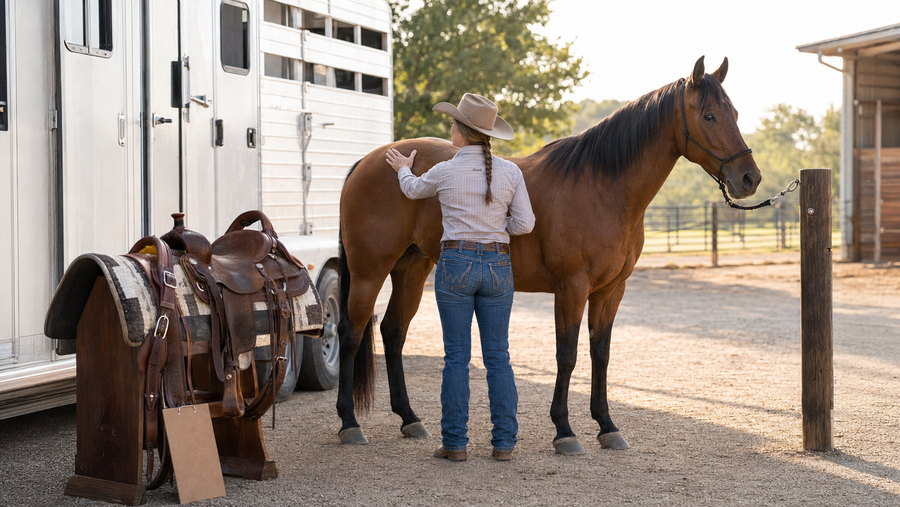
If the horse reacts during grooming, saddling, or mounting, look closely at fit and pressure points before assuming anything else.
Look for companion signals
Tail swishing, hollowing, bracing, or slowing off the leg often tell the real story behind the ears.
Compare easy vs demanding work
If the behavior shows up only when effort increases, the issue is likely tied to workload or engagement.
Reset before escalating
Simplify the ride. Improve the warm-up. Do not push harder on a signal you have not understood yet.
What riders often miss
Expression comes first
Horses often show discomfort in behavior before movement changes.
Not all signals are dramatic
Some horses never buck or refuse. They just get tighter and less willing.
Confusion and discomfort overlap
A horse can be unclear and uncomfortable at the same time.
Where a calm routine helps
Once obvious issues are ruled out, riders usually benefit from something simple and repeatable around work. Not a dramatic fix. A consistent one.

Draw It Out® 16oz High Potency Liniment Gel
Built for targeted, stay-put support that fits into real riding routines. Works best when you need consistency, not complexity.
Educational support only. Follow product directions and your veterinarian’s guidance.
When to worry
- Behavior appears suddenly
- Reaction is getting stronger over time
- Paired with lameness or refusal
- Horse reacts during grooming or saddling
- Performance drops at the same time
If the pattern is getting louder instead of quieter, involve your vet, fitter, or trainer sooner rather than later.
Bottom line
When a horse pins its ears when asked to work, assume it matters.
Not because it is always serious. Because it is rarely random.
Frequently asked questions
Does ear pinning always mean pain?
No. It can reflect discomfort, confusion, fatigue, or learned behavior. Patterns matter more than one-off reactions.
Why during transitions?
Transitions require effort and balance. That is where issues show first.
Why when I apply leg?
This often points to sensitivity or resistance to pressure, sometimes tied to discomfort.
Why later in the ride?
Fatigue or workload mismatch is often the cause.
Not a drug. Not intended to diagnose, treat, cure, or prevent disease. Always consult your veterinarian, trainer, and saddle fitter for medical, training, or fit questions.