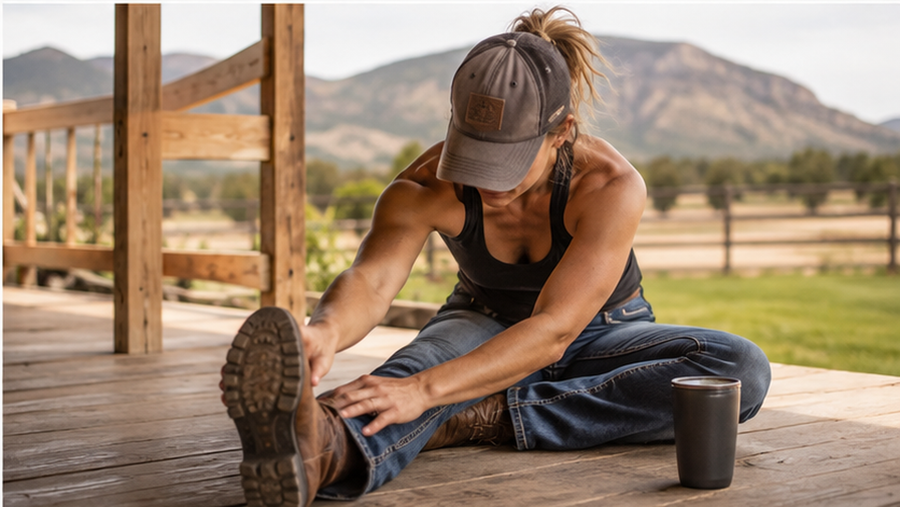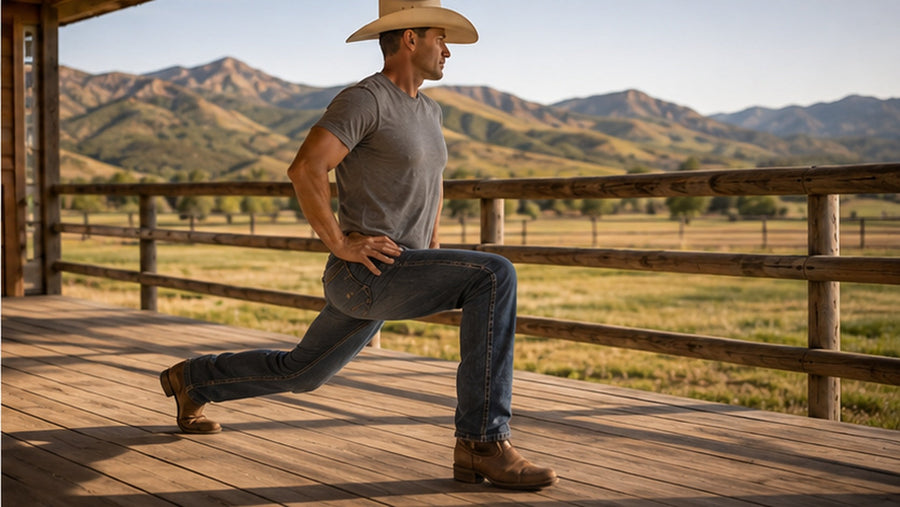
Hip Flexors Tight After Sitting? A 6-Minute Reset Before Barn Work
Hips tight after a long drive or sitting? Use this six-minute transition routine before barn work: walk, open the hips gently, wake up the glutes, hinge, and reassess.

ReJüv™ Recovery Journal
By Jon Conklin | Updated August 1, 2026
Quick answer
A practical daily mobility routine can take 10 minutes: breathe, move the shoulders and upper back, reset the hands, practice a hip hinge, open the hips, perform controlled sit-to-stands, move the ankles, side-step, and finish with an easy walk. Stay in a comfortable range and stop for concerning symptoms.
You need a stable chair or wall, enough room to take one step in each direction, and clothing that lets you move. You do not need to get on the floor. Keep every movement slow enough that you could stop at any point.
Use a comfortable range. This is a general movement routine for active adults, not a treatment for an injury. People with recent surgery, a major fall, known instability, severe osteoporosis, neurologic symptoms, or clinician-directed restrictions should follow their professional plan instead.
Before riding or chores: keep the movements dynamic and easy. Use fewer long holds and focus on readiness, coordination, and gradually increasing range.
After riding or chores: slow the pace. Use comfortable breathing, slightly longer positions, and a calm walk to downshift. Do not force end range when you are fatigued.
The federal Physical Activity Guidelines emphasize that adults gain meaningful health benefits from regular activity and should build toward a mix of aerobic and muscle-strengthening work. Mobility supports that larger plan but does not replace it. See the Physical Activity Guidelines for Americans.
Do not depend on motivation. Attach the routine to something that already happens:
Consistency beats the once-a-month heroic stretch session. A routine that is easy enough to repeat gives you better information about what is normal, what is improving, and what keeps returning.
Use ReJüv™ according to the label before or after the routine on clean, dry, intact skin. Give it time to dry before clothing or activity. The gel should support a sensible movement habit, not encourage you to push through sharp pain or force a joint farther.
Stop and get appropriate medical advice if movement triggers sharp or severe pain, new numbness or weakness, dizziness, loss of balance, chest pain, shortness of breath, loss of function, or symptoms after a significant fall or impact. A daily routine should make movement feel more controlled—not hide a worsening problem.
Use the routine as the bridge between barn work, riding, driving, and the next day—not as a punishment after you have already overdone it.
Safety note: ReJüv™ is a human-labeled topical wellness gel for external use. It is not intended to diagnose, treat, cure, or prevent disease or injury. Follow the current label, use only on clean, dry, intact skin, and avoid eyes, mouth, broken skin, external heat, and improvised topical combinations. Patch-test sensitive skin, discontinue use if irritation occurs, and seek professional care for severe, sudden, traumatic, unexplained, persistent, or worsening symptoms.
Training several horses today? Use the horse trainer recovery routine for between-horse resets, workload decisions, and the end-of-day check.
Hips tight after a long drive or sitting? Use this six-minute transition routine before barn work: walk, open the hips gently, wake up the glutes, hinge, and reassess.
A five-minute post-barn routine built around easy movement, hydration, footwear, and a repeatable transition from hard work to recovery.
Why riders put horse care first, plus a friction audit and practical 2, 5, and 15-minute recovery system that fits real barn days.
!