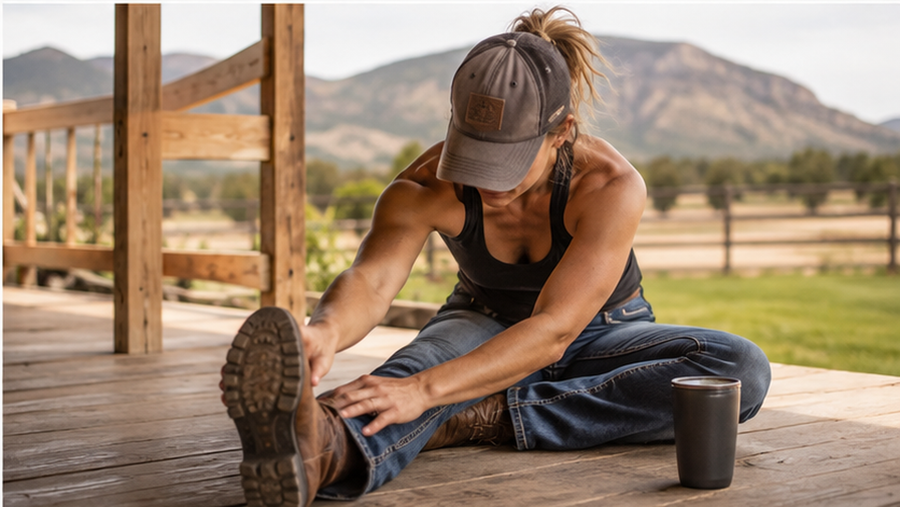
Labor Day Is Also Permission to Rest
A Labor Day reflection for the people who carry the load all year: honest work deserves respect, and the worker deserves a moment to set it down.

ReJüv™ Recovery Journal
By Jon Conklin | Updated August 1, 2026
Quick answer
Recovery after barn chores begins with safer work: warm up briefly, clear the route, keep loads close, turn with your feet instead of twisting, and use help or equipment for awkward weight. Afterward, cool down, hydrate, move gently, clean the skin, and use ReJüv™ only as labeled.
Barn work is rarely one clean movement performed on a level floor. A normal morning can include feed bags, water buckets, gates, wheelbarrows, hay bales, mud, uneven ground, cold fingers, rushed footing, and a horse that changes the plan.
That mix creates cumulative load. The first bale may feel easy; the twentieth arrives after your grip, trunk, hips, and attention have already been working. A recovery plan should therefore start before the first lift, not only after the last chore.
The CDC’s National Institute for Occupational Safety and Health emphasizes fitting the task to the worker, reducing awkward postures and force, and using equipment or work redesign to lower musculoskeletal risk. See the NIOSH ergonomics overview.
Use a short reset before you sit in the truck or collapse on the couch:
Footwear, surface, standing time, hydration, and total workload all matter. Change out of wet socks, inspect blisters or broken skin before using any topical product, elevate your feet if that feels comfortable, and use gentle ankle pumps rather than aggressive stretching.
If swelling is one-sided, sudden, painful, associated with redness or warmth, or paired with chest pain or shortness of breath, seek prompt medical care.
Buckets, gates, wheelbarrows, tools, lead ropes, and hay twine can make grip the limiting factor before the legs are finished. Use the hands and forearms grip-work routine for a quick function check, task changes, and safe topical-use boundaries.
The best barn recovery system starts with better work mechanics and ends with a routine you will actually repeat.
Safety note: ReJüv™ is a human-labeled topical wellness gel for external use. It is not intended to diagnose, treat, cure, or prevent disease or injury. Follow the current label, use only on clean, dry, intact skin, and avoid eyes, mouth, broken skin, external heat, and improvised topical combinations. Patch-test sensitive skin, discontinue use if irritation occurs, and seek professional care for severe, sudden, traumatic, unexplained, persistent, or worsening symptoms.
A Labor Day reflection for the people who carry the load all year: honest work deserves respect, and the worker deserves a moment to set it down.
Hips tight after a long drive or sitting? Use this six-minute transition routine before barn work: walk, open the hips gently, wake up the glutes, hinge, and reassess.
A five-minute post-barn routine built around easy movement, hydration, footwear, and a repeatable transition from hard work to recovery.
!